Recalling Man’s Place In Nature by Arnaud Vlaminck
A walk in nature is always beneficial. Sometimes it gives you time to think, to put things into perspective. This photo illustrates the importance of human beings in this world: in the end, we're just a small being in the midst of a grandiose natural world that's much bigger than we are. A good reminder of our place on earth in relation to nature.
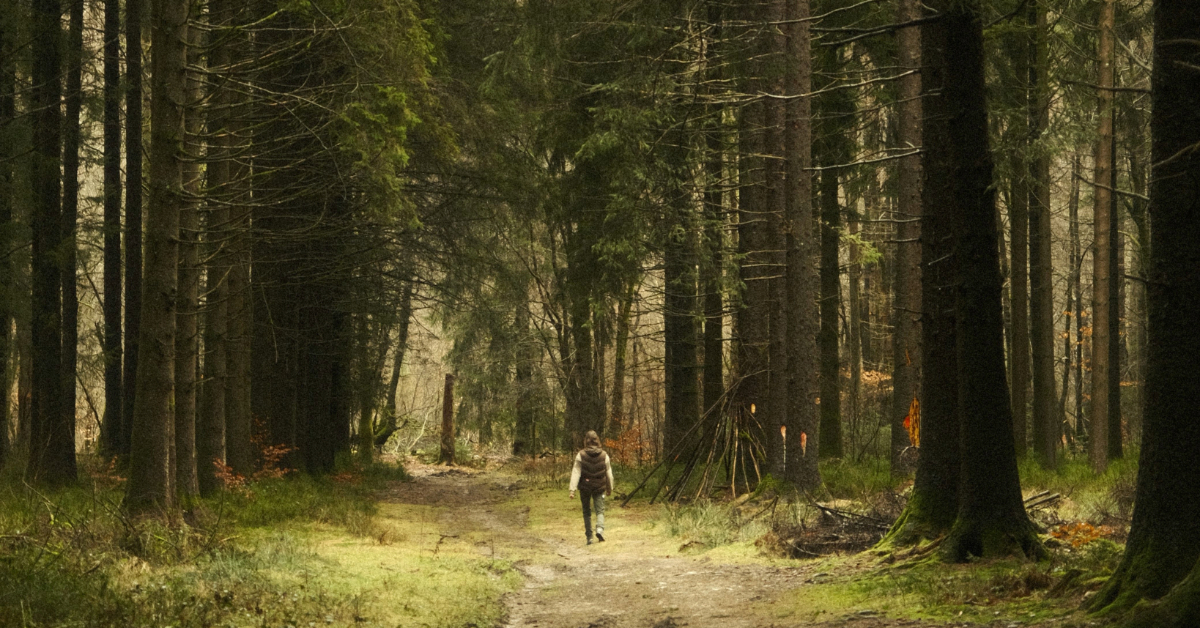
Exposure 1/125sec @ f/4 | ISO 1250 | Focal Length 68mm
Arnaud Vlaminck
Hailing from Belgium and currently based in Charleroi, Arnaud Vlaminck developed his photographic practice through extensive global travels. Initially working with minimal equipment, he transitioned to professional gear to better articulate his unique perspective on the world. As a trained educator, he is deeply committed to sharing his visual narratives while simultaneously developing his expertise in content creation and digital marketing to sustain his creative journey.
Resonance Score Breakdown
Transparency Note: The resonance score (7.2/20) is calculated based on social engagement metrics collected before the award announcement.
Expert Photography Reviews · 8
Among the Tall Trunks
Whenever my thoughts begin to feel tangled and suffocating, I drive out to the oak forests near the valley. The moment you step into the canopy, the scale of things changes dramatically.
Read the reflection →The Humility of the Tide
The light on a tidal flat at low water possesses a unique, silvered neutrality. It is a flat, honest light that refuses to flatter the landscape, exposing the intricate, vein-like channels carved into the silt by the retreating sea.
Read the reflection →The Weight of Small Things
Why do we assume that significance is measured by scale? We spend our lives looking for the monumental, the towering, the things that demand our attention through sheer force of presence.
Read the reflection →The Ancient Canopy
There is a restorative silence in the deep woods that feels like water washing over stone. In the city, our eyes are constantly stopped by walls, signs, and corners.
Read the reflection →Reviews & Comments
Share your thoughts about this award-winning photograph. Your reviews contribute to the community engagement score.
The Sundarbans aren’t just a backdrop for your aesthetic contemplation. Why does the bird’s isolation feel so curated? It’s a pretty frame, but it ignores the human struggle for survival in those shifting tides. I find the romanticization of this mudflat unsettling. Does the photographer see a landscape, or just a stage for his own perspective? When we strip away the context of the local people, what are we actually celebrating here? It’s technically sharp, but ethically hollow.
The Sundarbans don’t wait for anyone, and neither does that sandpiper. I love how the bird anchors that vast, muddy expanse. It’s a quiet, twitchy instant. If Vlaminck had waited a fraction longer, the bird would’ve flown or the light would’ve shifted, killing the scale. It’s sharp, it’s honest, and it’s alive. I’ve spent years chasing these fleeting flickers of life; he caught this one perfectly. It’s a rare, breathless second held in the mud.
At f/4, the focal plane is razor-thin, isolating the sandpiper’s plumage against the Sundarbans’ mud. The 68mm reach resolves the bird’s texture with startling clarity, though I’m sensing a slight diffraction limit creeping into the background bokeh. It’s a delicate optical dance. Honestly, seeing the way the light catches those tiny, wet ripples makes my heart skip a beat. It’s not just a bird; it’s a precise collision of glass, physics, and raw, breathing life.
The frame breathes. It’s a wide, low-angle tracking shot that refuses to pan. The Sandpiper moves through the mud, a tiny protagonist against the vast, indifferent Sundarbans. I’ve watched this frame for ten minutes; it’s the cut an editor keeps because the silence is deafening. The 68mm focal length holds the scale perfectly. It’s haunting. I felt my own pulse slow down just looking at it. That’s the rhythm of a film that never needed to move.
Most nature photography today is just wallpaper, but this sandpiper in the Sundarbans actually earns its space. By keeping the bird small against that vast, muddy expanse, Vlaminck forces us to confront our own insignificance. It’s a quiet, brutal reminder of scale. I’ve seen thousands of bird shots, but this one made me catch my breath. It’s not just a record of a creature; it’s a thirty-year argument for why we must leave the wild alone.
It’s refreshing to see the Sundarbans rendered not as a crisp postcard, but as a muddy, shifting abstraction. By choosing a shutter speed that barely registers the sandpiper’s frantic energy, Vlaminck flirts with the edge of legibility. I’m genuinely moved by the way the bird dissolves into the silt. Why resolve the feathers when the atmosphere is the real subject? It’s closer to Sugimoto’s blurred horizons than nature photography, and frankly, it’s far more honest.
The Sundarbans mud isn’t merely sediment; it’s a dark, primordial ink. Vlaminck’s sandpiper doesn’t just walk; it navigates the void between existence and erasure. I’ve stared at these shadows until my eyes ached, feeling the crushing weight of the tide. It’s a lonely, cold beauty that refuses to comfort us. When the light fails to reach the silt, the bird becomes a ghost. It’s a haunting reminder that we’re just brief, flickering interruptions in the silence.
The Sundarbans swallows everything whole, and here, the sandpiper is just a small, nervous heartbeat against that vast, indifferent mud. It’s a clean shot, sure, but I find myself craving a pulse. Where is the person? Where’s the grit of a life lived in those mangroves? It’s technically sharp, but it doesn’t look back at me. I’ve spent my life chasing eyes that meet mine; this bird just doesn’t know I’m here.