
Mekong Monk, by Greg Goodman
During my backpacking adventure across India and SouthEast Asia, I encountered countless Monks working on everything from building houses to selling prayer beads. However, this scene on a wide stretch of the Mekong River in Northern Laos struck me as the most odd of all of them all. To this day, I still wonder why a young Monk was piloting a boat. Were these his friends? Was he earning money for his monastery as a boat captain? I guess I’ll never know.
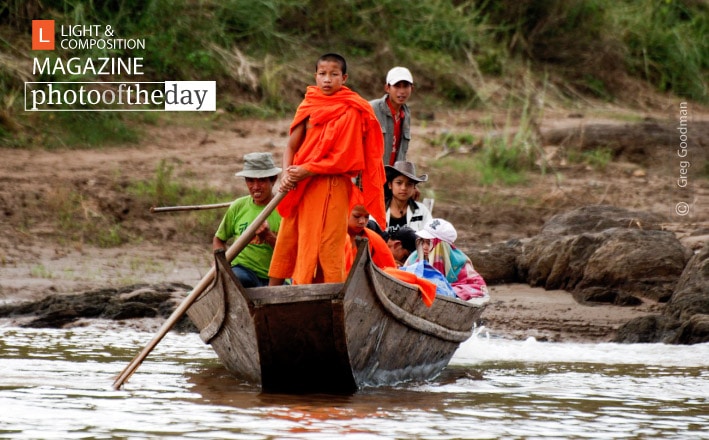
Nikon D80 | 1/640s at f/5.6 | Focal Length 300mm | ISO400 | Exposure Bias -2/3
Mekong Monk, by Greg Goodman
Award Winner: Photo of the Day | November 29
Photo of the Day Award Category: Travel Photography
Photograph Location: Mekong River | Laos
Photographer: Greg Goodman ( San Francisco, CA, USA) Registered
Greg Goodman’s passion for travel and photography is deeply rooted in early-childhood family vacations, when his parents gave him a 110mm film camera to keep him entertained. Growing up in New York City continues to influence Greg’s choice of subject matter, as he is particularly drawn to cityscapes, buildings, bridges, transportation methods, decay, manmade objects and nature’s interaction with humanity.
In addition to his photographic work being featured in numerous exhibitions, events and publications, Greg frequently updates the digital magazine of his life – Adventures of a GoodMan .com – with stories, photographs, travel journals and videos from numerous backpacking trips abroad…and life’s adventures at home.
Website: http://www.AdventuresofaGoodMan.com
Flickr: http://www.flickr.com/greggoodman
Facebook: http://www.facebook.com/adventuresofagoodman
Twitter: http://www.Twitter.com/greggoodman
Google+: https://plus.google.com/u/0/104345450242748116125


 Thai Fishing Boat by Leanne Lindsay
 Sunset over the Canyon, by Anindya Chakraborty
Leave a Reply
Want to join the discussion?Feel free to contribute!