In love with Miyajima by Ali Berrada
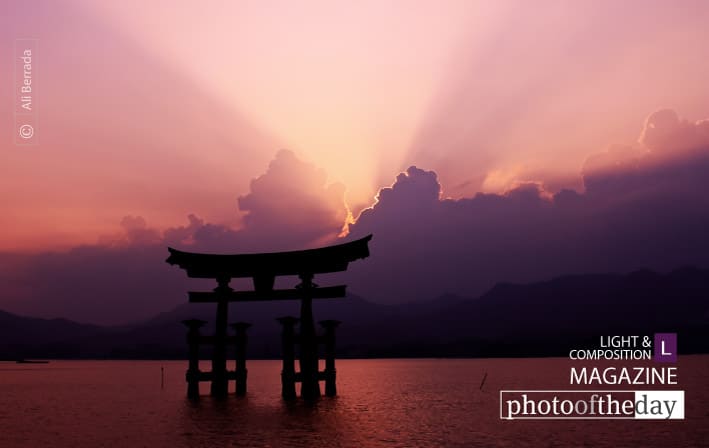
Captured on the serene island of Miyajima, located just 30 kilometers from Hiroshima, this photograph highlights the iconic torii gate standing majestically amidst the sea. The photographer was drawn to the island's raw, wild beauty and the profound simplicity of the temple's placement within the water. By focusing on the interplay between the ancient structure and the vast, tranquil environment, the image captures a timeless moment of stillness. This work is award-worthy for its evocative composition and the photographer's ability to distill the essence of Japanese landscape photography into a single, meditative frame.
Ali Berrada
Based in Casablanca, Morocco, Ali Berrada is a dedicated freelance photographer who views the world through a lens of passion and creative discovery. A self-described citizen of the world, he travels extensively in search of the perfect light, aiming to capture fleeting moments that endure through time. His photographic philosophy centers on finding simplicity within beauty and creativity within the void, reflecting his deep commitment to documenting the earth as a unified landscape.
Resonance Score Breakdown
Transparency Note: The resonance score (12.7/20) is calculated based on social engagement metrics collected before the award announcement.
Expert Photography Reviews · 6
The Gate Between Tides
The tide comes in, and the world is erased. The tide goes out, and the world returns, changed. We build structures to mark our place in the shifting water, hoping to anchor ourselves to something that does not move.
Read the reflection →The Threshold of Tides
We spend our lives building fences against the tide, convinced that if we mark a boundary, we can claim a piece of the earth as our own. We stack stones and carve lines into the sand, forgetting that the sea has no memory of our ownership. It only knows the rhythm of the return.
Read the reflection →Reviews & Comments
Share your thoughts about this award-winning photograph. Your reviews contribute to the community engagement score.
The vermilion of that gate bleeds into the grey-blue of shallow tidal water at dusk, a chromatic tension reminiscent of Turner’s most melancholic seascapes. It’s a quiet, aching harmony that pulls at one’s chest, doesn’t it? I’ve found myself lost in the way the muted, slate-toned atmosphere swallows the structure, turning the horizon into a soft, bruised veil. It’s truly breathtaking, a rare, hushed dialogue between ancient pigment and the infinite, cooling light of Japan.
The torii gate anchors the frame with necessary gravity. It’s a study in vertical assertion against the horizontal expanse of the tide. The negative space surrounding the structure doesn’t collapse; it breathes. I’m genuinely unsettled by how the horizon line bisects the frame with such clinical indifference. It’s a rigid geometry that demands total submission from the viewer. The composition holds because it refuses to soften its edges. It’s a rare, disciplined architecture of light.
The tide has retreated, leaving the gate to breathe in the salt-heavy air. Ali waited for that precise, hushed transition where the water mirrors the sky’s soft exhaustion. It’s a quiet ache, watching the wood anchor itself against the vast, indifferent sea. I’ve stood in such places, feeling the world grow small and holy. He didn’t rush the light; he let it settle until the silence became visible. It’s a beautiful, patient surrender to the landscape.
Miyajima’s gate is a well-trodden path for the casual tourist, yet here, the tide has been allowed to do the heavy lifting. One suspects Berrada didn’t just stumble upon this stillness; he likely sat until his boots grew damp and the crowds evaporated. It’s a quiet, disciplined frame. I’ve spent enough miserable hours waiting for a tide to turn to recognize the patience required here. It’s a rare, earned silence. Well played.
Of the thousands of travel shots I’ve reviewed, most drown in the postcard cliché of that torii gate. What saves this is the deliberate, low-slung horizon that forces the viewer to confront the tide’s weight against the wood. It’s a quiet, heavy stillness that actually makes me hold my breath. It doesn’t just document a landmark; it captures the exact moment the sea claims the structure. That’s why it’ll still matter in thirty years.
Miyajima’s gate doesn’t merely sit in the water; it anchors the void. Berrada understands that light is a shallow vanity, but here, the shadows beneath the torii feel heavy, like ink bleeding into the tide. It’s a haunting, silent confrontation with the infinite. I’ve stared at these dark reflections until my own pulse slowed to match the stillness. It doesn’t invite us in. Instead, it demands we acknowledge the abyss that sustains all beauty.