Leave a Reply
Want to join the discussion?Feel free to contribute!

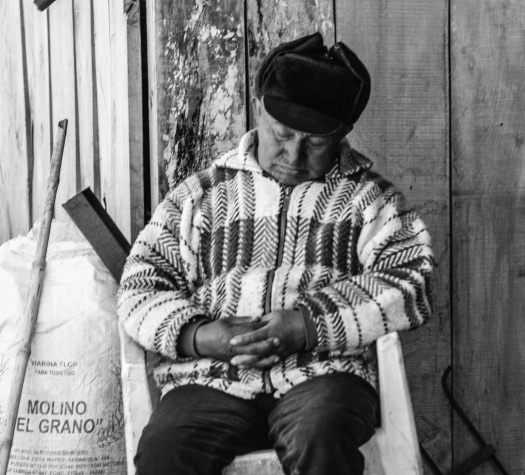
Captured within the Mapuche community of Nehuen in Temuco, Chile, this poignant image documents a moment of stillness following a long day of labor. The photographer, invited to work alongside the community, focused his lens on an eighty-year-old man finding respite after working the earth. The photograph is a testament to the quiet dignity of aging and the physical toll of a life lived close to the land. Its award-worthy quality lies in the raw, empathetic connection between the subject and the viewer, transforming a simple moment of rest into a profound narrative of human endurance and cultural heritage.
Born in Santiago, Chile, in 1989, Andres Martinoli serves as a studio director of film photography. His transition into still photography began as a pursuit to better understand the nuances of light, eventually evolving into a compelling body of work. Martinoli is deeply motivated by the desire to capture the essence of indigenous communities across Latin America, aiming to preserve the unique perspectives and human stories that are increasingly absent from the modern world.
Transparency Note: The resonance score (10.8/20) is calculated based on social engagement metrics collected before the award announcement.
I spent this morning trying to fix the loose stone in my garden path. It took much longer than I expected, and by the time I finished, my hands were stained with dirt and my back felt like it had been folded in two.
Read the reflection →In the quiet hours of the afternoon, when the shadows begin to stretch their limbs across the floorboards, I often find myself thinking about the things we carry.
Read the reflection →
 Lost in Thoughts by Shirren Lim
Share your thoughts about this award-winning photograph. Your reviews contribute to the community engagement score.