Young Adult by Ryszard Wierzbicki
Captured with a keen eye for social reality, this portrait highlights the poignant life of a young girl within the Smokey Mountain community. The photographer documents the challenging environment where eldest daughters often assume maternal responsibilities for their siblings, navigating a world where formal education is frequently replaced by the harsh lessons of street life. The image is award-worthy for its raw, empathetic portrayal of a child facing systemic barriers, using sharp focus and natural light to elevate a quiet, somber moment into a powerful visual narrative about resilience and the struggle for opportunity.
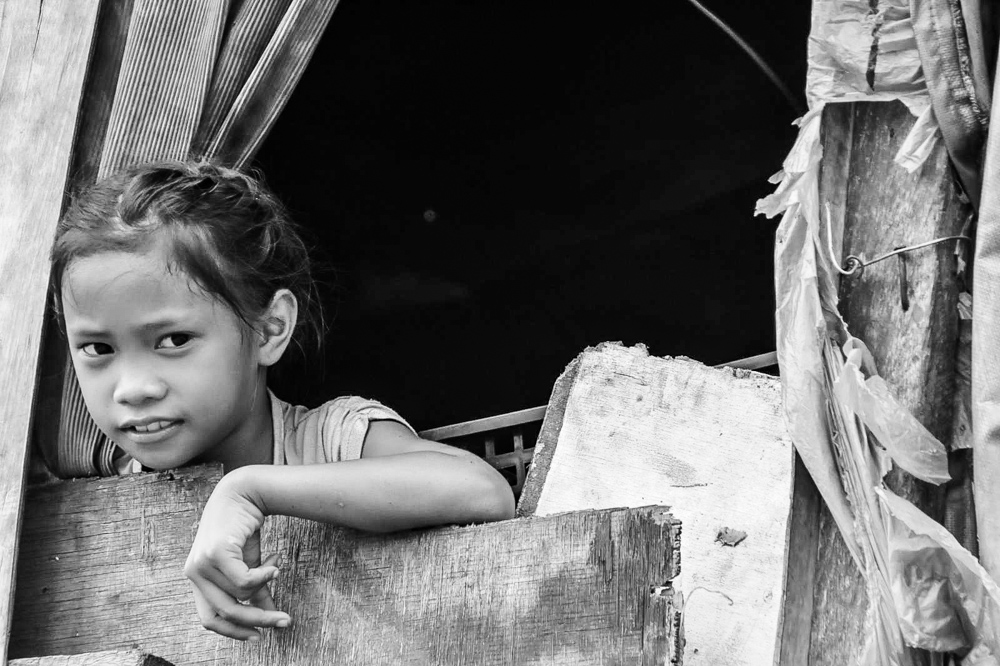
Exposure 1/1000sec @ f/8 | ISO | Focal Length 300mm
Ryszard Wierzbicki
Born in 1963, Ryszard Wierzbicki holds a Master's degree in Social Sciences from the University of Gdańsk. After a diverse career spanning child care, dentistry, and IT, he transitioned into professional travel photography and scuba instruction. Since relocating to the United Kingdom in 2006, he has dedicated much of his time to volunteering with orphan charities across Southeast Asia, an experience that deeply informs his compassionate and socially conscious photographic style. As the founder of two major travel and photography forums, he remains a prominent voice in the international photography community.
Resonance Score Breakdown
Transparency Note: The resonance score (6.2/20) is calculated based on social engagement metrics collected before the award announcement.
Expert Photography Reviews · 6
The Weight of Quiet Seasons
There is a particular gravity that settles upon the shoulders of the young when they are asked to carry the world before they have even learned to walk its paths.
Read the reflection →The Architecture of Becoming
In the quiet hours before dawn, I often think about the way a house is built. We start with the foundation, the heavy, unseen work that anchors a life to the earth.
Read the reflection →Reviews & Comments
Share your thoughts about this award-winning photograph. Your reviews contribute to the community engagement score.
We look at her eyes and we don’t just see a child; we see a life already heavy with the weight of others. Ryszard didn’t just point his lens; he sat with the silence of Smokey Mountain until she let him in. I feel a sharp ache in my chest looking at her steady, tired gaze. It’s a portrait that asks to be returned to, because it’s a story that hasn’t finished being told.
That gaze hits like a freight train. Wierzbicki caught her right when the weight of the world settled on those young shoulders. It’s the eyes—they aren’t just looking; they’re enduring. One tenth of a second later and the light shifts, the tension evaporates, and the frame collapses. I’ve seen thousands of portraits, but this one makes me want to put the camera down and just listen. He didn’t blink. That’s the street, raw and unforgiving.
The girl’s gaze is locked, but the tension in her neck muscles hasn’t reached its apex. It’s a quiet moment, yet I’m looking for that physiological snap—the precise millisecond where her posture would reveal the true weight of her burden. It’s close, but the shutter fired a fraction too early. I’ve felt that exhaustion in my own lungs; it’s a heavy, singular ache. This frame is good, but it’s not the one.
Wierzbicki’s framing echoes the stark, unvarnished humanism of Helen Levitt’s street work, yet the compressed perspective of the 300mm lens creates a claustrophobic intimacy that feels distinctly modern. It’s a haunting study of systemic weight. I’ve spent decades cataloging the gaze of the marginalized, but the girl’s eyes here—sharp, weary, and utterly unyielding—actually stopped my breath. It’s a rare, piercing contribution to the long lineage of social documentary that refuses to look away.
Most entries in this category rely on poverty as a shortcut to pathos, but Wierzbicki avoids that trap. The 300mm compression flattens the background, forcing us to confront her gaze without the distraction of her surroundings. It’s a brutal, honest portrait. I’ve seen thousands of street shots, yet this girl’s weary, adult eyes haunt me. She isn’t posing; she’s enduring. That’s why this will matter in thirty years. It’s a rare, unflinching look at stolen childhood.
Stripped of chromatic distraction, one finds the silver-grey of a Manila morning, a tonal range reminiscent of Morandi’s dust-choked bottles, where the absence of hue forces the eye to confront the heavy, tactile weight of poverty. It’s a stark, monochromatic ache that lingers; I’ve felt my own heart stutter at the way the light clings to her weary skin, turning the girl’s quiet resilience into a haunting, chiaroscuro meditation on the fragility of stolen childhood.