Taking Snapshot by Sanjoy Sengupta
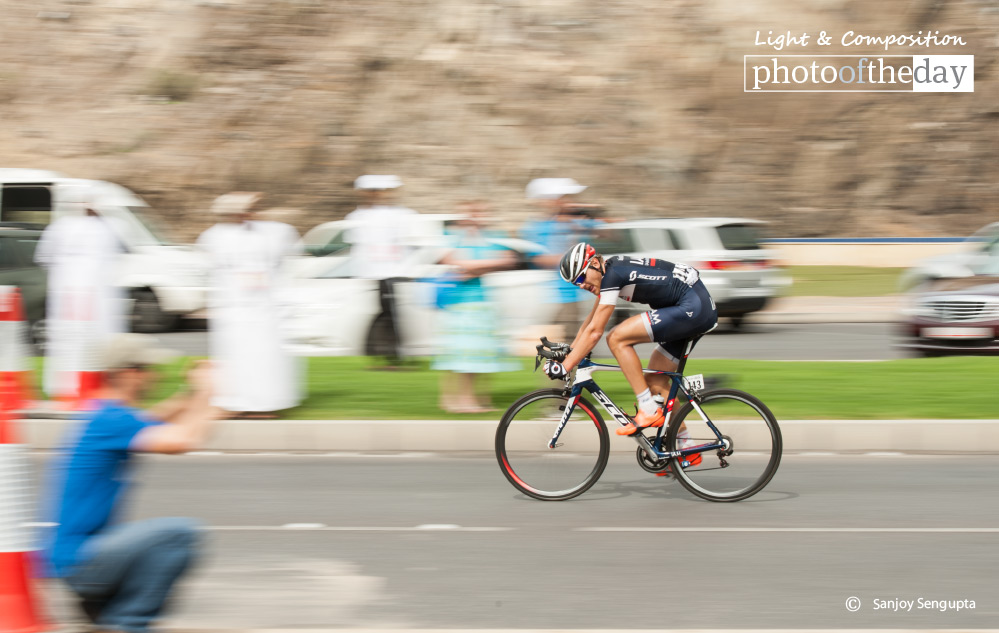
Captured during the Tour of Oman in Muscat, this image freezes a fleeting moment of high-speed action as a cyclist surges past the finish line. The photographer, positioned strategically at the course, managed to catch the athlete in a moment of genuine surprise, emphasizing the raw intensity of professional cycling. The composition excels by isolating the subject against the backdrop of the race, effectively conveying the kinetic energy and urgency of the event. This snapshot stands out for its impeccable timing and the ability to transform a standard sporting event into a compelling narrative of human effort and spontaneous reaction.
Sanjoy Sengupta
Based in Muscat, Oman, Sanjoy Sengupta has cultivated a lifelong passion for photography that evolved from early experiments with point-and-shoot and film cameras to a dedicated mastery of digital DSLR systems. His journey reflects a persistent commitment to capturing the ephemeral beauty of life's moments, transitioning from amateur trials to a refined technical approach. Today, Sengupta is recognized for his ability to document the world around him with precision and narrative depth, consistently seeking to preserve cherished experiences through his lens.
Resonance Score Breakdown
Transparency Note: The resonance score (12.3/20) is calculated based on social engagement metrics collected before the award announcement.
Expert Photography Reviews · 5
The Blur of Becoming
I remember sitting on a low stone wall in a village outside of Florence, watching a group of teenagers race their bicycles down the hill. They were moving so fast that their faces were just smudges of color against the olive trees.
Read the reflection →The Velocity of Being
Can we ever truly inhabit the present, or are we merely ghosts chasing the echoes of where we have just been? We spend our lives leaning forward, our bodies angled toward a future that dissolves the moment we touch it.
Read the reflection →Reviews & Comments
Share your thoughts about this award-winning photograph. Your reviews contribute to the community engagement score.
The cyclist blurs. Speed isn’t the point. It’s the vast, sun-bleached asphalt stretching toward the edge of the frame. I find myself holding my breath, waiting for the dust to settle. The rider is a ghost in the heat. Nothing here is accidental. The empty corner is not empty. It’s the weight of the silence after the race ends. I’ve never felt such stillness in a sprint. It’s quiet. It’s enough.
Speed is a lie we tell ourselves to ignore the void. In Sengupta’s frame, the cyclist’s frantic motion isn’t about victory; it’s a desperate flight from the encroaching, heavy shadows of Muttrah. I feel a cold shiver watching him outrun his own darkness. It’s an exhausting, futile sprint against time itself. When the light hits that jersey, it doesn’t celebrate the athlete—it exposes his fragility. We’re all just racing toward the inevitable silence of the frame’s edge.
The cyclist surges, yet the true weight here isn’t the speed; it’s the light clinging to the Muttrah stone. Sanjoy stood there, waiting for the sun to carve that fleeting, raw intensity against the ancient backdrop. I’ve felt that same stillness while the world rushes by. It’s a quiet ache, really—watching a man’s singular, breathless effort collide with the timeless, sun-drenched silence of Oman. He didn’t just catch a race; he listened to the land.
The cyclist’s trajectory bisects the frame with aggressive precision. It’s a clean diagonal, slicing through the static background. The negative space behind the athlete provides the necessary vacuum for this kinetic surge. Yet, the peripheral clutter threatens the structural integrity of the composition. It’s distracting. I’d prefer a tighter crop to isolate that singular, sharp focus. The tension holds, but only just. It’s a rigid architecture, barely containing the chaos of the race.
The cyclist’s face contorts in a grimace of raw exertion, but who is he to us? Sengupta isolates the athlete against a blurred Muttrah, yet the local context feels like mere wallpaper. Why does the race matter more than the city it traverses? I’m unsettled by how we consume this man’s exhaustion as a kinetic trophy. Does his struggle belong to the sport, or is it just another spectacle for our fleeting, detached gaze?