Sur Profundo by Maureen Mayne-Nicholls
Captured from the deck of a boat navigating the remote waters of southern Chile, Sur Profundo evokes the raw, prehistoric beauty of the Carretera Austral. The photographer, deeply connected to this wild landscape after years of residency, sought to translate the profound tranquility of the region into a visual narrative. By balancing the vast, untamed horizon with the intimate experience of returning to these cherished lands, the image captures a sense of timelessness. Its award-worthy quality lies in the evocative composition and the photographer's ability to render the rugged, hidden essence of the Chilean wilderness with both technical precision and emotional depth.
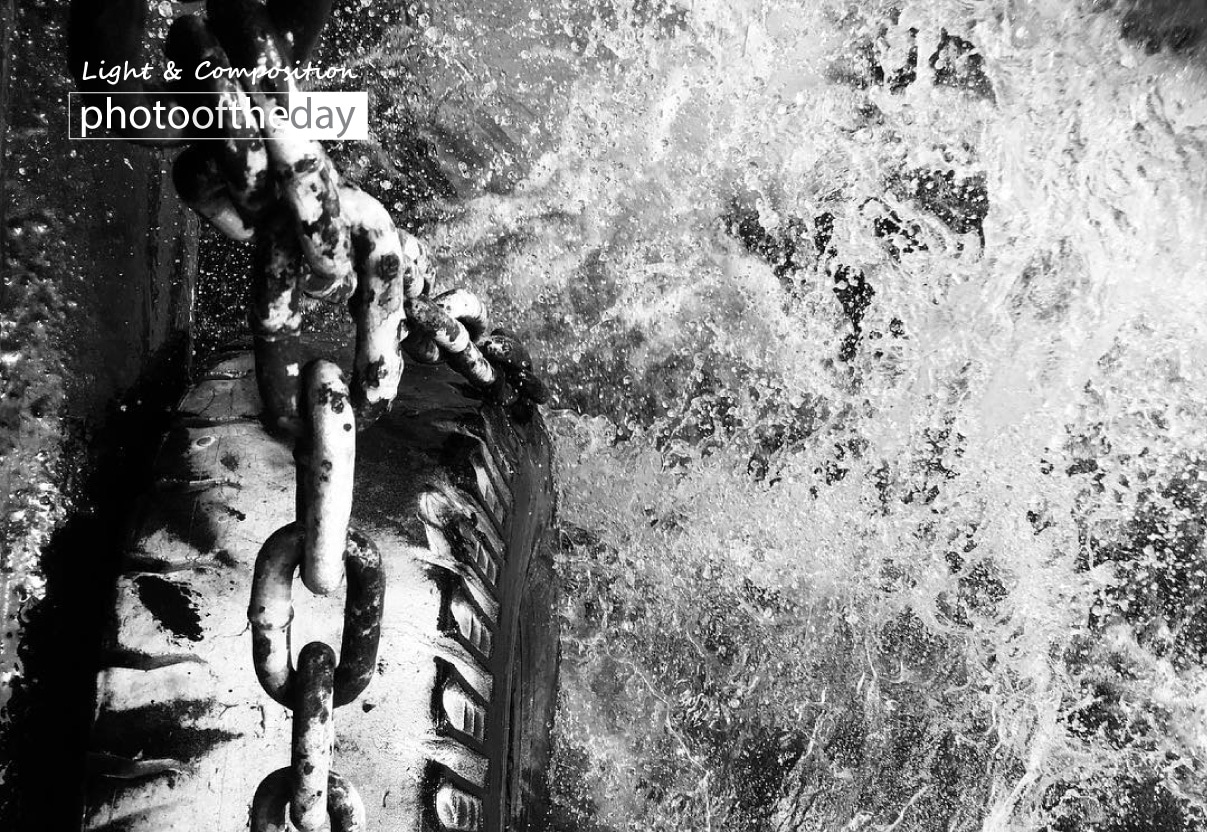
Exposure 1/125sec @ f/4.0 | ISO 1600 | Focal Length 105mm
Maureen Mayne-Nicholls
Based in Viña del Mar, Chile, Maureen Mayne-Nicholls is a dedicated artist whose work traverses the diverse landscapes of Latin America, from the high plateaus to the southern reaches of her home country. Her photography is defined by a persistent exploration of human intimacy, viewing the connection between individuals and their inner selves as a central, representative theme. Through a multidisciplinary artistic approach, she consistently seeks to document the profound, quiet relationships that define the human experience, establishing a signature style rooted in emotional resonance and authentic observation.
Resonance Score Breakdown
Transparency Note: The resonance score (11.2/20) is calculated based on social engagement metrics collected before the award announcement.
Expert Photography Reviews · 5
The Geography of Silence
We often mistake emptiness for absence. In the logic of the city, we are taught that space must be occupied to be significant—that a place only gains value through the density of its inhabitants or the utility of its infrastructure.
Read the reflection →The Salt of Silence
The air in the mountains has a specific weight, a cold, metallic tang that settles at the back of the throat like crushed ice.
Read the reflection →Reviews & Comments
Share your thoughts about this award-winning photograph. Your reviews contribute to the community engagement score.
Stripped of chromatic distraction, one finds the Aysén wilderness rendered in the silver-grey of a Morandi still life, where the absence of pigment forces the eye to confront the tactile weight of light itself. It’s a haunting, monochromatic ache; I’ve felt my own breath hitch at the way the mist clings to those jagged peaks like charcoal dust on vellum. It doesn’t need colour to bleed; the silence of these tonal gradients is enough to break one’s heart.
The horizon line cuts through the Aysén mist like a slow, deliberate pan. It’s a quiet shot, the kind where the editor holds the frame just long enough for the silence to become heavy. I’ve spent hours staring at these grey, prehistoric waters, and it makes my chest ache with a sudden, sharp longing. The 105mm compression flattens the depth, turning the landscape into a film strip that refused to move. It’s perfect.
We look at the Aysén waters and we don’t just see a landscape; we see a conversation between the traveler and the tide. Maureen Mayne-Nicholls didn’t just point her lens at the horizon; she listened to the silence of the fjords first. It’s a portrait of a place that’s forgotten how to be loud. I feel a sudden, sharp ache for that stillness. It’s a photograph that asks to be returned to, again and again.
The jury’s obsession with clarity here feels misplaced. Why chase resolution in the Aysén wilderness? I’m far more intrigued by what Mayne-Nicholls chose not to resolve. The motion blur from the boat isn’t a technical failure; it’s a rhythmic pulse. It’s closer to Sugimoto’s long-exposure theatres than standard landscape work. I’d trade that clinical sharpness for more of this intentional instability. It’s the only way to truly capture the raw, shifting soul of the southern fjords.
Aysen’s glacial silence echoes the stark, high-contrast isolation found in early 20th-century expeditionary plates. Mayne-Nicholls avoids the romanticized sublime, opting instead for a gritty, tactile rendering that recalls the atmospheric density of Bill Brandt’s northern landscapes. It’s a rare, haunting stillness. I’ve spent decades staring at horizons, yet this particular gray-scale transition—that subtle, biting crispness at 105mm—actually made me catch my breath. It’s not just a view; it’s a profound, lonely conversation with the earth itself.