Shadows by Kirsten Bruening
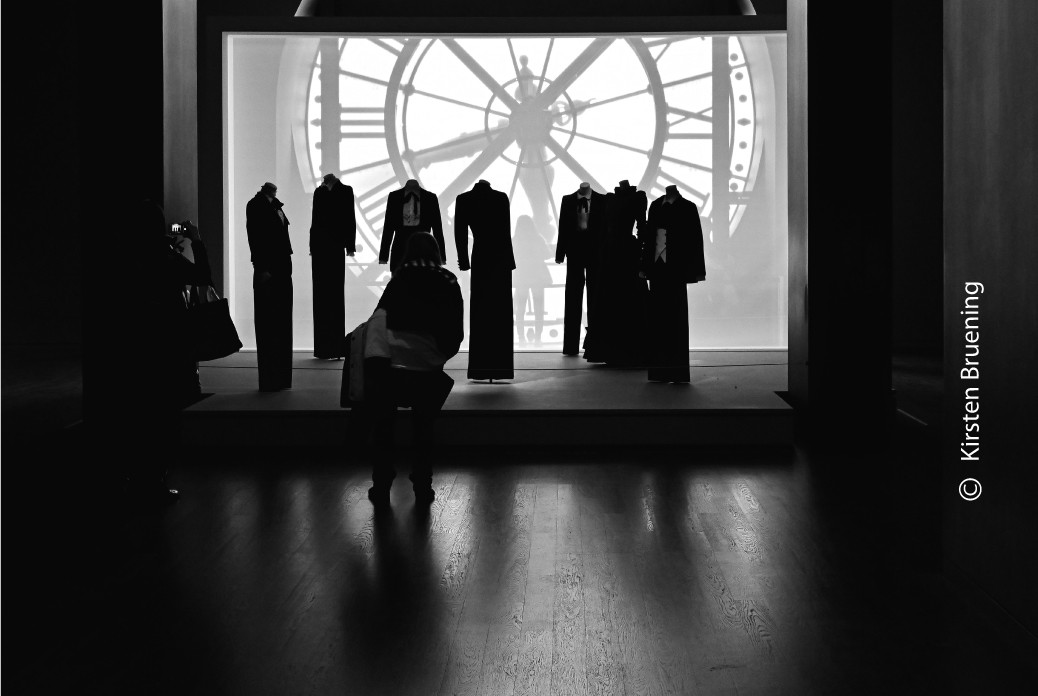
Captured within the iconic halls of the Musée d'Orsay in Paris, this photograph masterfully utilizes the museum's famous clock face as a singular, dramatic light source. By positioning the camera to face the backlight, the photographer transformed visitors viewing the contemporary exhibitions into enigmatic, stark silhouettes. This deliberate choice emphasizes the interplay between architecture and human presence, stripping away detail to focus on form and atmosphere. The resulting image is award-worthy for its sophisticated use of high-contrast lighting, which turns a standard museum visit into a timeless, evocative study of shadow and anonymity.
Kirsten Bruening
Based near Cologne, Germany, Kirsten Bruening is a dedicated photographer whose creative journey began in childhood with an early exploration of analogue techniques. After a fifteen-year hiatus, she returned to the craft with a renewed focus on the expressive power of light and shadow, particularly within black and white portraiture, nature, and wildlife photography. Currently pursuing formal photographic studies to refine her technical expertise, Bruening continues to develop a distinct visual language that prioritizes emotional depth and artistic narrative.
Resonance Score Breakdown
Transparency Note: The resonance score (7.6/20) is calculated based on social engagement metrics collected before the award announcement.
Expert Photography Reviews · 5
The Weight of Stolen Time
The smell of old stone always pulls me back to the damp, cool air of a cellar, where time seems to thicken like honey. It is a heavy, velvet sensation against the skin, the kind of quiet that makes your own pulse sound like a drum in your ears.
Read the reflection →The Weight of Time
The clock does not measure the day. It measures the distance between who we were and who we are becoming. We stand before the face of it, waiting for a signal, a shift in the gears, a permission to move forward.
Read the reflection →Reviews & Comments
Share your thoughts about this award-winning photograph. Your reviews contribute to the community engagement score.
We stand before the great clock at Orsay, watching ghosts drift through the light. Kirsten hasn’t just captured silhouettes; she’s listened to the silence of strangers caught between time and art. By stripping away their faces, she forces us to imagine the stories they carry into the frame. I find myself holding my breath, wondering what they’ve left behind. It’s a haunting, beautiful reminder that we are all just passing shadows in someone else’s history.
The clock’s circular frame anchors the composition, establishing a rigid geometric center that forces the silhouettes into the negative quadrants. It’s a brilliant spatial equation where the vertical axis of the clock hands bisects the horizontal flow of visitors. I’m genuinely struck by how the high-contrast ratio flattens the human form into pure, dark vectors. It’s not just a museum shot; it’s a perfectly balanced study of mass against light. The math here is simply elegant.
It’s refreshing to see light handled with such precision. In my world, we fight the water’s refractive index and the relentless loss of the red spectrum just to capture a silhouette. Here, the Orsay’s clock face acts like the surface sun, turning visitors into dark, suspended forms. It’s hauntingly familiar. I’ve spent my life chasing shadows in the deep, and seeing that same stark, beautiful anonymity on land makes my heart race. It’s perfectly executed.
The clock at the Orsay is a beautiful stage, but it’s a lonely one. By turning these visitors into silhouettes, you’ve stripped away the very thing I look for: the person. I don’t see a life here, just shapes against the light. It’s technically sharp, sure, but it feels like a missed connection. I’d trade all that dramatic contrast for one pair of eyes looking back. It’s a cold way to see a human being.
The clock face at Orsay is a trap for the lazy, but Kirsten caught the rhythm here. Those silhouettes aren’t just shapes; they’re ghosts caught in the gears of time. I love the way the light bites into their edges. One tenth of a second later and the shadow has moved, the frame has collapsed. It’s sharp, it’s honest, and it’s alive. She didn’t hesitate. That’s how you capture the city’s pulse. Pure, decisive magic.