Multicoloured Carrots by May Lawrence
Captured in the soft, directional light of a late afternoon in her home studio, May Lawrence’s study of multicoloured carrots is a masterclass in food styling. By utilizing natural light filtered through plantation shutters, she highlights the vibrant, organic textures of the red, purple, and green vegetables against an antique bronze plate. The composition celebrates the rarity of these imported carrots, transforming a simple culinary ingredient into a sophisticated visual narrative. This image is award-worthy for its harmonious balance of color, the thoughtful selection of rustic props, and the photographer’s ability to elevate a domestic subject into a refined, evocative still life.
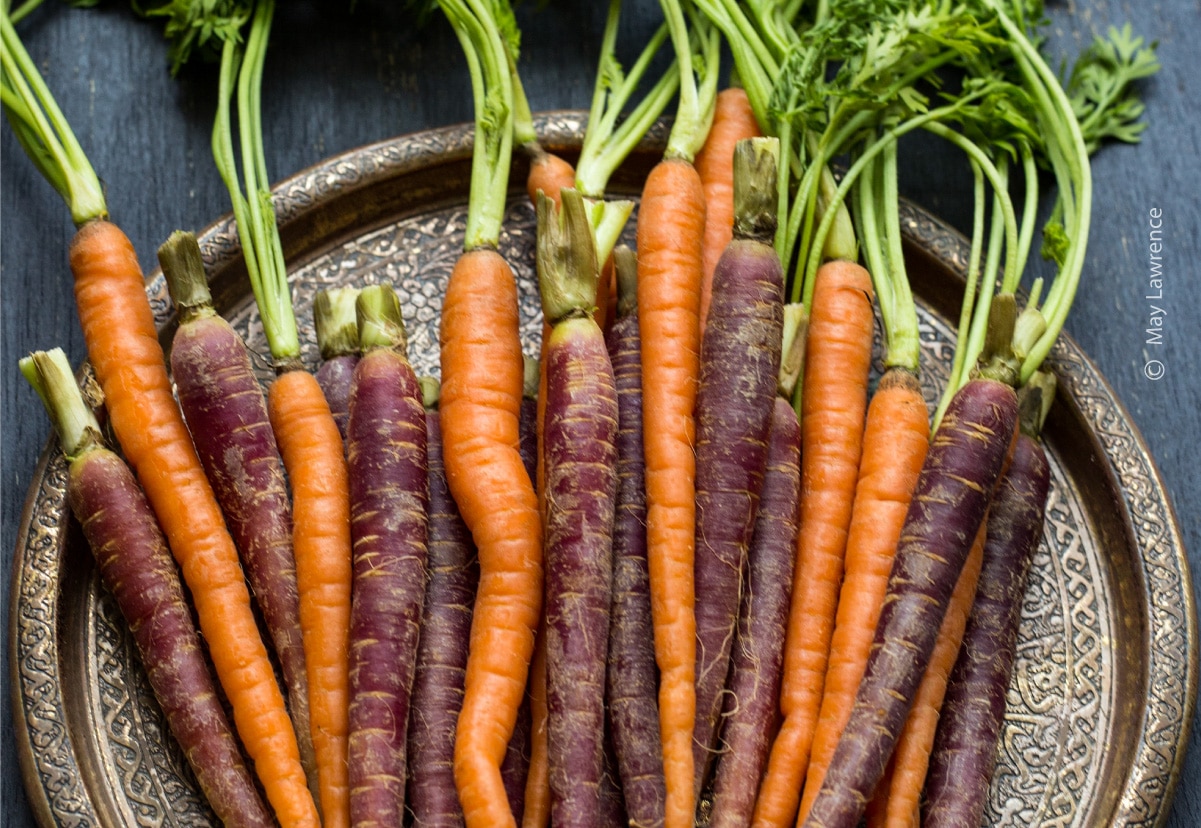
Exposure 1/60sec @ f/4.5 | ISO 400 | Focal Length 50mm
May Lawrence
Born in Singapore and raised in Australia, May Lawrence is a professional food photographer and Le Cordon Bleu-trained patisserie chef based in Bangkok. After a successful career as a regional director, she transitioned into the creative arts to merge her culinary expertise with her passion for visual storytelling. Her work is deeply influenced by her global travels and a desire to document the history and culture embedded in food and street life. Lawrence utilizes photography as a primary vehicle to convey the rich, unfolding narratives of the world around her.
Resonance Score Breakdown
Transparency Note: The resonance score (11.1/20) is calculated based on social engagement metrics collected before the award announcement.
Expert Photography Reviews · 8
The Earth’s Quiet Memory
Why do we insist on naming the things we consume, as if a label could ever capture the slow, silent labor of the soil? We treat the harvest as a mere transaction, a fleeting necessity to sustain the body, forgetting that every root and stem is a vessel for time itself.
Read the reflection →The Soil’s Quiet Geometry
I remember sitting in a small kitchen in Chiang Mai, watching an elderly woman scrub dirt from a handful of carrots she had pulled from the earth that morning. They weren't the uniform, orange sticks I was used to finding in plastic bags back home.
Read the reflection →Reviews & Comments
Share your thoughts about this award-winning photograph. Your reviews contribute to the community engagement score.
At f/4.5, the focal plane is razor-thin, isolating the fibrous, organic topography of these carrots. The diffraction of light across their skins is, in the strictest physical sense, extraordinary. I’m genuinely moved by how the lens resolves the micro-textures against that bronze plate; it’s a tactile precision the naked eye simply misses. Lawrence hasn’t just captured food; she’s mapped the light’s interaction with cellulose. It’s a beautiful, forensic study of nature’s own complex geometry.
The bronze plate holds the weight of the afternoon. Shadows stretch across the carrots, carving out the space between them. It’s quiet here. I’ve spent minutes watching the light retreat from the purple skin. Nothing here is accidental. The empty corner is not empty. It’s a breath held in the dark. I feel a sudden, sharp ache for this stillness. It doesn’t need more. It’s enough. The silence is the loudest thing in the room.
We look at these carrots and we don’t just see food; we see a lineage. May Lawrence has listened to the earth here. The way the light catches those bruised, purple skins against the bronze plate feels like a quiet conversation between the soil and the kitchen. It’s intimate, almost ancestral. I find myself leaning in, wanting to know the hands that pulled them from the ground. It’s a portrait of harvest, and it’s deeply moving.
These carrots are beautiful, but they’re frozen. Where’s the chaos? Cartier-Bresson hunted life in motion; Winogrand chased the friction of the sidewalk. Here, the light is polite, controlled, and safe. It’s a studio setup, not a street encounter. I’m craving the grit of a Bangkok market, the sweat, the blur of a passing motorbike. It’s technically perfect, sure, but it’s missing the heartbeat. One tenth of a second later, and the world moves on. This just stays still.
The bronze plate anchors the frame, providing a necessary fulcrum for the chaotic geometry of the carrots. The diagonal thrust of the purple root creates a tension that almost redeems the composition’s reliance on soft, directional light. It’s a disciplined arrangement, yet the negative space feels slightly underutilized. I’ve grown tired of such domestic staging, but the structural integrity here holds. It doesn’t collapse into sentimentality, and for that, it’s earned its place.
The light here doesn’t just fall; it breathes through those shutters, catching the earth-born grit on these carrots. I’ve spent enough dawns waiting for the sun to reveal such honesty. She stood in the cooling hour, watching the shadows lengthen across that bronze plate. It’s quiet work, finding the sacred in a root vegetable. Honestly, looking at the way the purple skin holds that soft, directional glow, I feel a sudden, sharp hunger for the soil itself.
Before the eye identifies the carrots, a sudden stillness settles in the chest. The light filtering through those shutters mimics the slow, amber decay of a Bangkok afternoon. I’m struck by the visceral weight of the bronze plate; it’s cold, grounding. When I return to this, I don’t see food. I see the quiet ache of domesticity. It’s a strange, earthy comfort that lingers, following me into the dark long after I’ve turned away.
The chiaroscuro here evokes the Dutch masters, yet the vibrant, organic geometry of these carrots feels distinctly modern. It’s a delicate dance between the rustic textures of the bronze plate and the soft, shutter-filtered light. I’ve spent decades cataloging still lifes, but the way Lawrence renders those deep purple hues against the shadow really caught me off guard. It’s a refreshing, tactile departure from the sterile, over-lit commercial food photography that’s dominated the medium for far too long.