Looking over Bibi-Eybat by Fidan Nazim Qizi
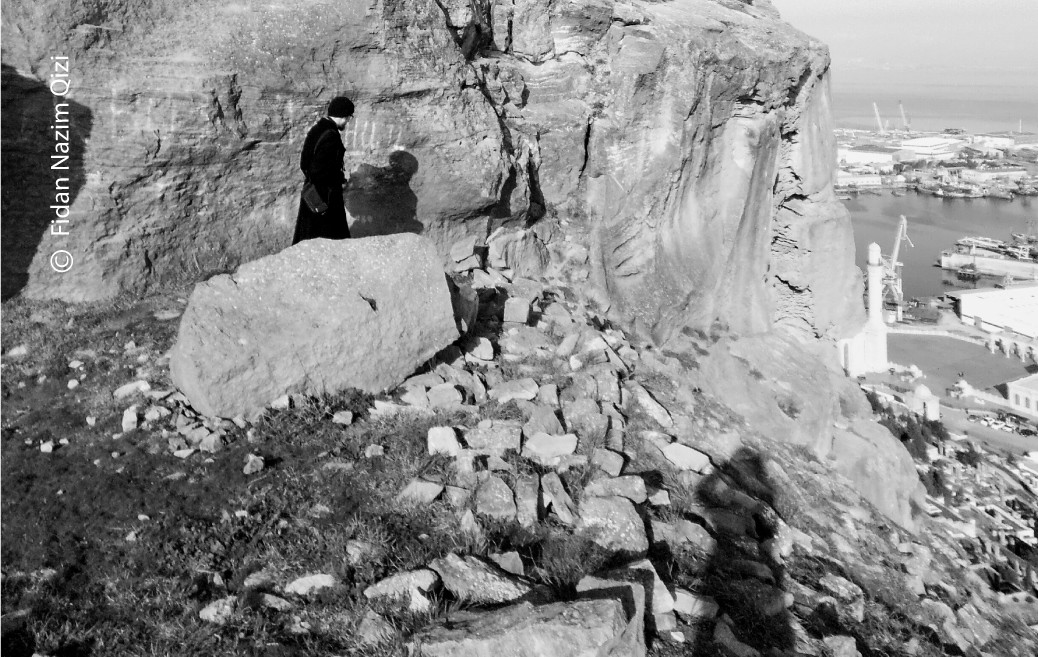
Captured from a vantage point overlooking the municipality of Bibi-Eybat in Baku, Azerbaijan, this photograph documents a landscape in transition. The image highlights the area's recent urban evolution, where the expansion of the Bibiheybat Motorway and the reconstruction of the historic mosque prompted the development of modern housing, a stadium, and community facilities. The photographer’s choice to frame this expansive view emphasizes the intersection of traditional heritage and contemporary infrastructure. This work is award-worthy for its clear, documentary approach, effectively balancing the scale of the architectural changes with the surrounding topography to tell a compelling story of regional growth.
Fidan Nazim Qizi
Born and based in Baku, Azerbaijan, Fidan Nazim Qizi is a dedicated photographer with a profound passion for nature, mountains, and hiking. Her artistic journey was deeply influenced by the evocative black-and-white works of Vivian Maier, which inspired her to adopt the monochromatic medium as her primary form of expression. Through her lens, she seeks to capture the energy and inspiration inherent in the world, viewing photography as a vital conduit for human emotion and life experiences.
Resonance Score Breakdown
Transparency Note: The resonance score (9.8/20) is calculated based on social engagement metrics collected before the award announcement.
Expert Photography Reviews · 5
The Weight of Stone
The earth does not ask for permission to change. It simply waits. We build our walls.
Read the reflection →The Weight of Becoming
Why do we feel a strange ache when we witness a place shedding its skin? We are creatures of memory, tethered to the familiar, yet we are also the architects of a future that demands the erasure of what came before.
Read the reflection →Reviews & Comments
Share your thoughts about this award-winning photograph. Your reviews contribute to the community engagement score.
Bibi-Eybat feels like a place caught between yesterday and tomorrow, but I’m searching for the pulse of the people living through it. The architecture is sharp, yet it’s cold. I’ve spent my life looking for the human hand in a landscape, and here, it’s missing. It’s a clean, wide view, but it doesn’t tell me who these people are. I’d trade all this infrastructure for one tired, honest face looking back at me.
One suspects the light here was a matter of convenience rather than a hard-won prize. It’s a tidy documentary effort, but I’m left wondering if Fidan ever bothered to return when the sky wasn’t so flat. The composition holds together, yet it lacks the grit of a place truly lived in by the lens. I’ve spent enough shivering mornings in the mud to know when a photographer hasn’t quite paid the full fare.
The horizon pulls the eye toward the grey sprawl. It’s a heavy weight. Yet, I’m drawn to the dust settling between the new stadium and the mosque. There’s a stillness in that gap. It’s where the city breathes. I’ve stood in places like this, feeling the quiet hum of progress. Nothing here is accidental. The empty corner is not empty. It’s a pause. A rare, honest silence in a landscape that’s trying too hard.
Looking at this landscape, I’m struck by how dry it is. Down where I work, light is a thief, stealing reds and oranges within meters. Here, the Baku sun hits the architecture with a clarity that’s almost jarring. There’s no backscatter to fight, no refractive index to distort the horizon. It’s a sharp, terrestrial stillness. I find myself craving the fluid, unpredictable dance of the Caspian’s depths, but there’s a strange, arid beauty in this transition.
It’s a shame the jury fixated on clarity here. By chasing a crisp, documentary rendering of Bibi-Eybat, the photographer has flattened a landscape that’s practically screaming for a more visceral, kinetic interpretation. I’m genuinely frustrated by the missed opportunity to blur the transition between those historic mosque lines and the motorway’s rigid geometry. Why resolve every detail? I’d have preferred a long exposure that dissolved this urban evolution into a ghostly, shifting smear of progress.