Leaving a Smoke Trail by Leanne Lindsay
At the V8 Supercars event at Eastern Creek, the photographer captured the Red Devils in a daring aerial display. By timing the shot to coincide with the sunlight hitting the aircraft's smoke trails, the image transforms simple exhaust into glowing, painterly brushstrokes against a vibrant blue sky. This photograph is award-worthy for its ability to freeze a moment of intense mechanical power and translate it into a dynamic, artistic composition. The interplay between the sharp formation of the jets and the ethereal, illuminated smoke creates a sense of movement that conveys the sheer precision and awe-inspiring nature of high-speed aviation.
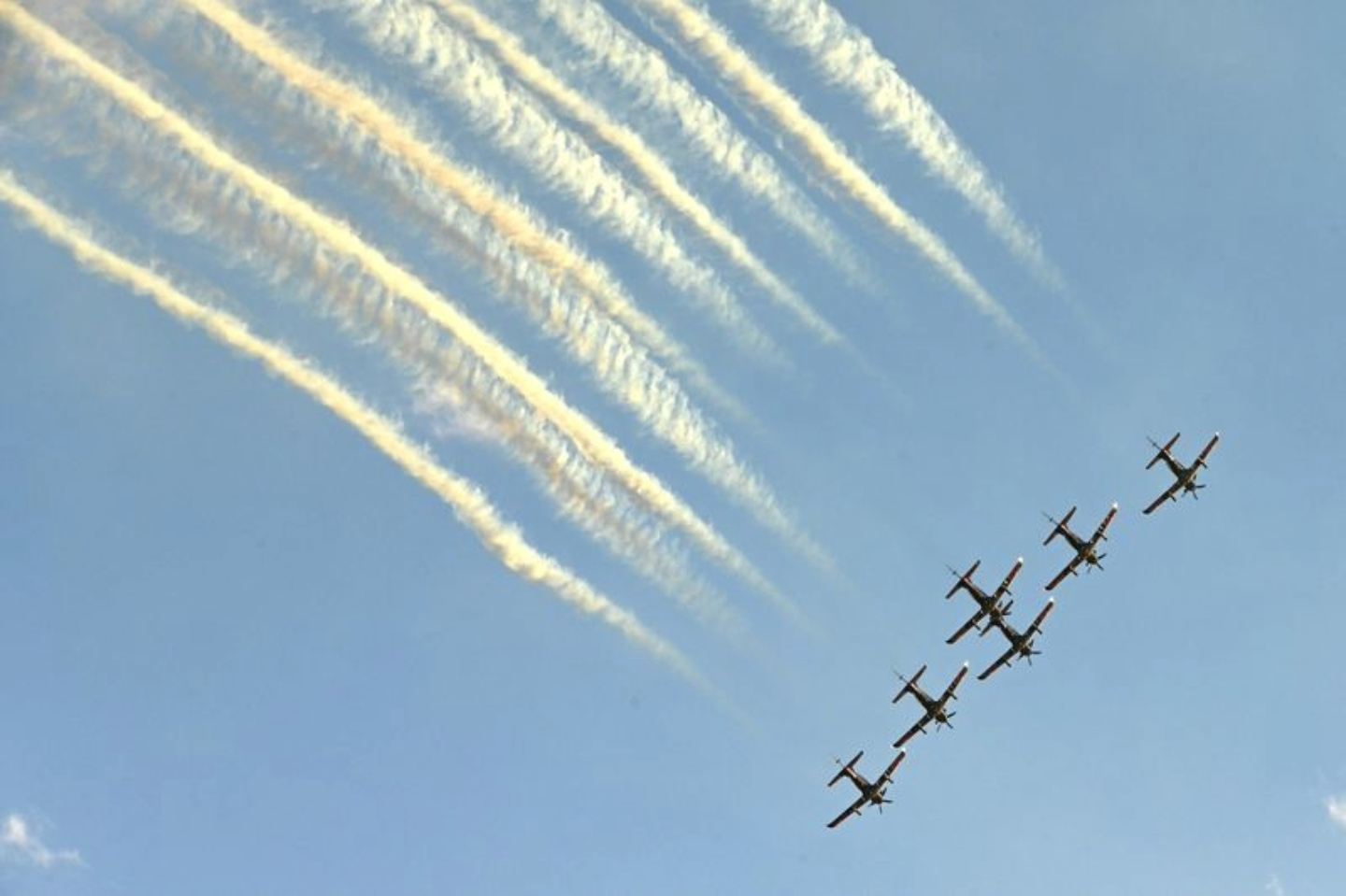
Exposure 1/1600sec @ f/11 | ISO 1100 | Focal Length 200mm
Leanne Lindsay
Born in Adelaide in 1962, Leanne Lindsay relocated to Sydney during her youth. Though her early interest in photography was interrupted by the loss of her equipment, she rediscovered her creative passion in her late fifties. Now based in Sydney, she has cultivated a diverse portfolio that spans family and newborn portraiture, while maintaining a particular dedication to the technical precision of architectural and landscape photography.
Resonance Score Breakdown
Transparency Note: The resonance score (7.8/20) is calculated based on social engagement metrics collected before the award announcement.
Expert Photography Reviews · 6
The Architecture of a Breath
In the study of calligraphy, the ink is not merely a medium; it is a record of a gesture. The brush touches the paper, and for a fraction of a second, the intent of the hand is frozen in a permanent, dark line.
Read the reflection →The Geography of the Void
We often mistake the sky for an empty canvas, a neutral backdrop that belongs to no one. Yet, in the modern city, the air above us is just as mapped, zoned, and contested as the pavement beneath our feet.
Read the reflection →Reviews & Comments
Share your thoughts about this award-winning photograph. Your reviews contribute to the community engagement score.
We look at these glowing trails and we don’t just see machines; we see the ghosts of a conversation between pilot and sky. It’s a portrait of velocity, where the smoke acts as a signature left behind by someone we’ll never meet. I feel a strange, quiet ache looking at those brushstrokes against the blue. It’s as if the air itself is remembering the intensity of the flight. This is a photograph that asks to be returned to.
It’s a strange shift, moving from the silence of the cosmos to the roar of Eastern Creek. At 1/1600sec, Leanne’s shutter has sliced through a moment of fleeting combustion. I’m struck by the irony; we spend our lives chasing photons that have traveled eons, yet here, the light is merely milliseconds old. It’s a violent, beautiful contrast. Watching those smoke trails catch the sun, I feel a sudden, sharp ache for the stillness of the dark.
The jets are locked in formation, but the timing is just a fraction off. I’ve spent my life chasing the exact millisecond of peak tension, and here, the smoke trails have already begun to dissipate into soft, aimless wisps. It’s a beautiful composition, sure, but it’s missing the violent, sharp snap of the initial exhaust burst. I wanted that raw, mechanical punch. It’s a near miss, but in this game, near isn’t enough.
That smoke isn’t just exhaust; it’s a brushstroke across the blue. I’ve spent years chasing the fleeting, but this? It’s pure adrenaline. You hit the shutter when the light caught the vapor, turning mechanical chaos into something elegant. One tenth of a second later and the glow fades, the frame collapses. I felt my pulse jump looking at this. You didn’t just track the jets; you caught the exact heartbeat of the sky. Brilliant timing.
It’s rare to see mechanical violence rendered with such ethereal grace. Lindsay’s smoke trails evoke the kinetic energy of Moholy-Nagy’s photograms, yet they’re grounded in the precise, high-shutter-speed rigor of Harold Edgerton’s stroboscopic work. I’ve spent decades cataloging the sky, but the way she’s captured that specific, golden-hour luminescence against the deep cobalt is genuinely breathtaking. It’s a rare, painterly intervention in the lineage of aviation photography that finally moves beyond mere documentation into something truly transcendent.
Freezing these jets at 1/1600sec is technically competent, yet it feels stiflingly safe. Why resolve the aircraft with such clinical rigidity? I’m genuinely frustrated that Lindsay didn’t let the shutter drag, allowing the smoke to bleed into the frame. It’s closer to a commercial brochure than Sugimoto’s long-exposure theatres. By choosing total clarity, she’s ignored the kinetic potential of the air itself. I’d trade that sharpness for a single, honest smear of motion any day.