The Geography of the Void
We often mistake the sky for an empty canvas, a neutral backdrop that belongs to no one. Yet, in the modern city, the air above us is just as mapped, zoned, and contested as the pavement beneath our feet. We designate corridors for commerce, for transit, and for the spectacle of power, carving invisible borders through the atmosphere. When we look upward, we are witnessing the reach of human infrastructure extending into the clouds, claiming space that feels infinite but is, in reality, strictly regulated. Who is granted the right to leave a mark on the horizon? And who is left to watch from the ground, tethered to the grid, while others trace lines of dominance across the blue? The city is a document of access, and the sky is merely the latest frontier where we project our hierarchies. If we look closely at the trails left behind, we might see not just movement, but the heavy footprint of those who own the view. Who is the sky actually for?
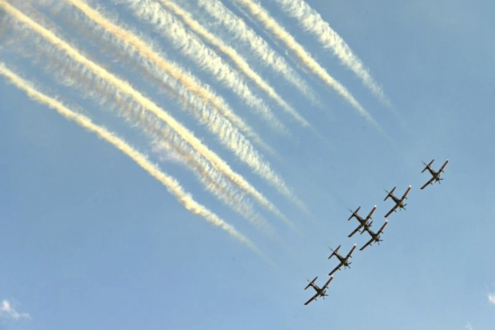
Leanne Lindsay has captured this tension in her striking image titled Leaving a Smoke Trail. It serves as a reminder that even the most fleeting marks in the air are products of human design and intent. Does this display make the city feel more open, or does it simply highlight the boundaries of our own reach?