Having Samovar Tea by Fidan Nazim Qizi
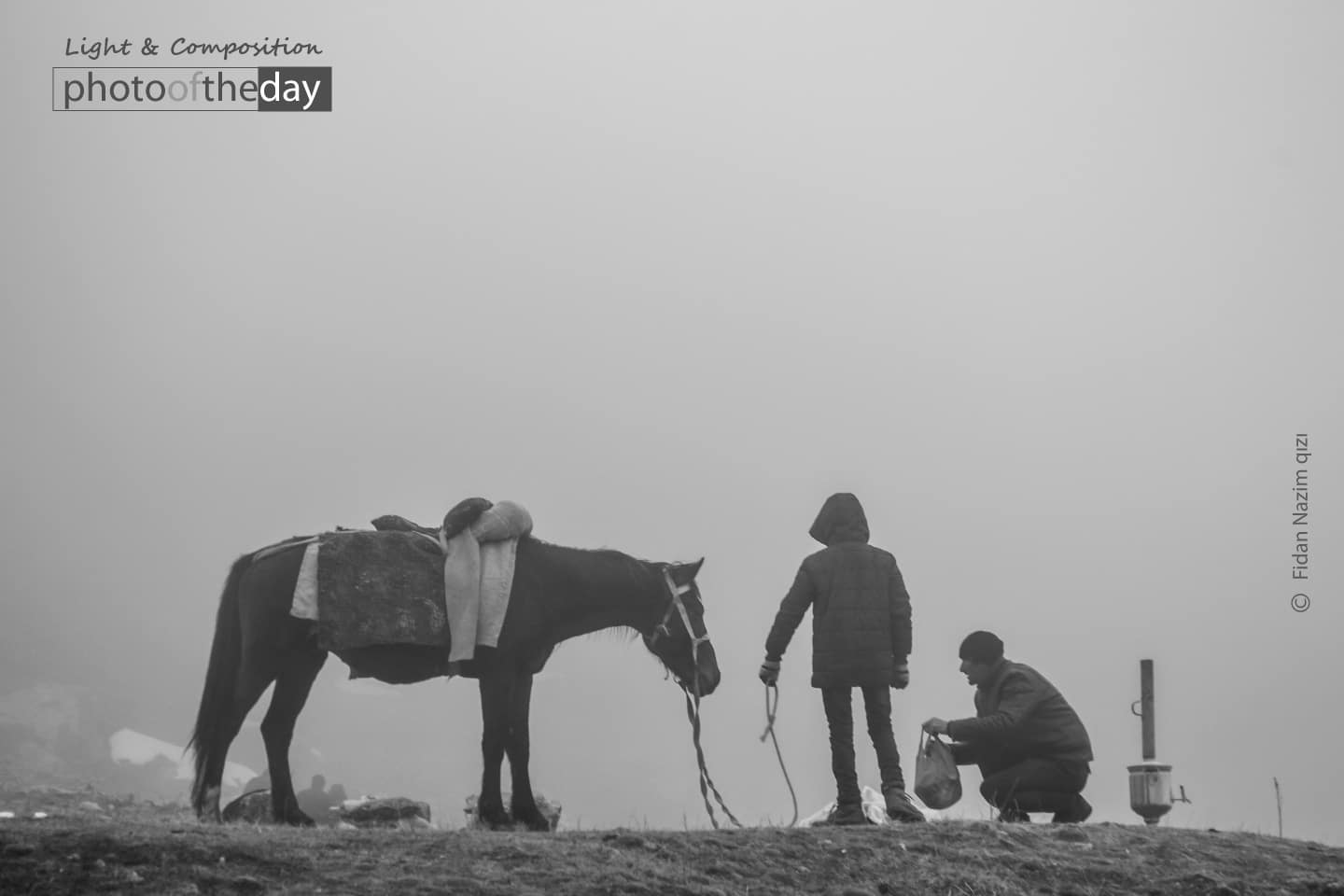
In this evocative capture, a father and son share a quiet moment over traditional samovar tea in Quba, Azerbaijan. The photographer highlights the cultural significance of 'chay,' where freshly brewed, strong tea is served in iconic pear-shaped armudu glasses. By focusing on the steam and the intimate interaction between the pair, the image transcends a simple portrait to become a testament to Azerbaijani hospitality and ancient customs. The composition is particularly award-worthy for its ability to transform a daily ritual into a timeless, atmospheric narrative, beautifully rendered in the classic black and white medium.
Fidan Nazim Qizi
Born in Baku, Azerbaijan, Fidan Nazim Qizi continues to reside in her home city while frequently traveling abroad to document the world. An avid hiker and nature enthusiast, she found her primary artistic inspiration in the works of Vivian Maier, which led her to specialize in the black and white medium. Fidan views photography as a vital source of energy and inspiration, using her lens to capture the profound feelings and human connections found within everyday life.
Resonance Score Breakdown
Transparency Note: The resonance score (10.1/20) is calculated based on social engagement metrics collected before the award announcement.
Expert Photography Reviews · 4
The Steam of Yesterday
There is a specific silence that lives in the space between two people when they are not speaking, but are instead occupied by the ritual of a shared drink. It is not an empty silence; it is a heavy, warm thing, like the weight of a wool coat kept in a cedar chest.
Read the reflection →The Weight of Quiet
It is 3:15 am. The house has finally stopped settling, and the silence is heavy enough to touch. In the daylight, we talk to fill the gaps, terrified of what might surface if we just sat still.
Read the reflection →Reviews & Comments
Share your thoughts about this award-winning photograph. Your reviews contribute to the community engagement score.
Most submissions I’ve seen this year rely on forced drama, but this quiet ritual in Quba earns its place because it doesn’t try too hard. The steam curling against the dark backdrop anchors the frame, turning a simple tea service into a generational bridge. I’ll admit, the warmth of that moment actually made me miss my own father. It’s a rare, honest slice of life that will still feel vital thirty years from now.
The steam here isn’t just atmospheric; it’s a deliberate dissolution of the subjects. I’m genuinely moved by how the tea’s vapor obscures the father’s features, forcing us to feel the heat rather than just see the faces. It’s closer to Sugimoto’s long-exposure theatres than conventional portraiture. Why resolve the eyes when the blur tells the truth of the ritual? It’s a brave choice to let the samovar’s haze dictate the frame’s clarity.
There’s a quiet gravity here that you can’t fake. You can see the boy watching his father, learning the rhythm of the tea, not just the ritual. It’s clear they’ve forgotten the camera exists, which is the highest compliment I can pay. That steam rising between them feels like a shared breath. Honestly, looking at the father’s steady hands, I feel a sudden, sharp ache for my own home. This face has a whole life in it.
The steam rising from the armudu glass echoes the soft, diffused light of Julia Margaret Cameron’s portraits, yet it’s grounded in the stark, ethnographic clarity of early 20th-century documentary work. It’s a quiet, rhythmic scene. I’ve spent decades tracking how light defines cultural intimacy, but the way the vapor obscures the father’s features here genuinely caught me off guard. It’s a rare, tender dialogue between tradition and the ephemeral nature of the photographic moment itself.