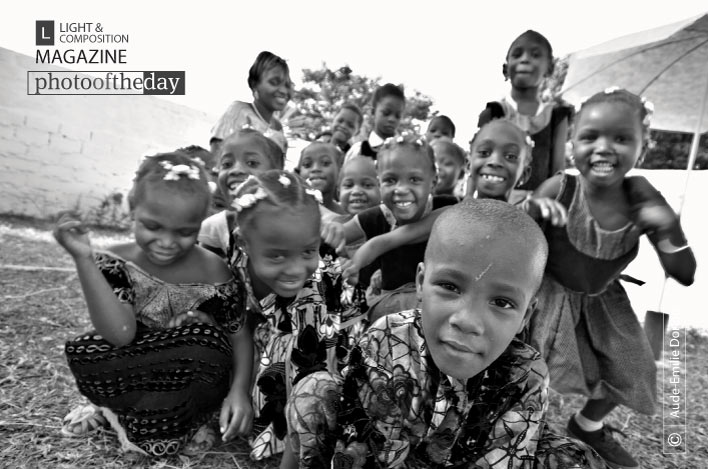
Children of Gambia by Aude-Emilie Dorion
Captured in the vibrant community of Batukunku, this poignant documentary photograph highlights the aspirations of Gambian children who balance their dedication to education with essential domestic responsibilities. The image reflects a shifting cultural landscape where parents increasingly recognize the communal value of schooling, despite the financial hurdles faced by single-parent households. Through a wide 14mm perspective, the photographer frames these young lives with dignity and intimacy, underscoring the resilience of the next generation. The work is award-worthy for its sensitive portrayal of social transformation, effectively humanizing the complex economic realities of the region while celebrating the universal hope found in learning.
Aude-Emilie Dorion
Born in France in 1980, Aude-Emilie Dorion is a freelance photographer and writer whose work is deeply rooted in the observation of globalization and economic inequity. Her practice, which often bridges the gap between artistic expression and social documentary, seeks to use photography as a catalyst for political change and public awareness. Drawing on her experience in the live performance industry, she captures the tensions and transformations of modern cultures with a keen, empathetic eye, aiming to give voice to those navigating a rapidly changing world.
Resonance Score Breakdown
Transparency Note: The resonance score (13.1/20) is calculated based on social engagement metrics collected before the award announcement.
Expert Photography Reviews · 3
The Weight of Small Hands
There is a quiet physics to the way we grow. We often imagine childhood as a season of lightness, a time defined by the absence of burden, yet anyone who has watched a young person navigate the threshold of a doorway knows better.
Read the reflection →The Weight of a Book
I spent this morning watching my neighbor’s daughter walk to the bus stop. She was carrying a backpack that looked far too heavy for her small frame, yet she moved with a strange, steady purpose. It made me think about how early we start carrying the weight of our own futures.
Read the reflection →Reviews & Comments
Share your thoughts about this award-winning photograph. Your reviews contribute to the community engagement score.
Using a 14mm lens in a documentary setting is a gamble that usually ends in cluttered chaos. Dorion, however, has clearly spent enough time in Batukunku to become invisible. She’s earned that intimacy; the children aren’t performing for a tourist. I’ve spent enough days waiting for a scene to settle to know when a photographer has stopped being an intruder. It’s a quiet, honest bit of work. She didn’t just find this; she lived it.
The light in Batukunku doesn’t just fall; it settles, heavy and warm against the earth. Aude-Emilie waited for that precise, soft glow that turns dust into gold. I’ve stood in that same heat, feeling the stillness of a day winding down. She didn’t rush these children. She let the 14mm lens breathe, capturing their quiet dignity. It’s a rare, honest grace. Looking at them, I feel a sudden, sharp ache for the simplicity of their hope.
Batukunku’s light is cruel, yet here it’s forced into a fragile truce. The 14mm lens pulls the horizon close, but it’s the encroaching shadows that truly anchor these children. They aren’t just students; they’re silhouettes carved from necessity. I’ve stared at the way the darkness clings to their clothes, and it’s haunting—it feels like the weight of their future pressing against the frame. It’s not a celebration of hope, but a quiet, stubborn refusal to vanish.
This photo is touching because it shows a typical, emotional situation when interacting with children during traveling. The photographer should be always prepared for such interaction and readiness to spend sometime with kids to be accepted as a friend, not an intruder. Sometimes is needed even to drop your plans of photographing and join the game together.