Baku Boulevard by Fidan Nazim Qizi
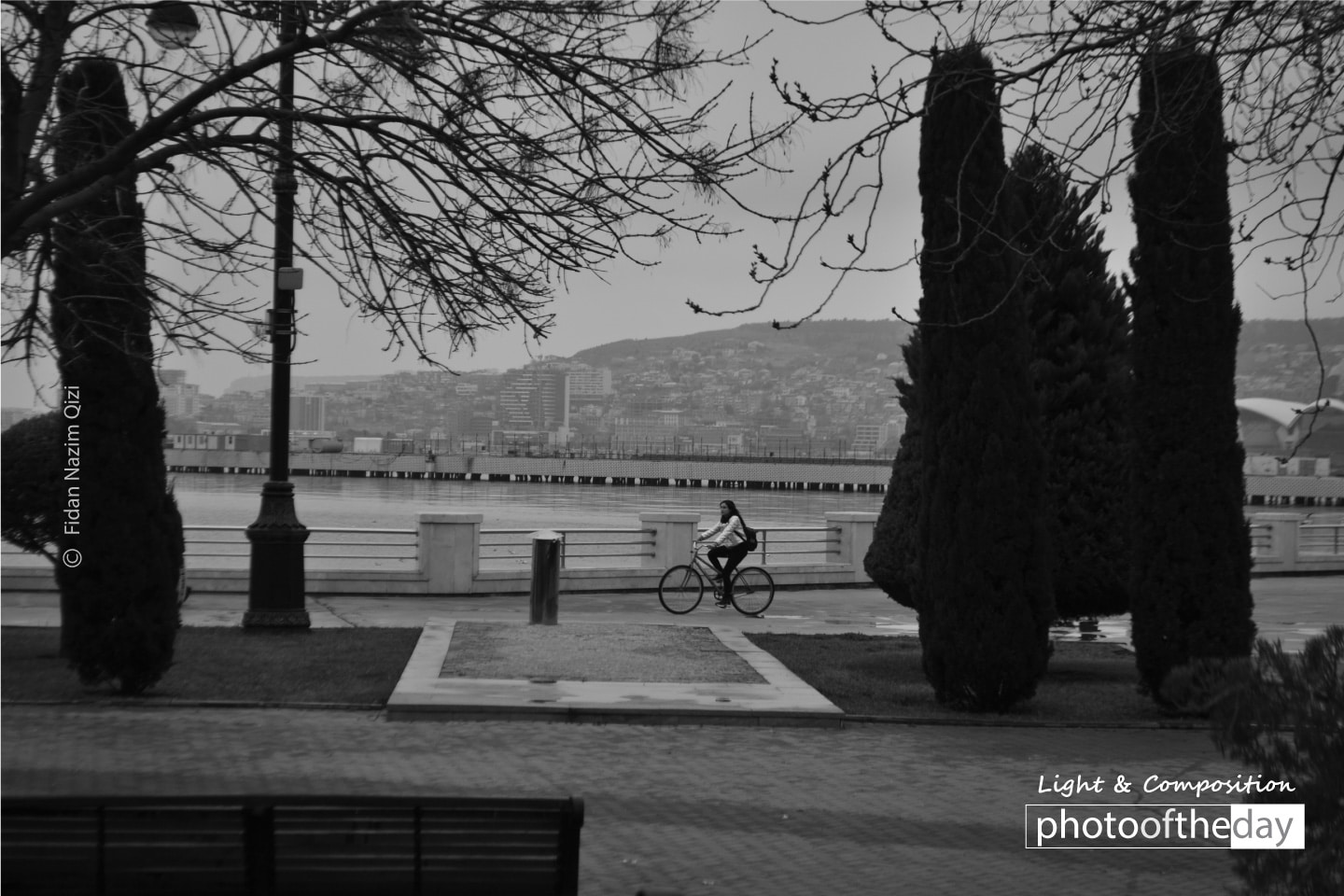
Captured along the historic Baku Boulevard, this evocative black and white photograph pays homage to a century-old promenade that has served as the city's coastal heart since 1909. The photographer masterfully utilizes the monochromatic medium to emphasize the architectural textures and the timeless atmosphere of the Caspian seafront. By stripping away the distraction of color, the image highlights the interplay of light and shadow across the park’s expansive landscape. This composition is award-worthy for its ability to transform a familiar urban landmark into a poetic study of history and stillness, reflecting a deep appreciation for the evocative power of classic photography.
Fidan Nazim Qizi
Born in Baku, Azerbaijan, Fidan Nazim Qizi maintains her base in her home city while frequently traveling abroad to explore diverse landscapes. An avid hiker with a profound love for nature and mountains, she draws significant creative inspiration from the works of Vivian Maier, which led her to specialize in the black and white medium. Fidan views photography as a vital source of energy and emotion, consistently striving to capture the deeper feelings and inspiration that life offers through her lens.
Resonance Score Breakdown
Transparency Note: The resonance score (12.6/20) is calculated based on social engagement metrics collected before the award announcement.
Expert Photography Reviews · 5
The Echo of Footsteps
In the nineteenth century, the physicist Ernst Mach suggested that the inertia of every object is determined by the presence of all other matter in the universe.
Read the reflection →The Echo of the Shore
There is a quiet rhythm to the edge of the world, where the land finally yields to the water. We often walk these paths with our minds tethered to the day’s demands, forgetting that the ground beneath us has held the footsteps of countless others for generations.
Read the reflection →Reviews & Comments
Share your thoughts about this award-winning photograph. Your reviews contribute to the community engagement score.
Baku Boulevard feels like a ghost story told in monochrome. By stripping the Caspian coast of its color, Fidan Nazim Qizi demands we focus on the architecture, but I find myself searching for the people she’s erased. Why does this historic promenade look so hollow? Is this stillness a tribute to heritage or a sanitization of public life? It’s haunting, sure, but I can’t shake the feeling that something vital is missing from the frame.
The frame’s geometry relies on the promenade’s receding lines to anchor the Caspian horizon. It’s a rigid, calculated perspective. The negative space surrounding the central figures creates a necessary, cold isolation. While the tonality lacks depth, the spatial tension holds the eye firmly within the frame’s perimeter. I’ve grown weary of such predictable vanishing points, yet the structural discipline here is undeniable. It’s a precise, if somewhat sterile, arrangement of urban mass.
The curator calls this a study of stillness, but I find it frustratingly static. It’s a safe, sharp postcard of Baku Boulevard that refuses to breathe. Why resolve every architectural detail when the Caspian wind demands movement? I’d have preferred a long exposure to dissolve those rigid textures into something ethereal, closer to Hiroshi Sugimoto’s theatres. It’s technically competent, sure, but it’s just so polite. Where’s the risk? I’m bored by such perfect, predictable clarity.
Baku Boulevard feels like a quiet conversation I wasn’t invited to join. The stillness here is heavy, but it’s missing that spark of human connection I look for. I’ve spent years watching how people hold themselves when they’re truly seen, and here, the subjects feel like part of the scenery rather than living, breathing souls. It’s a beautiful study of light, sure, but I’m left wanting to know who they are behind those shadows.
We walk along the Caspian, but we aren’t looking at the architecture. We’re looking for the ghosts of the people who’ve paced this boulevard for a century. Fidan has stripped away the color, leaving only the quiet weight of history. I feel a sudden, sharp ache for the conversations lost to the wind here. It’s a portrait of a place that has listened to everyone, yet keeps its own secrets. It’s a photograph that demands we stay.