A Man at Wide View by Karthick Saravanan
In the vast, tranquil expanse of the Sundarbans, a lone figure is captured against the rhythmic meeting of earth and sea. Utilizing a wide-angle perspective, the photographer emphasizes the grandeur of the horizon, where sand and water merge in a serene, timeless tableau. The image masterfully balances the scale of the environment with the contemplative presence of the subject, freezing a moment of profound solitude. This photograph is award-worthy for its evocative composition and the technical precision that renders the natural textures of the landscape with exquisite clarity, turning a simple coastal scene into a meditative study of nature’s embrace.
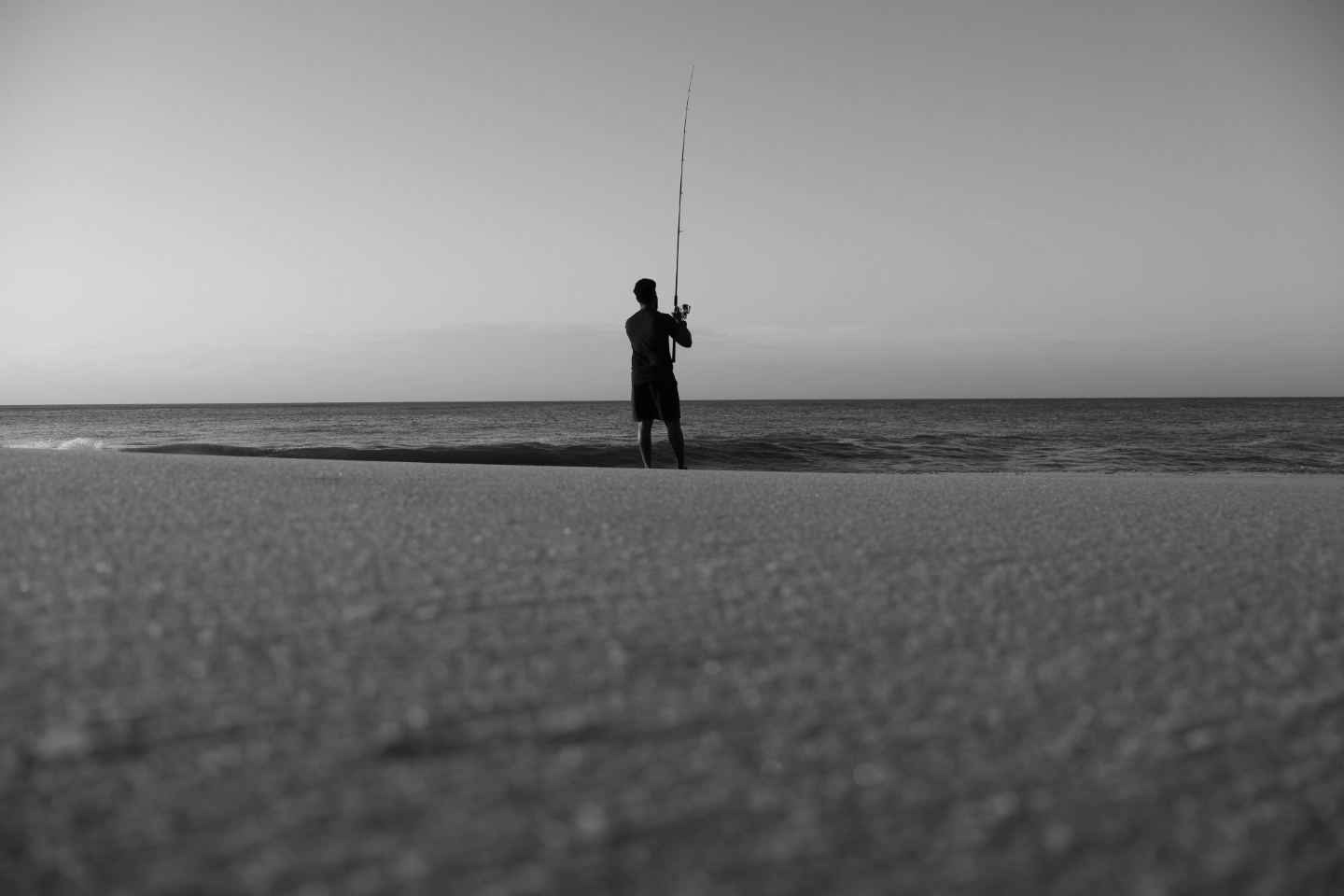
Exposure 1/500sec @ f/4.5 | ISO 100 | Focal Length 18mm
Karthick Saravanan
Based in Chennai, India, Karthick Saravanan is a dedicated photographer celebrated for his evocative storytelling and mastery of monochrome aesthetics. His artistic journey, which began during his teenage years, evolved significantly as he honed his ability to capture the essence of both living and non-living subjects through a unique, contemplative lens. Whether documenting the quiet rhythms of nature or the raw emotions of street life, his work serves as a testament to the enduring power of visual narrative, consistently resonating with audiences through its depth and timeless composition.
Resonance Score Breakdown
Transparency Note: The resonance score (8.1/20) is calculated based on social engagement metrics collected before the award announcement.
Expert Photography Reviews · 8
The Weight of the Horizon
I keep a small, smooth stone on my desk, pulled from a riverbed I haven't visited in twenty years. It is cold, heavy, and unremarkable to anyone else, but it carries the silence of that particular water.
Read the reflection →The Edge of Belonging
We often mistake the periphery for the unimportant. In urban theory, we are taught to look at the center—the plaza, the market, the intersection—where the density of human interaction creates a legible history of power and access.
Read the reflection →Reviews & Comments
Share your thoughts about this award-winning photograph. Your reviews contribute to the community engagement score.
The horizon in the Sundarbans doesn’t wait for anyone. Karthick caught this man right as the tide and sky aligned. It’s that rare, quiet tension Winogrand chased. One tenth of a second later and the figure loses that perfect isolation against the mudflats. I’m actually holding my breath looking at the scale here. It’s lonely, sharp, and honest. He didn’t hesitate. He saw the geometry of the solitude and clicked. That’s the decisive moment, pure and simple.
The Sundarbans’ brackish, sediment-heavy water is a nightmare for optics, yet here, the light behaves differently. By stripping away the muddy, yellow-green colour shift typical of these mangroves, the monochrome choice highlights the refractive dance between the tide and the silt. It’s a stark, honest look at the boundary where the ocean swallows the land. I find myself holding my breath, feeling that familiar, heavy silence of the shallows. It’s a hauntingly precise capture of stillness.
We look at this man in the Sundarbans and we wonder what he heard before the shutter clicked. He isn’t just standing against the tide; he’s listening to the water’s long, rhythmic history. Karthick didn’t just frame a landscape; he held space for a soul. It’s quiet, yet it feels heavy with everything he hasn’t said. I find myself wanting to sit beside him in that sand. It’s a photograph that asks to be returned to.
The Sundarbans isn’t a backdrop for human contemplation; it’s a fragile, dangerous sanctuary. Using an 18mm lens here suggests the photographer was right on top of the tide line, likely disturbing the very stillness they claim to capture. I’ve spent weeks in these mangroves, and the silence is sacred. This feels like an extraction, not a connection. It’s technically sharp, sure, but it leaves me cold. Why must we always insert ourselves into the frame?
The horizon acts as a brutal datum, slicing the frame into a binary of mud and sky. It’s a vast, unbuilt void that makes me ache for the tactile resistance of a wall. By stripping away all fenestration and structure, Saravanan forces us to confront the scale of the human figure against the infinite. It’s lonely, sure, but there’s a strange, quiet honesty in how the light flattens the sand, revealing the architecture of emptiness.
Before the eye identifies the man, something in the chest tightens. The vast, grey horizon pulls the breath right out of you, leaving a hollow ache where the tide meets the silt. It’s a quiet, heavy solitude that I’ve felt in my own dreams. When I return to this frame, the silence feels louder, pressing against my skin. It doesn’t just show a landscape; it forces you to confront the scale of your own small, drifting existence.
The horizon line bisects the frame at a near-perfect 1:3 ratio, anchoring the vertical axis of the figure against the vast negative space of the mudflats. Saravanan’s use of the 18mm focal length creates a forced perspective that pulls the eye toward the subject’s singular, dark mass. It’s a beautifully solved spatial equation. I’m genuinely moved by how the geometric tension between the man and the infinite horizon creates such a profound sense of equilibrium.
You’ve captured a rare kind of silence here. Most people would have zoomed in, but you let the Sundarbans swallow him whole. It’s a lonely frame, and honestly, it makes my chest tighten just looking at it. You didn’t just take a picture of a landscape; you waited until the world felt big enough to hold his solitude. And that’s the truth of it. You were there, you felt the scale, and you didn’t blink.