Lost in the Vastness by Dipanjan Mitra
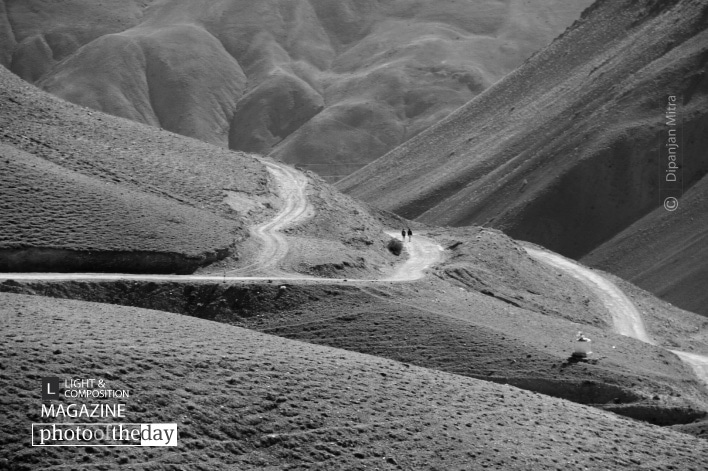
Captured amidst the rugged, towering peaks of the Indian Himalayas, this photograph encapsulates the profound sense of insignificance one feels when confronted by nature's immense scale. Taken while in motion, the image conveys the fleeting, ethereal beauty of the mountain landscape as the photographer traversed the challenging terrain. The composition is award-worthy for its ability to translate the overwhelming vastness of the high-altitude environment into a singular, contemplative frame. By balancing the technical demands of shooting from a moving vehicle with a keen eye for atmospheric depth, the photographer successfully invites the viewer to experience the quiet, humbling majesty of the Himalayas.
Dipanjan Mitra
Based in Calcutta, India, Dipanjan Mitra is a dedicated photographer who balances a long-standing career in software engineering with a deep-seated passion for exploring the Indian landscape. Since beginning his photographic journey in 2006, he has evolved from using entry-level digital cameras to mastering professional equipment, constantly seeking to capture the magic of light and form. His work is driven by an enduring fascination with the natural world, reflecting a commitment to documenting the beauty of the terrains he traverses.
Resonance Score Breakdown
Transparency Note: The resonance score (13.9/20) is calculated based on social engagement metrics collected before the award announcement.
Expert Photography Reviews · 5
Small Against the Sky
I stood on my balcony this morning, holding a mug that had gone cold, and watched a single ant navigate the wide, gray expanse of the concrete floor. It looked so purposeful, yet so incredibly tiny against the scale of the building.
Read the reflection →The Architecture of Silence
We spend our lives building walls of certainty, brick by heavy brick, convinced that our small stories are the center of the world. But there are places where the earth refuses to acknowledge our noise.
Read the reflection →Reviews & Comments
Share your thoughts about this award-winning photograph. Your reviews contribute to the community engagement score.
The mountains recede into a haze of grey. It’s a blur of stone and sky. I’ve spent minutes staring at the lower third of the frame. Nothing here is accidental. The empty corner is not empty. It’s a breath held in the cold air of Himachal. I feel a sudden, sharp loneliness looking at it. It’s the weight of the silence. Mitra doesn’t force the scale. He lets the mountain simply exist. It’s enough.
The Himalayan peaks bleed into a bruised, melancholic indigo, reminiscent of Turner’s late, vaporous horizons where light doesn’t merely land, but dissolves. It’s a haunting, glacial palette that makes my own chest ache with the cold. One finds the grey-blue of shallow tidal water at dusk clinging to the jagged rock faces, a chromatic dissonance that feels like a Morandi still life expanded to the scale of the infinite, capturing a silence that’s truly profound.
Shooting from a moving vehicle is a gamble, and usually, it’s a lazy one. One suspects the shutter was pressed in haste, hoping the Himalayas would do the heavy lifting. I’ve spent weeks shivering in those passes, waiting for the light to actually commit. This doesn’t feel earned; it feels like a lucky glance through a window. It’s pretty enough, I suppose, but I’d have preferred the photographer stepped out and felt the cold.
The mountains don’t care if we’re passing through. I feel a strange, cold ache in my chest looking at these jagged peaks; it’s the loneliness of the high altitude. Mitra didn’t force this frame. He waited for the light to soften against the rock, catching the mountain’s breath while in motion. It’s a humble surrender to the scale of Himachal. He wasn’t just taking a picture; he was listening to the silence of the stone.
The Himalayas aren’t just rock; they’re a crushing silence. Mitra captures the blur of motion, yet it’s the deep, bruised shadows clinging to the ravines that hold the real weight. I’ve stared at these jagged ridges until my eyes ached, feeling the terrifying indifference of the earth. It’s not a landscape; it’s a confrontation. When light fails to penetrate those crevices, we’re forced to acknowledge that some things aren’t meant to be seen.