Road Through A Dying Landscape by Arnaud Vlaminck
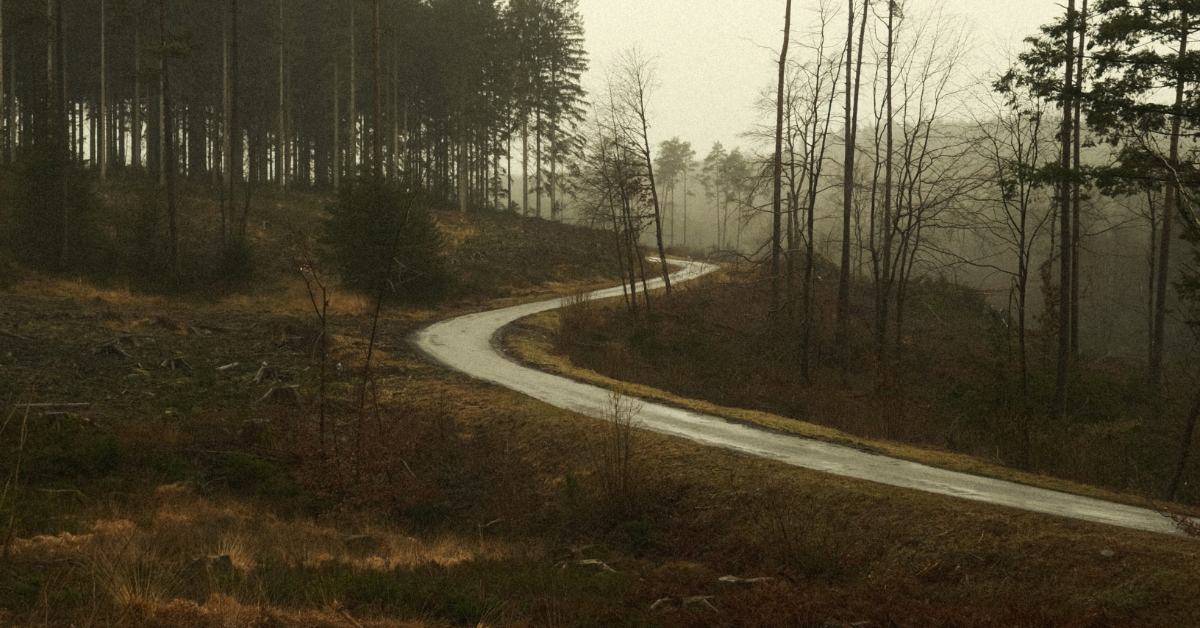
Captured under a moody, damp Belgian sky, this photograph explores the stark intersection of nature and human impact. The photographer was struck by the visual tension between the raw beauty of the landscape and the encroaching presence of concrete roads and deforestation. By quickly pulling over during a hike, the photographer immortalized a fleeting, somber moment where the environment feels both fragile and imposing. The image is award-worthy for its evocative atmosphere and its ability to transform a simple roadside observation into a poignant commentary on the changing natural world.
Arnaud Vlaminck
Hailing from Belgium, Arnaud Vlaminck discovered his passion for photography while traveling with minimal equipment, eventually investing in professional gear to better articulate his creative vision. A dedicated educator by profession, he balances his artistic pursuits with training in digital marketing and content creation to turn his lifelong passion into a sustainable career. His work is deeply influenced by his nomadic spirit, as he consistently carries his camera to document the world through a unique, observant lens.
Resonance Score Breakdown
Transparency Note: The resonance score (7.1/20) is calculated based on social engagement metrics collected before the award announcement.
Expert Photography Reviews · 7
The Path We Carved
When I was ten, my grandfather took me to the edge of the woods behind his house to show me where the old tractor path had been swallowed by the brambles. He pointed to a rusted piece of iron half-buried in the mud, a relic of a road that no longer led anywhere.
Read the reflection →The Weight of the Path
I keep a pressed fern inside a heavy dictionary, its edges brittle and the color of a winter dusk. It was plucked from a forest floor that no longer exists, replaced years ago by the grey, unyielding reach of a highway.
Read the reflection →Reviews & Comments
Share your thoughts about this award-winning photograph. Your reviews contribute to the community engagement score.
The road acts as a harsh datum, slicing through the landscape with a brutal, man-made indifference. It’s a study in the failure of threshold; there’s no transition between the wild and the paved. I’m struck by how the light flattens the mass of the trees, turning them into a mere backdrop for the asphalt’s cold geometry. It’s unsettling. I’ve walked these Belgian fringes, and this frame captures that specific, lonely ache of encroaching concrete perfectly.
The frame holds a heavy, suffocating silence. It’s a tracking shot that stopped dead, catching the road’s grey scar cutting through the Belgian gloom. I’ve felt that damp chill in my bones before; it’s the kind of atmosphere that makes you hold your breath. Vlaminck didn’t overthink the cut. He just let the landscape bleed into the concrete. It’s a brutal, honest edit. I’d have kept this frame exactly as it is. It’s perfect.
The damp, bruised sky of Charleroi presses down on the asphalt, turning the road into a jagged scar across the earth. It’s a lonely, suffocating geometry. I find myself shivering at the sight of those skeletal trees, their limbs reaching out like desperate fingers. Without a human subject, the landscape itself becomes the portrait; it’s a study of abandonment. It’s haunting how the concrete feels more permanent than the forest. I’ve never felt such profound, quiet grief.
Vlaminck’s road in Charleroi feels trapped in a conventional trap. It’s technically competent, yet it’s suffocated by the obsession with clarity. Why resolve the texture of the asphalt when the landscape is dying? I’d have preferred a long, dragging shutter to dissolve that concrete into the grey Belgian sky. It’s closer to Sugimoto’s theatres than this rigid documentation. I’m genuinely frustrated; there’s a haunting, fragile ghost here that the lens simply refused to let breathe.
At f/4.5, the XF 16-80mm renders the damp asphalt with a clinical sharpness that reveals the micro-texture of the aggregate. It’s a fascinating use of the focal plane to isolate the road’s decay against the soft, atmospheric diffusion of the Belgian background. I’m genuinely moved by how the lens captures the light scattering across those wet, fractured surfaces. It’s a haunting, precise intersection where the physics of glass meets the stark, cold reality of environmental loss.
1/125sec at f/4.5, 25mm. A pedestrian choice for a landscape. At f/4.5, the depth of field is lazy, failing to isolate the road’s texture from the encroaching decay. It’s a compromise that lacks conviction. I’ve seen this exact hesitation in every amateur’s portfolio. The sensor’s potential is wasted on a middle-ground aperture that commits to nothing. It’s technically timid. Honestly, the lack of sharpness in the foreground makes my teeth ache. It’s a missed opportunity.
The bruised, slate-grey sky of Charleroi bleeds into the road’s asphalt, a charcoal hue reminiscent of Morandi’s dustiest bottles, yet it’s the sudden, sickly ochre of the dying foliage that truly breaks one’s heart. It’s a chromatic collision, a damp, melancholic dissonance that I’ve felt in my own bones during Belgian winters. The light doesn’t merely illuminate; it suffocates, wrapping the landscape in a cold, suffocating shroud of muted, mournful pigments that refuse to harmonize.