Nature Naturally by Sanjoy Sengupta
In this intimate close-up, the photographer descends to the forest floor to capture the vibrant, intricate details of buttonhead mushrooms nestled in a lush, green backyard. By choosing a low perspective, the image transforms humble fungi into a striking feast of color and texture. The composition highlights the delicate organic forms against a soft, natural backdrop, showcasing the beauty found in the photographer's own village. This award-winning shot demonstrates a keen eye for macro detail and a patient approach to natural subjects, elevating a simple backyard scene into a compelling study of nature’s quiet elegance.
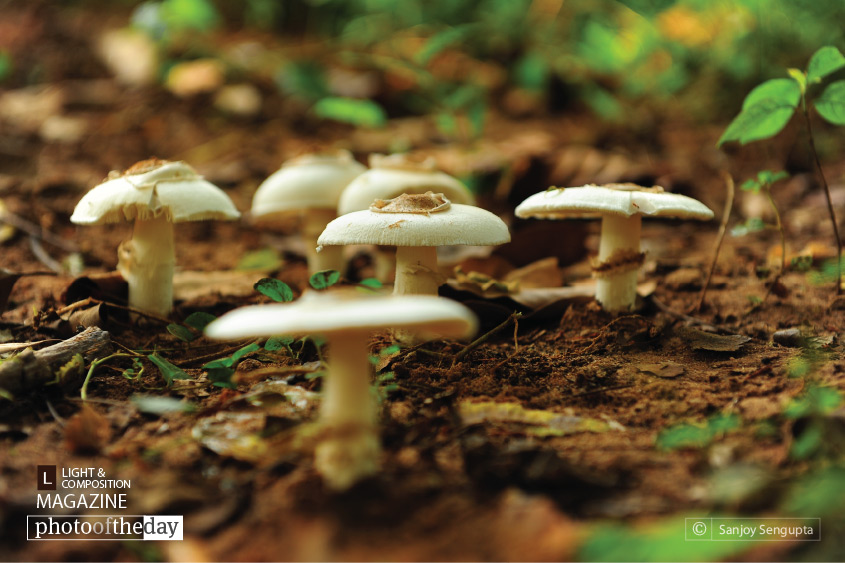
Exposure 1/160sec @ f/4 | ISO 200 | Focal Length 70mm
Sanjoy Sengupta
Based in Muscat, Oman, Sanjoy Sengupta is a dedicated photographer whose journey began with film cameras in the late 1980s. After years of experimenting with various point-and-shoot and hybrid models, he transitioned to professional Nikon DSLR equipment, which marked the beginning of his formal technical development. His work is driven by a desire to capture and preserve the fleeting, beautiful moments of life, reflecting a lifelong passion for documenting the world around him with increasing precision and artistic intent.
Resonance Score Breakdown
Transparency Note: The resonance score (12.4/20) is calculated based on social engagement metrics collected before the award announcement.
Expert Photography Reviews · 4
The Quiet Beneath Our Feet
There is a rhythm to the earth that we often overlook, a slow, deliberate pulse that exists beneath the noise of our daily lives.
Read the reflection →The Architecture of Decay
There is a specific silence that belongs to the forest floor, a damp, heavy quiet that follows the end of a bloom.
Read the reflection →Reviews & Comments
Share your thoughts about this award-winning photograph. Your reviews contribute to the community engagement score.
The forest floor breathes. These buttonheads don’t demand attention; they simply exist. I’ve spent minutes watching the soft blur behind them. It’s a quiet, green hum. The space between the fungi isn’t just distance. It’s a pause. I feel my own pulse slow down when I look at this. Nothing here is accidental. The empty corner is not empty. It’s the silence of the woods, held perfectly still. It’s enough.
The damp earth of Jhargram holds a quiet pulse. Sanjoy knelt here, likely ignoring the ache in his knees, to listen to these buttonhead mushrooms. It’s a humble communion. I’ve spent enough mornings in the dirt to recognize that stillness; he didn’t rush the light. Looking at the soft, green blur behind those caps, I feel a sudden, sharp longing for the forest floor. It’s a gentle reminder that the sacred often hides in the smallest shadows.
Fungi aren’t merely organic matter; they are the earth’s quietest philosophers. Sengupta’s buttonheads emerge from the loam, yet I’m troubled by the light. It’s too eager, too revealing. Where the shadows should deepen into the abyss of the forest floor, they instead retreat, leaving the textures exposed and vulnerable. It’s a pretty study, sure, but it lacks the necessary darkness to let the subject truly think. I’d have preferred a silence that the light couldn’t touch.
The composition relies on a tight cluster of circular forms, creating a rhythmic sequence across the lower-left quadrant. By anchoring the primary buttonhead at the intersection of the rule-of-thirds grid, Sengupta balances the negative space of the blurred foliage perfectly. It’s a precise spatial equation. I’m genuinely captivated by how the radial symmetry of the fungi disrupts the chaotic green vectors. It’s rare to see such organic disorder solved with this level of geometric clarity.