The Architecture of Decay
There is a specific silence that belongs to the forest floor, a damp, heavy quiet that follows the end of a bloom. I remember the way the old oak in my grandmother’s yard would shed its life in stages—first the vibrant, stubborn green, then the brittle brown, and finally, the soft, pulpy surrender to the earth. We often mistake the end of a thing for its disappearance, but the forest knows better. It understands that nothing is ever truly gone; it is merely rearranged. The mushroom, rising from the rot of what was once a leaf or a fallen branch, is a testament to the persistence of form. It is a ghost made of fiber and moisture, feeding on the memory of the tree. We look for permanence in stone and steel, yet the most enduring things are those that know how to dissolve and return. If the earth is a graveyard of everything that has ever lived, what is currently pushing its way through the soil to meet the light?
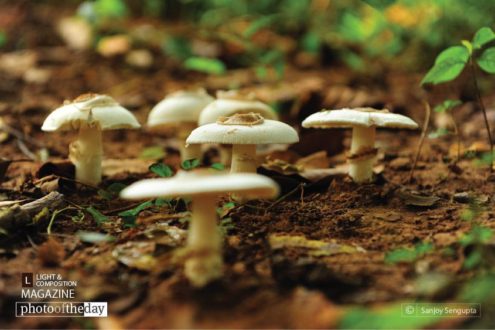
Sanjoy Sengupta has captured this quiet cycle in his image titled Nature Naturally. He finds the life that thrives in the wake of what has passed, reminding us that even the smallest decay is a beginning. Does this view change how you look at the ground beneath your feet?