Zuppa di Zucca in the Andes by Rodrigo Aliaga
In this evocative culinary study, the photographer captures the essence of a pumpkin soup set against the rugged backdrop of the Andes. By juxtaposing the vibrant, warm hues of the yellow soup and orange pumpkin with the sharp, cool contrast of a fresh green garnish, the image achieves a sophisticated visual harmony. The composition was meticulously crafted to fulfill an assignment highlighting the relationship between a finished dish and its raw ingredients. This deliberate play of color and texture, combined with a shallow depth of field, elevates a simple meal into a compelling, award-worthy narrative of Andean gastronomy.
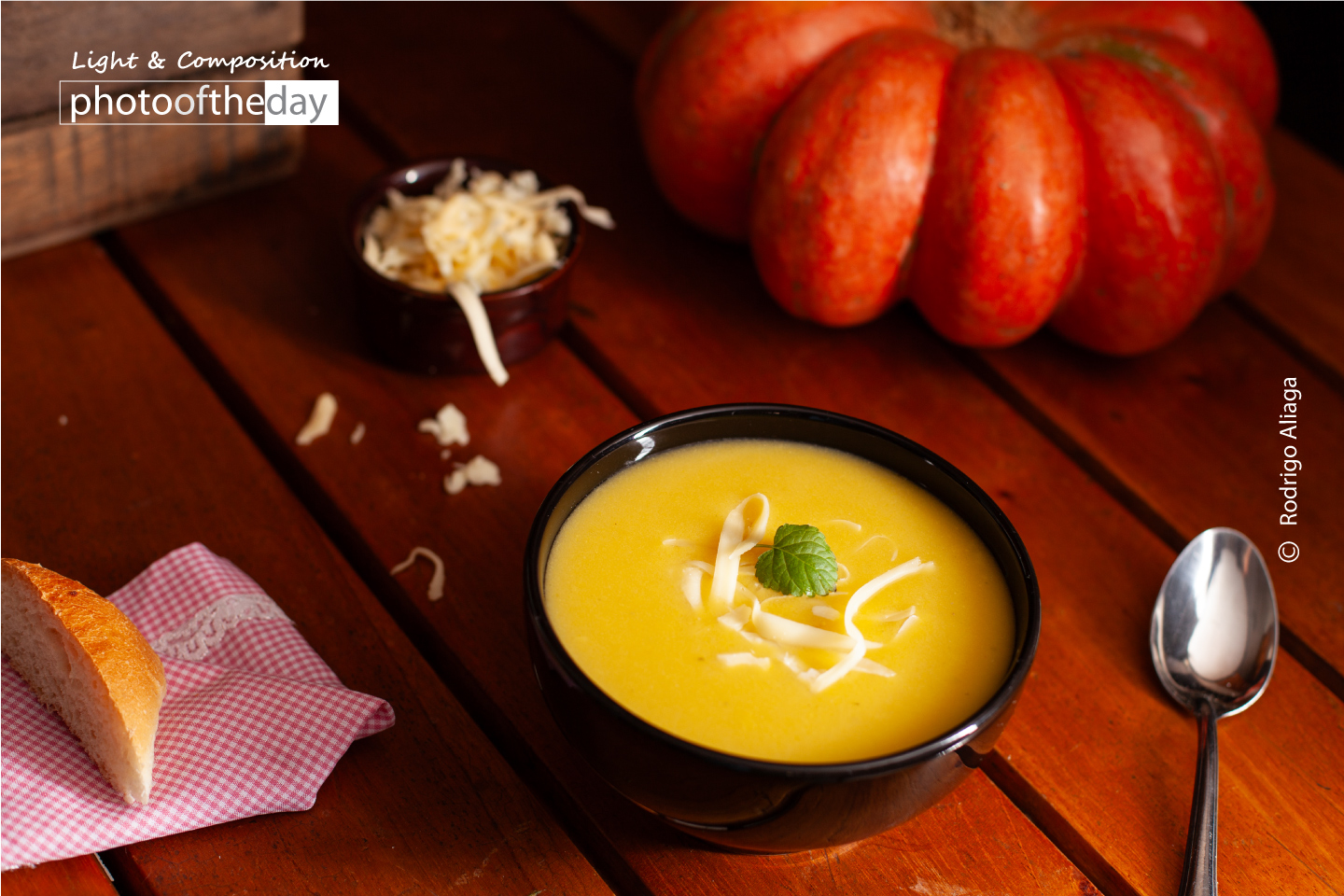
Exposure 1/40sec @ f/3.5 | ISO 100 | Focal Length 50mm
Rodrigo Aliaga
Born in La Paz, Bolivia, Rodrigo Tato Aliaga is a seasoned director of photography with an extensive background in film production and television advertising. His transition into digital photography allowed him to refine his technical precision, ultimately leading him to specialize in food photography. Aliaga masterfully blends his creative vision with rigorous technical execution, consistently striving to produce exquisite imagery that engages the senses and showcases his unique perspective on culinary art.
Resonance Score Breakdown
Transparency Note: The resonance score (7.8/20) is calculated based on social engagement metrics collected before the award announcement.
Expert Photography Reviews · 5
The Sustenance of Presence
Seneca once remarked that we are often more concerned with the preparation of our lives than with the living of them. We spend our days gathering, arranging, and refining, yet we frequently fail to taste the fruit of our own labor.
Read the reflection →The Weight of Sustenance
I usually find the glorification of food in images to be a tedious exercise in vanity. We are so quick to aestheticize the things that keep us alive, turning the basic necessity of fuel into a performance of color and texture.
Read the reflection →Reviews & Comments
Share your thoughts about this award-winning photograph. Your reviews contribute to the community engagement score.

Aliaga’s shallow depth of field recalls the soft, selective focus of Julia Margaret Cameron, yet here it serves the modern culinary aesthetic. The vibrant pumpkin hues against the Andean chill evoke the tonal precision of early Kodachrome, though it’s the raw, unrefined texture of the garnish that truly catches my eye. It’s a refreshing departure from the sterile, over-lit food photography I’ve endured for decades. I’m genuinely charmed by how he’s grounded such fleeting warmth in that rugged landscape.
At f/3.5, the 50mm focal plane renders the soup’s viscosity with startling clarity. The bokeh, a function of the wide aperture, softens the Andean backdrop into a creamy, atmospheric blur that isolates the texture of the pumpkin. I’m genuinely moved by how the light refracts through the garnish’s moisture; it’s a microscopic brilliance the naked eye usually misses. It’s a rare moment where the lens’s resolution perfectly captures the raw, vibrant soul of the ingredients.
That vibrant pumpkin soup glows, but I’m left cold. Why does the Andes backdrop remain a blurry, exoticized smudge? It’s a classic aesthetic trap: using a landscape as a mere condiment for a bowl of food. Does the raw pumpkin sitting beside the dish actually belong to the local market, or is it a prop for a Western lens? I’d prefer a meal that doesn’t treat an entire mountain range like a decorative garnish.
La Paz isn’t a studio; it’s a living, breathing beast. This shot is technically pretty, but it’s too polite. Where’s the grit? Where’s the chaos of the Andes? It’s a still life in a city that never stops moving. I’m looking for the steam rising, a hand reaching, the life behind the bowl. It’s clean, sure, but it’s static. One tenth of a second later and the soup could’ve told a story. I’m bored.
The soup glows with a desperate, synthetic warmth, yet it’s the encroaching Andean gloom that truly feeds the frame. I’m unsettled by how the darkness swallows the bowl’s edge, turning a simple meal into a void. It’s not about the ingredients; it’s about what the shadows refuse to reveal. When I look at those murky depths, I feel a sudden, cold hunger for something the light can’t provide. It’s a haunting, hollow victory.