What to Do Now? by Sanjiban Ghosh
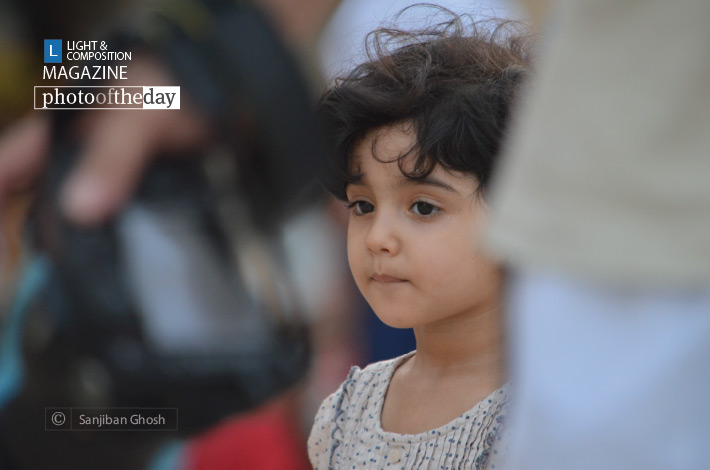
In the bustling squares of Doha, where pigeons gather in abundance, Sanjiban Ghosh captured a poignant moment of childhood contemplation. While composing the shot, an unexpected interruption threatened to ruin the frame, yet the resulting image preserved a perfect, candid expression of the child. This photograph stands out for its ability to transform a fleeting, potentially compromised moment into a narrative of quiet human connection. The photographer’s patience and keen eye for authentic emotion amidst a chaotic environment elevate this work, showcasing a remarkable ability to find beauty in the unplanned.
Sanjiban Ghosh
Sanjiban Ghosh is an engineer currently based in Doha, Qatar, who balances his professional career with a deep-seated passion for photography. A dedicated self-learner, he transitioned from point-and-shoot cameras to DSLR equipment to better document the architectural, travel, and landscape scenes he encounters. His work serves as a window into the diverse cultures and beauty of the world, reflecting his commitment to sharing the wonderful events of daily life with a global audience.
Resonance Score Breakdown
Transparency Note: The resonance score (12.6/20) is calculated based on social engagement metrics collected before the award announcement.
Expert Photography Reviews · 8
The Weight of Stillness
The smell of damp earth after a sudden downpour always pulls me back to the feeling of being small. It is a heavy, grounding scent that settles deep in the lungs, reminding me of afternoons spent sitting on a porch, waiting for the world to decide what happens next.
Read the reflection →The Weight of Small Decisions
Why do we assume that the smallest among us are not carrying the heaviest questions? We often mistake the stillness of a child for a lack of purpose, a mere pause between bouts of play.
Read the reflection →Reviews & Comments
Share your thoughts about this award-winning photograph. Your reviews contribute to the community engagement score.
The frame holds a breath. It’s that split second before the chaos of the square swallows the subject whole. Ghosh caught the stillness in the boy’s eyes, a quiet tension that makes the shutter speed feel like a deliberate choice rather than a necessity. I’ve spent hours in editing suites looking for this kind of honesty. It’s the frame the editor keeps because the cut would have been a mistake. It’s beautiful, really. It just works.
Before the eye identifies the child, something in the chest tightens. It’s the stillness of the boy against the blurred, chaotic motion of Doha’s pigeons that triggers a sudden, sharp intake of breath. I feel a phantom weight in my own hands, mirroring his aimless posture. When I return to this a year later, the quiet isn’t just his; it’s the echo of every moment I’ve spent wondering what comes next. It’s hauntingly human.
Doha’s heat is a brutal companion, yet here’s a child caught in a rare, quiet stillness. One suspects the photographer didn’t just stumble upon this; he likely stood in that glare until his boots felt like ovens. It’s a decent bit of timing, though I’d have preferred a tighter aperture to lose that distracting background. Still, I find myself lingering on the boy’s expression. It’s a genuine moment, earned through sheer, sweaty persistence. Not bad at all.
The light in Doha doesn’t just fall; it presses against the skin. He stood there, waiting for the chaos of the square to settle into a singular, breathless question. I’ve felt that same stillness when the world finally stops moving. It’s a quiet ache, watching the boy’s face as he contemplates the pigeons. He wasn’t rushing. He listened to the light until it revealed this small, heavy truth. It’s a beautiful, lonely moment to hold.
The ochre dust of Doha clings to the child’s garment, a shade reminiscent of Morandi’s muted, melancholic earth tones, grounding the frame in a stillness that feels almost sacred. It’s the way the light catches the pale, sun-bleached concrete that truly moves me; I’m breathless at how the warmth of the stone harmonizes with the boy’s quiet gaze, creating a chromatic resonance that transcends the chaos of the square, turning a fleeting moment into pure, suspended poetry.
Most candid shots of children in public squares are forgettable clutter, but this one sticks. It’s the tension between the boy’s stillness and the chaotic blur of the pigeons that forces you to pause. I’ve seen thousands of street frames, and most fail because they lack this specific gravity. The way he’s looking off-frame makes me wonder what he’s actually seeing. It’s a quiet, honest anchor in a world that usually moves too fast to care.
We look at this child in Doha and we see the weight of a question he hasn’t yet learned to voice. Amidst the fluttering pigeons and the city’s rush, he’s paused, caught in a stillness that feels heavy with wonder. I’ve spent hours staring at his eyes; they hold a quiet gravity that pulls me in. It’s a rare, honest moment of solitude. I find myself wanting to sit beside him, just to listen.
Doha’s light doesn’t just illuminate; it interrogates. In this frame, the child’s stillness amidst the chaotic flutter of pigeons isn’t merely a candid pause. It’s a confrontation with the void. I’ve stared at his eyes for an hour, feeling that heavy, existential dread we all recognize but rarely name. Ghosh understands that shadow isn’t an absence here—it’s the weight of a future yet unwritten. It’s haunting, really. The darkness doesn’t hide; it defines the silence.