We´ll Always Have Paris by Ana Sylvia Encinas
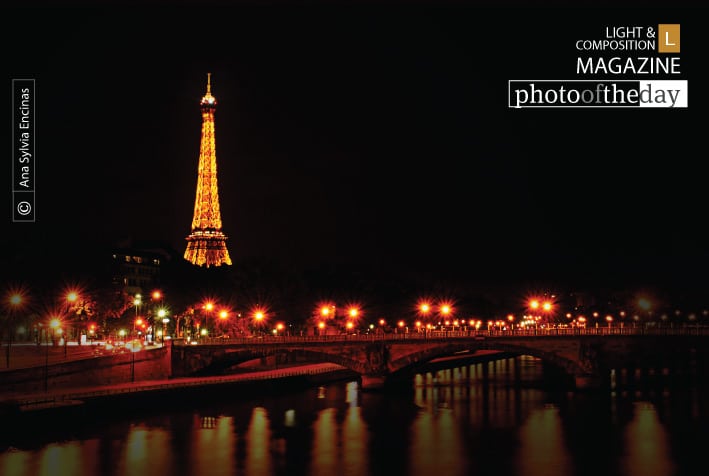
Captured from the iconic Alexander III bridge, this photograph frames the Eiffel Tower through a lens of nocturnal romance. By incorporating the bridge’s intricate architecture into the foreground, the photographer creates a layered composition that draws the viewer’s eye toward the shimmering lights of Paris. The long exposure captures the city’s vibrant energy, transforming the night into a tapestry of illumination. This image is award-worthy for its masterful balance of classic Parisian landmarks and the deliberate use of foreground elements to add depth, texture, and a unique, compelling perspective to a timeless subject.
Ana Sylvia Encinas
Born in Hermosillo, Mexico, Ana Sylvia Encinas discovered her profound passion for photography after acquiring her first DSLR in 2009. While she balances a successful career as an entrepreneur and marketing professional, she dedicates her time to exploring the nuances of landscape and nature photography. Constantly refining her technical approach, Encinas is committed to developing a distinct artistic voice, capturing the magic of the world through a lens that reflects her ongoing journey of creative discovery.
Resonance Score Breakdown
Transparency Note: The resonance score (12.1/20) is calculated based on social engagement metrics collected before the award announcement.
Expert Photography Reviews · 5
The Architecture of Longing
We carry our histories like lanterns, swinging them against the dark to see if the path ahead still holds the shape of what we once loved. Memory is a strange, nocturnal gardener; it prunes the sharp edges of grief until only the soft, glowing outlines of a place remain.
Read the reflection →The Architecture of Memory
In the nineteenth century, the French poet Baudelaire walked the streets of Paris with a specific kind of hunger. He was a flâneur, a man who wandered without a destination, letting the city reveal itself in fragments of light and shadow.
Read the reflection →Reviews & Comments
Share your thoughts about this award-winning photograph. Your reviews contribute to the community engagement score.
The ironwork of the Alexander III bridge anchors us, holding the weight of the city while the night breathes. She stood there for twenty seconds, letting the light of the Eiffel Tower bleed into the Seine. It’s a quiet, patient surrender to the dark. I find myself shivering, remembering how the cold air feels against the skin when you’re waiting for the city to finally stop moving. It’s a beautiful, lonely sort of stillness.
Paris isn’t a city of light; it’s a city of deep, suffocating secrets. Encinas captures the Eiffel Tower, yet I’m drawn only to the ironwork’s cold, unyielding silhouette. It’s a cage for the eye. The long exposure bleeds the night into a flat, artificial glow, erasing the necessary void where thought resides. It’s too bright, too eager to please. I find myself shivering, not from the cold, but from the absence of true, honest darkness.
The bruised violet of the Parisian night, bleeding into the sulfurous, gas-lamp yellow of the bridge’s ironwork, creates a chromatic dissonance that’s utterly intoxicating. It’s as if Turner had traded his oils for a sensor, capturing that specific, melancholic gold of a city that’s forgotten how to sleep. I’m breathless before these shadows; they don’t merely obscure, they vibrate with the deep, resonant indigo of a velvet curtain falling on a long-lost, luminous romance.
The Alexander III bridge is a tourist trap, yet here, the composition holds. It’s a twenty-second exposure, which suggests she stood there long enough to let the crowds thin or simply ignored them entirely. I’ve spent enough freezing nights on that bridge to know the wind cuts right through you. She didn’t just point and click; she endured the damp air. It’s a decent bit of work. One suspects she actually waited for it.
Of the thousands of Parisian night shots I’ve reviewed, most are postcards. This one almost failed by leaning too hard on the Eiffel Tower, but the Alexander III bridge’s ironwork saves it. It’s the way the cold, sharp metal frames the soft, glowing distance that makes me stop. It’s a quiet, lonely sort of beauty. I’d bet in thirty years, we’ll still find this specific tension between the architecture and the light worth keeping.