Waterfall by Ankush Kochhar
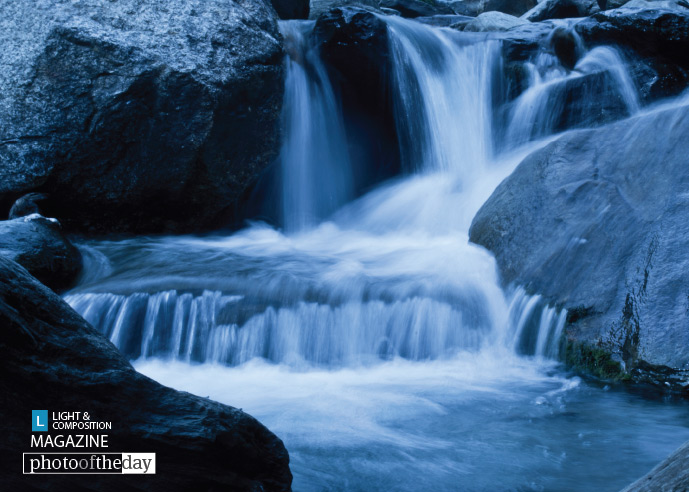
Captured at the serene Bhagsunath waterfall in Mcloedganj, this photograph highlights the raw, untamed beauty of the natural world. The photographer utilized a long exposure of 1/4 second to soften the cascading water, creating a silky, ethereal effect against the rugged landscape. By choosing a narrow aperture of f/32, the photographer ensured deep depth of field, allowing every detail of the rock formations and surrounding foliage to remain in sharp focus. This image stands out for its masterful balance of technical precision and the quiet, contemplative atmosphere of the Himalayan foothills, earning recognition for its exceptional composition.
Ankush Kochhar
Born in 1987 and based in Delhi, India, Ankush Kochhar discovered his passion for photography in 2008, transitioning from a casual hobbyist to a dedicated visual storyteller. He favors a minimalist approach to his craft, preferring to capture the world through simple, authentic perspectives rather than relying on extensive equipment. Currently pursuing photography as a professional career, Kochhar is a committed learner who travels extensively to document the natural beauty he encounters, consistently refining his ability to translate his unique vision into compelling, award-winning imagery.
Resonance Score Breakdown
Transparency Note: The resonance score (12.5/20) is calculated based on social engagement metrics collected before the award announcement.
Expert Photography Reviews · 4
The Persistence of Flow
If the river could speak of its own history, would it describe the mountain that birthed it, or the ocean that eventually claims its name?
Read the reflection →The Persistence of Falling
There is a quiet violence in the way water insists upon its own path. We often speak of the river as a symbol of change, but it is perhaps more accurately a symbol of stubbornness.
Read the reflection →Reviews & Comments
Share your thoughts about this award-winning photograph. Your reviews contribute to the community engagement score.
The frame’s geometry is compromised. While the long exposure softens the cascade, the lack of a clear fulcrum leaves the eye drifting across the chaotic rock face. It’s a structural failure. The f/32 aperture forces too much detail into the foreground, cluttering the picture plane and destroying any sense of spatial depth. I’ve stared at this for an hour, and it doesn’t hold. The composition lacks the necessary discipline to anchor its own weight.
Before the eye identifies the water, a sudden stillness settles in the chest. That 1/4 second exposure doesn’t just blur the flow; it mimics the way memory softens a trauma. I’ve felt my own pulse sync with that rhythmic, silky descent. Returning to it a year later, the sharp, unyielding rocks feel like a weight I’m finally setting down. It’s a quiet, cold relief that follows me into sleep, long after the screen goes dark.
F/32 on a D3100 is a bold choice, though it invites diffraction to the party. One wonders if the photographer spent the morning shivering on those wet rocks or simply wandered by for a quick snap. The water’s silkiness is pleasant enough, but it lacks the grit of a truly earned morning. I’ve spent enough hours in the mist to know when a shot was hunted and when it was merely found. It’s decent, but hardly transformative.
We look at these rocks and we don’t just see stone; we see the patient listener. Ankush Kochhar didn’t just capture a waterfall; he waited for the water to tell its secret to the mountain. By slowing the shutter, he let the landscape breathe. It’s a portrait of the earth itself, caught in a moment of quiet confession. I find myself wanting to sit by that stream, just to hear what the silence says back.