Walking in the Snow by Payman Mollaie
Captured in the serene, snow-covered landscapes of Iran, this photograph depicts a solitary figure traversing a quiet, wintry road. The photographer sought out the stark contrast of a lone tree against the vast, white expanse, creating a scene defined by its profound simplicity. By carefully framing the man against the minimalist backdrop, the image highlights the quiet beauty of a mountain winter. This photograph is award-worthy for its masterful use of negative space and its ability to transform a fleeting moment of solitude into a timeless, evocative study of light, texture, and composition.
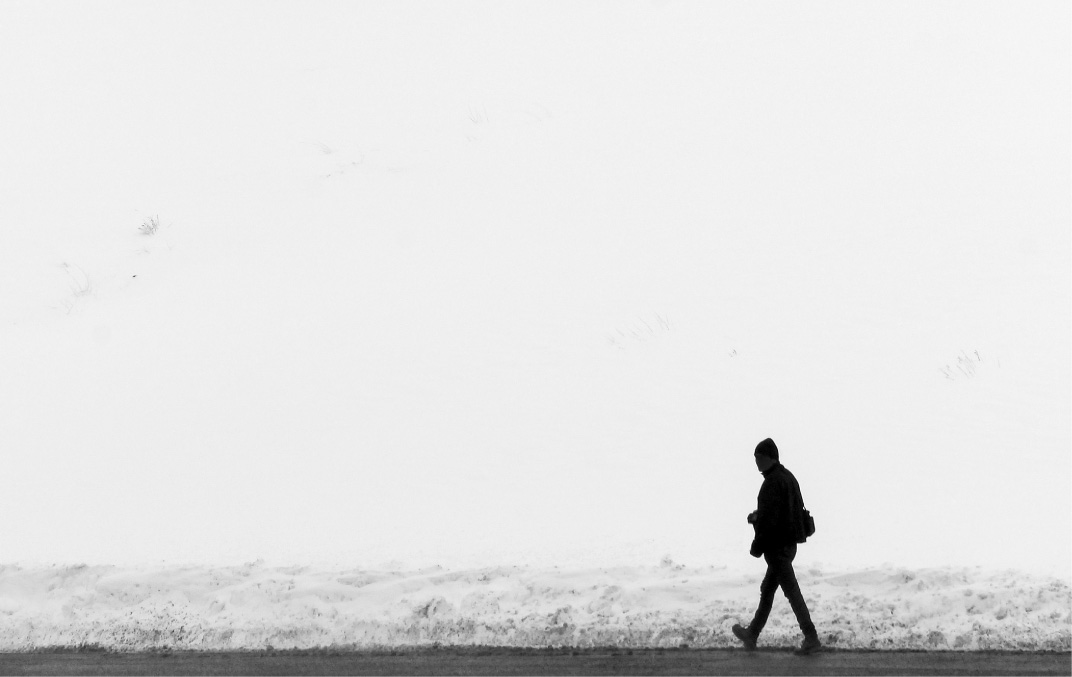
Exposure 1/400sec @ f/14 | ISO 160 | Focal Length 146mm
Payman Mollaie
Born in 1981 in Qazvin, Iran, Payman Mollaie is a dedicated photographer with a deep passion for capturing the serene, minimalist beauty of snowy landscapes. Often utilizing analogue equipment like his Yashika camera, he focuses on clean compositions and evocative, atmospheric storytelling. His work reflects a lifelong love for travel and the quiet solitude of the mountains, where he finds the perfect conditions to explore the intersection of nature and minimalism.
Resonance Score Breakdown
Transparency Note: The resonance score (11.2/20) is calculated based on social engagement metrics collected before the award announcement.
Expert Photography Reviews · 5
The Weight of White
Winter has a way of stripping the world back to its essential bones. When the snow falls, it does not merely cover the earth; it softens the edges of our frantic lives, demanding a slower pace.
Read the reflection →The Architecture of Silence
Winter is a patient teacher. It strips the world down to its bones, removing the clutter of green and the noise of growth until only the essential remains.
Read the reflection →Reviews & Comments
Share your thoughts about this award-winning photograph. Your reviews contribute to the community engagement score.
At f/14, the diffraction limit begins to soften the micro-contrast, yet here it serves the scene. The 146mm focal length compresses the atmospheric haze, rendering the snow’s texture with a clinical, icy precision. I’m genuinely moved by how the lens resolves the solitary figure against that vast, white void. It’s a rare moment where the physics of light doesn’t just capture a subject; it isolates the very essence of winter’s quiet, biting cold.
White isn’t purity here; it’s an erasure. Mollaie forces us to confront the void, where the lone tree and the traveler become mere ink stains against an indifferent, frozen expanse. It’s haunting. I’ve spent hours staring at that sliver of shadow beneath the man’s feet—it’s the only thing tethering him to existence. When the world turns this cold, we don’t look for beauty; we look for the courage to remain visible in the dark.
You waited for that man to hit the perfect spot in the frame, didn’t you? It’s quiet, but it isn’t empty. I feel a strange, cold ache in my chest looking at that lone figure against the white. You didn’t just take a picture of snow; you caught the weight of a man walking through his own life. And that’s the truth of it. You were patient, and it shows. There’s something honest happening here.
The vast, blinding white of the Alamout snow acts as a canvas, stripping away the unnecessary until only the essential remains. That lone, skeletal tree isn’t just a prop; it’s a mirror to the man’s solitude. I find my breath catching at the stark, monochromatic silence here. The figure doesn’t dominate the frame, but rather exists in dialogue with the frost. It’s a haunting, beautiful reminder that we are defined by the landscapes we endure.
Minimalism often risks drifting into the decorative, yet here, the stark isolation recalls the quiet austerity of Harry Callahan’s snow studies. By compressing the landscape with a 146mm focal length, Mollaie flattens the depth, forcing the figure into a graphic tension reminiscent of Japanese woodblock prints. It’s a brave, reductive choice. I’ve spent decades cataloging such voids, but the way this frame breathes—it actually made me pause and catch my own cold, winter breath.