Vidigal – Rio de Janeiro by Juarez Malavazzi
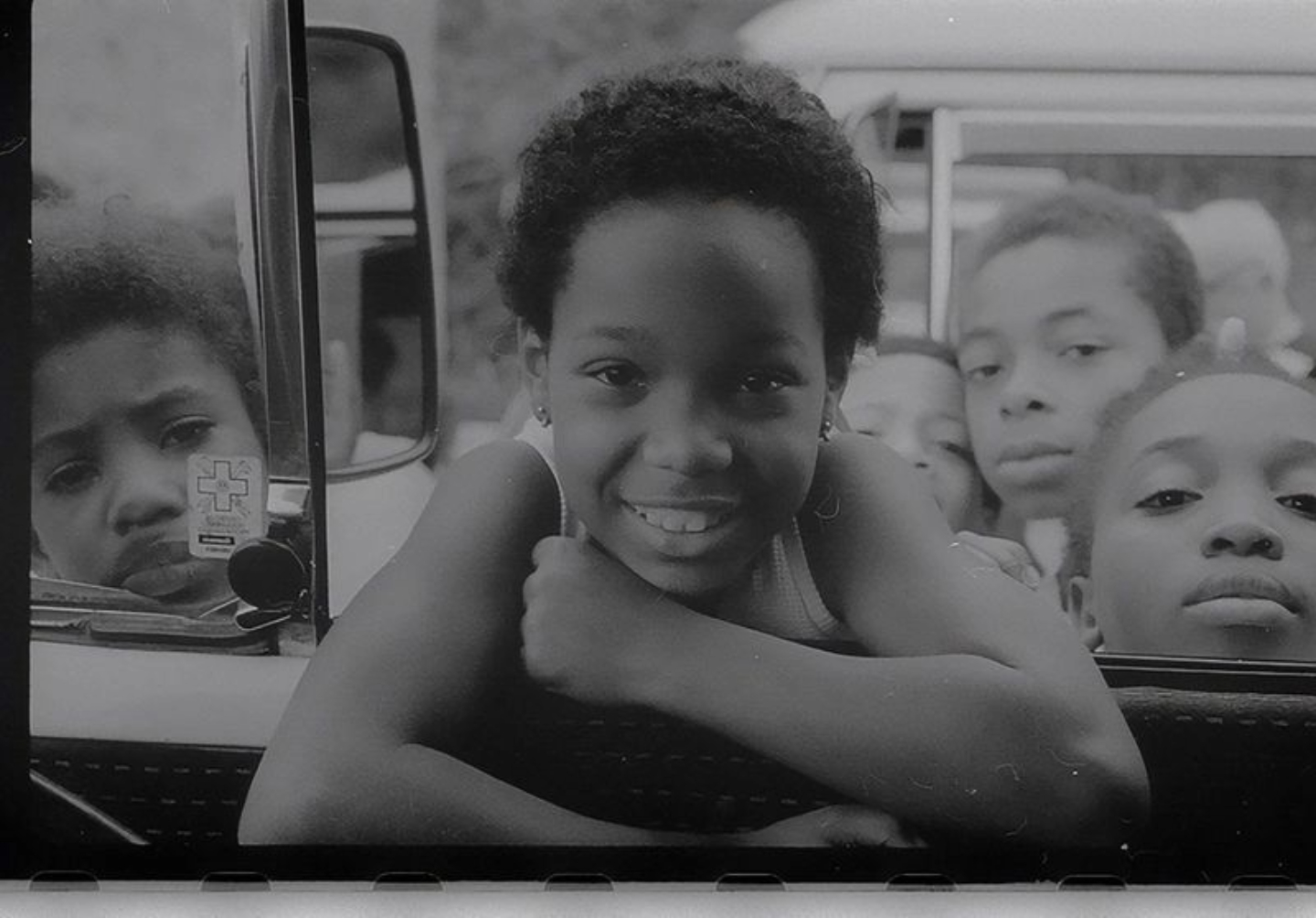
Captured in the vibrant Vidigal community of Rio de Janeiro, this photograph serves as a poignant testament to the resilience of the human spirit. While working on a modeling assignment, the photographer encountered a group of local children whose infectious joy stood in stark contrast to the surrounding environment, often overshadowed by regional instability. By choosing to document this moment, the photographer highlights the innocence and vitality that persist within these communities. The image is award-worthy for its authentic emotional resonance and the photographer's ability to find beauty and light amidst complex social realities, transforming a fleeting interaction into a powerful, enduring narrative.
Juarez Malavazzi
Born in Brazil, Juarez Malavazzi is a self-taught photographer who brings a unique perspective shaped by his extensive career as an international model. Having worked alongside legendary fashion photographers across Europe and the United States, he eventually transitioned into film, earning a degree in directing from New York University. Influenced by masters such as Albert Watson, Robert Capa, and Henri Cartier-Bresson, Malavazzi focuses his lens on the nuances of everyday city life. His work is defined by a humanist and naturalist approach, capturing the raw, authentic stories of the people and places he encounters.
Resonance Score Breakdown
Transparency Note: The resonance score (6.7/20) is calculated based on social engagement metrics collected before the award announcement.
Expert Photography Reviews · 3
The Geography of Breath
There is a weight to the air in places where the earth tilts sharply toward the sky. We build our lives in layers, one stone upon another, hoping the foundation holds against the gravity of circumstance. It is easy to mistake the surface for the whole.
Read the reflection →The Resilience of the Root
In the high alpine, where the soil is thin and the wind is a constant, scouring force, certain wildflowers germinate in the narrowest fissures of bare rock.
Read the reflection →Reviews & Comments
Share your thoughts about this award-winning photograph. Your reviews contribute to the community engagement score.
In Vidigal, Malavazzi doesn’t just capture children; he traps the light against the crushing weight of the favela’s concrete. The shadows here aren’t empty—they’re the heavy, silent witnesses to a precarious existence. I’ve stared at the deep blacks clinging to those walls, and it’s unsettling. It’s a reminder that joy in such places is a radical, defiant act. When I look at these faces, I don’t see innocence. I see a beautiful, terrifying resistance.
The Olympus Trip 35 captures a sharp, high-contrast slice of Vidigal, but I’m left uneasy. Why does the photographer’s modeling assignment necessitate this framing of local children as symbols of resilience? It feels like a tourist’s extraction of joy to decorate a narrative of instability. Does the f/22 depth of field flatten their reality into a mere backdrop for the photographer’s aesthetic? I find the power dynamic here deeply uncomfortable. Who actually benefits from this gaze?
The frame resolves into a complex grid of overlapping rooftops, creating a rigid, stepped geometry that anchors the composition. The children occupy the lower-left quadrant, their forms breaking the harsh, repetitive diagonals of the corrugated metal. It’s a brilliant spatial solution; the chaos of the favela is tamed by the 40mm focal length’s compression. I’m genuinely moved by how their organic, curved silhouettes disrupt the structural monotony. It’s a perfect mathematical equilibrium between human vitality and architectural constraint.