Training for the Worse by Blair Horgan
Captured during a simulated emergency training exercise in Burnie, this photograph documents the intense atmosphere of a collapsed building drill. The photographer shadowed the State Emergency Service volunteers throughout the night, eventually moving inside the training zone to document the action firsthand. By utilizing a high-contrast black and white aesthetic, the photographer effectively emphasized the raw energy of the scene and allowed the piercing beams of torchlight to cut through the darkness. This deliberate stylistic choice transforms a routine training session into a compelling narrative of preparedness and human effort, earning recognition for its powerful visual impact.
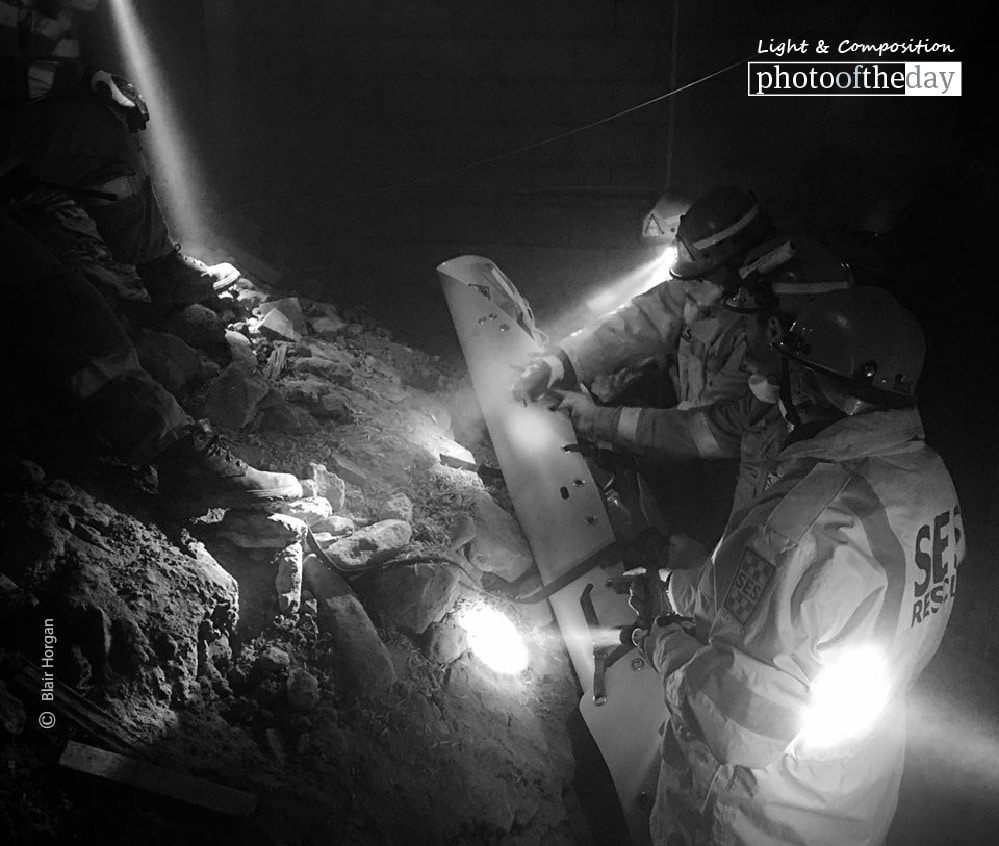
Blair Horgan
Based in Burnie, Tasmania, Blair Horgan began his photographic journey in Melbourne under the mentorship of Rennie Ellis in 1991. After balancing his passion with other life commitments for many years, he transitioned into full-time photography, where he now focuses on candid, unposed storytelling. His work is deeply influenced by his family life and a desire to capture authentic moments as they unfold in real time.
Resonance Score Breakdown
Transparency Note: The resonance score (12.2/20) is calculated based on social engagement metrics collected before the award announcement.
Expert Photography Reviews · 7
The Architecture of Readiness
We spend our lives building structures—houses, careers, reputations—as if they were meant to stand against the wind for eternity. We stack our days like bricks, mortar them with habit, and trust that the foundation will hold.
Read the reflection →The Light That Remains
We often fear the dark, viewing it as an absence, a void where our certainty dissolves. Yet, it is within the deepest shadows that we find the true measure of our resolve.
Read the reflection →Reviews & Comments
Share your thoughts about this award-winning photograph. Your reviews contribute to the community engagement score.
You didn’t just stand back; you got into the dust with them. I can feel the grit in my own throat looking at these volunteers. It’s a raw, frantic scene, and you’ve captured that desperate focus perfectly. Because you were right there, the torchlight feels like a lifeline in the dark. It’s honest work. I’ve spent enough time in the field to know that kind of commitment. You waited, and you caught the truth.
Stripped of chromatic warmth, the scene bleeds into a charcoal abyss, where the light doesn’t merely illuminate but carves through the gloom like a scalpel. It’s a monochromatic ache, reminiscent of a Morandi study in shadow, yet it’s the violent, piercing white of those torch beams that truly unnerves me. I’ve found myself shivering at the sheer, brutal isolation of these figures, caught in a chiaroscuro that feels less like training and more like existential dread.
Darkness here isn’t a void; it’s a heavy, suffocating architecture. Horgan’s torchlight doesn’t reveal; it interrogates, carving jagged, desperate geometry into the Tasmanian night. It’s a brutal, claustrophobic dance. I’ve felt that same cold dread in Tarkovsky’s frames, where the light is merely a reprieve from the inevitable. Looking at these volunteers, I’m struck by a sudden, sharp ache in my chest. It’s not just training. It’s a rehearsal for the silence that eventually claims us all.
The iPhone 6s sensor struggles here, yet the diffraction of light across the dust particles is, in the strictest physical sense, extraordinary. You can see the lens fighting the low-light noise floor, creating a gritty texture that feels almost tactile. It’s a raw, honest collision of optics and chaos. I’m genuinely moved by how those piercing torch beams resolve against the darkness; it’s a beautiful, fragile reminder of what happens when technology reaches its absolute limit.
Of the thousands of training drills I’ve reviewed, most feel staged. What separates this from the rest is the raw, claustrophobic urgency of those torch beams cutting through the dark. It’s not just a drill; it’s a visceral reminder of human fragility. I’ll admit, the grit of the iPhone sensor actually helps here—it feels like a frantic, stolen moment. Thirty years from now, we’ll still feel the weight of that darkness. It’s hauntingly real.
High-contrast grit doesn’t automatically grant depth. Why does Horgan prioritize the aesthetic of disaster over the people performing it? The torchlight slices through the dark, yet it obscures the volunteers’ faces, rendering them anonymous props in a staged collapse. I feel a cold detachment here; it’s voyeurism masquerading as documentation. Who are these people beneath the gear? By stripping away their humanity for a dramatic shadow play, does the photographer actually honor their labor?
iPhone 6s, 4.15mm, f/2.2, 1/15s, ISO 125. A tiny sensor pushed to its absolute limit in the Burnie dark. The noise floor is aggressive, yet it provides a grit that digital grain usually lacks. It’s a gamble that paid off. I’ve spent years loathing mobile sensors, but here, the lack of dynamic range actually forces the contrast. It’s technically flawed, but the shutter speed choice captures the chaos perfectly. I’m surprisingly impressed.