The Window by Ana Sylvia Encinas
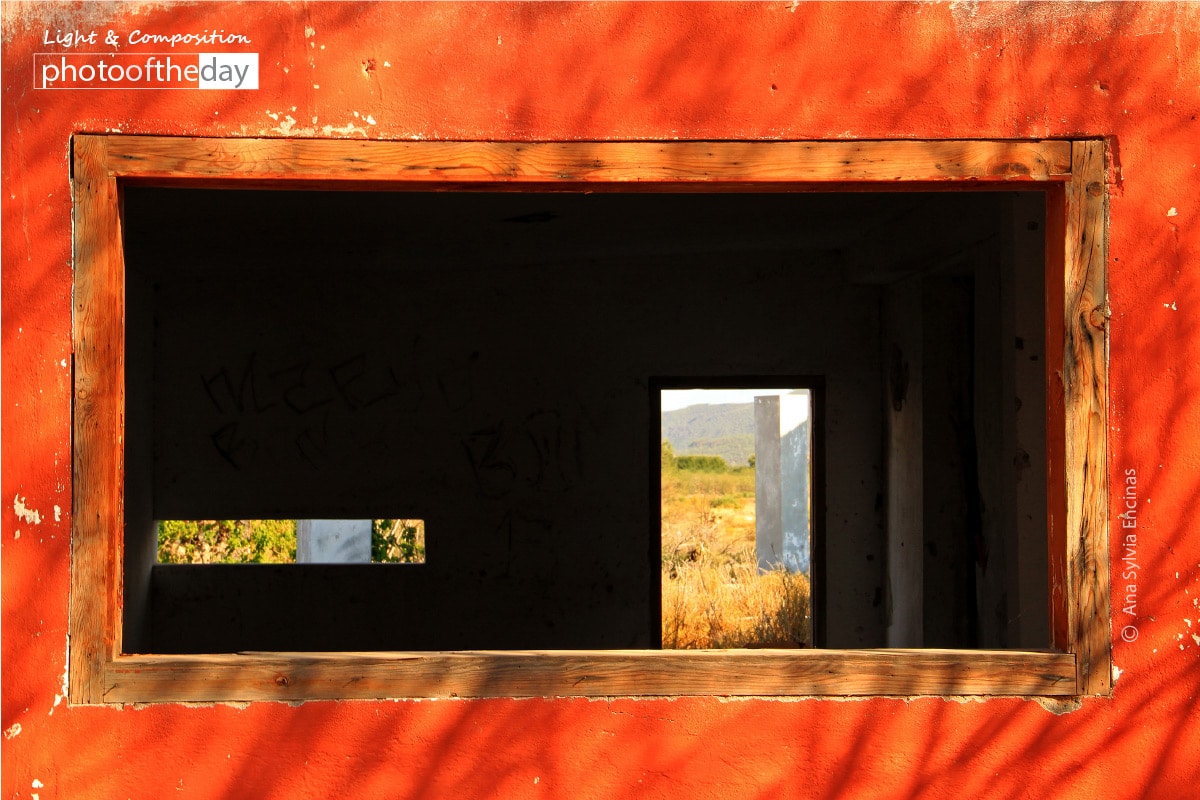
While traveling through Guaymas, Mexico, the photographer encountered an old, decaying hacienda that held a striking, vibrant window. Shaded by a nearby tree, the window’s intricate geometry stood in stark contrast to the surrounding ruins, evoking a sense of mystery and long-forgotten narratives. The photographer captured this scene to highlight the interplay between architectural decay and enduring color. This image is award-worthy for its evocative composition and the way it transforms a simple architectural detail into a compelling, story-driven visual experience that invites the viewer to imagine the history hidden within the crumbling walls.
Ana Sylvia Encinas
Born in Hermosillo, Mexico, Ana Sylvia Encinas has cultivated a deep passion for photography since childhood. Though she balances a successful career as an entrepreneur and marketing expert, she dedicates her time to exploring the natural world through her lens. Her photographic journey, which began in earnest with her first DSLR in 2009, is defined by a relentless pursuit of technical mastery and the development of a unique, personal artistic style.
Resonance Score Breakdown
Transparency Note: The resonance score (11.9/20) is calculated based on social engagement metrics collected before the award announcement.
Expert Photography Reviews · 4
The Persistence of Ochre
There is a specific, heavy stillness that arrives when the sun hits a wall that has long since forgotten the touch of a hand. In the north, we are accustomed to the way light strips things bare, revealing the skeletal truth of a landscape.
Read the reflection →The Architecture of Memory
We often mistake the city for a collection of static objects—walls, glass, and mortar—but these are merely the shells left behind by human ambition. Every structure is a silent witness to a social contract that has long since expired.
Read the reflection →Reviews & Comments
Share your thoughts about this award-winning photograph. Your reviews contribute to the community engagement score.
A shutter speed of 1/13th suggests a tripod and a steady hand, or perhaps just a photographer who didn’t mind the dust of a Sonora afternoon. It’s a quiet, patient study of decay. I’ve spent enough hours waiting for shadows to crawl across crumbling plaster to know when someone has actually sat with a subject. Encinas didn’t just stumble upon this window; she waited for the light to settle. It’s a decent, honest bit of work.
1/13sec at f/11, ISO 100, 47mm. A tripod was mandatory here, yet the motion blur in the foliage suggests a lack of stability. It’s sloppy. Stopping down to f/11 on a T1i sensor invites diffraction, softening the very textures she’s trying to highlight. I’ve seen enough soft architecture to last a lifetime. It’s frustrating because the framing is actually quite sharp. She had the eye, but she didn’t have the discipline to execute it.
You found a heartbeat in those ruins. Most people would just see peeling paint, but you saw the ghost of a home. That vibrant window against the decay feels like a memory trying to stay awake. I’ve spent years in places like Guaymas, and I can almost smell the dust and the heat coming off those walls. You waited for the light to hit just right. There’s something honest happening here. It’s haunting.
Decay is a convenient aesthetic for the outsider. Encinas frames this Guaymas hacienda as a vibrant relic, but who actually lives with these ruins? I find the romanticization of crumbling walls uncomfortable when the human cost of that neglect remains invisible. Why does the geometry of a window matter more than the history of the people displaced by its collapse? It’s pretty, sure, but I’m left wondering if we’re just consuming someone else’s poverty as art.