The Walking Platform by Jabbar Jamil
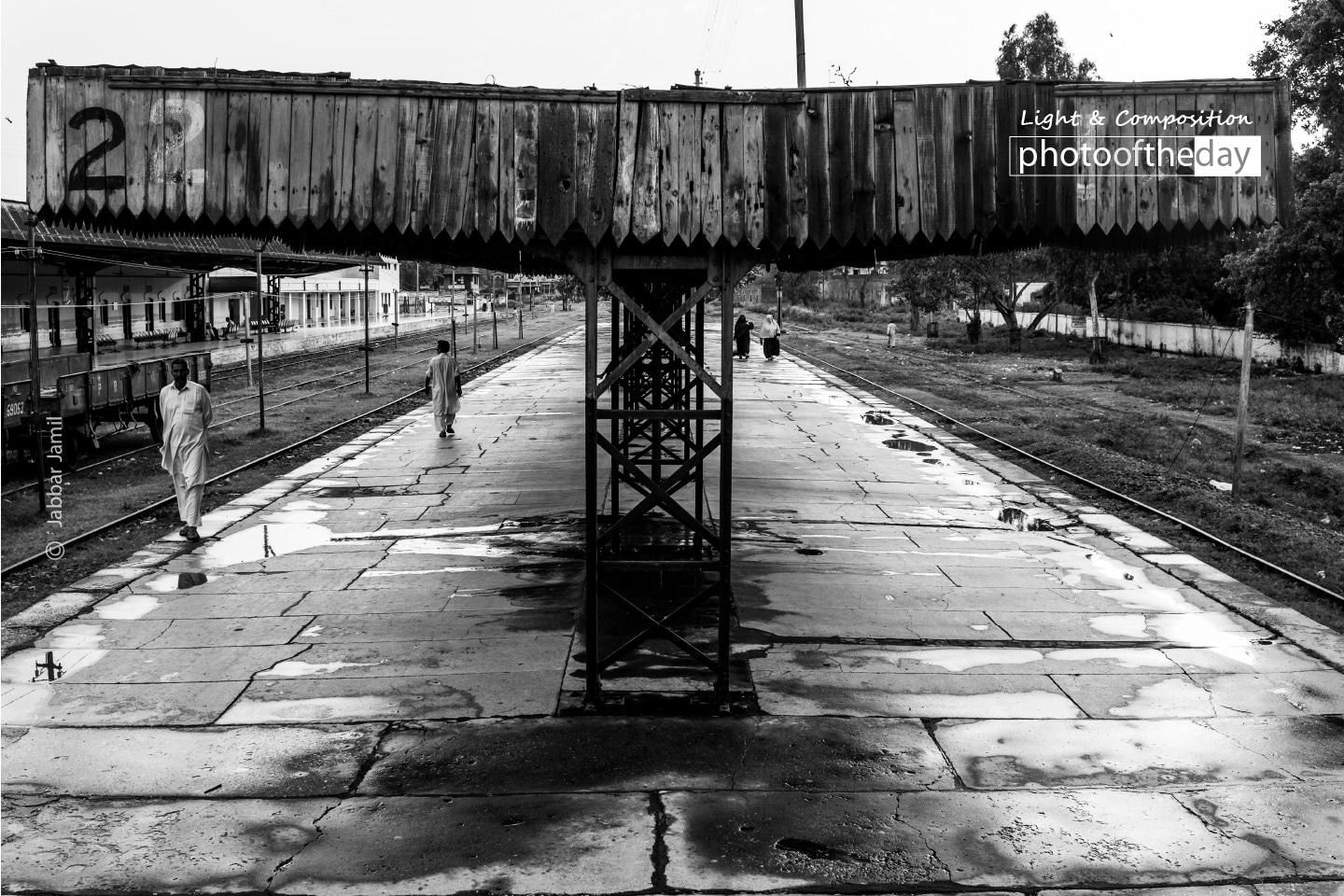
Captured at Sialkot Junction, this evocative image transforms an underutilized transit space into a vibrant community hub. Taken shortly after a rain shower, the photographer sought out the reflective potential of puddles to frame the scene. The composition highlights the platform’s unique role as a playground for local children and a thoroughfare for pedestrians, rather than a mere transit point. This photograph is award-worthy for its ability to find profound human connection and aesthetic beauty in the mundane, turning a quiet, rain-washed moment into a compelling narrative of daily life in Pakistan.
Jabbar Jamil
Based in Sialkot, Pakistan, Jabbar Jamil is a dedicated street photographer who uses his craft to bridge the gap between himself and the outside world. He views photography as both a vital creative outlet and a therapeutic practice, often documenting the raw, unfiltered realities of his surroundings. Through his lens, Jamil seeks to forge meaningful connections with his subjects, finding beauty in the everyday scenes that others might overlook.
Resonance Score Breakdown
Transparency Note: The resonance score (11.8/20) is calculated based on social engagement metrics collected before the award announcement.
Expert Photography Reviews · 6
The Geometry of Waiting
We often speak of transit as a void—a space between where we were and where we intend to be. We treat these places as if they are merely parentheses in the sentence of our lives, something to be passed through as quickly as possible, eyes fixed on the horizon or the clock.
Read the reflection →The Echo of Wet Stone
The smell of rain on hot pavement is a scent that travels deeper than the lungs; it settles in the marrow. It is the smell of a world suddenly scrubbed clean, a sharp, metallic tang that tastes like ozone and wet dust.
Read the reflection →Reviews & Comments
Share your thoughts about this award-winning photograph. Your reviews contribute to the community engagement score.
Rain-slicked concrete in Sialkot doesn’t just reflect light; it swallows the world whole. Jamil’s puddles aren’t merely aesthetic devices; they are dark, liquid mirrors where the children’s silhouettes lose their tether to the earth. It’s haunting. I’ve stared at these shadows until my eyes ached, feeling the weight of a fleeting, rain-washed existence. When a photographer refuses to brighten the gloom, they finally allow the silence of the platform to actually think.
The rain-slicked concrete at Sialkot Junction acts as a perfect specular surface, bending light into a crisp, inverted focal plane. I’m genuinely moved by how the puddles resolve the children’s silhouettes with such high-frequency detail, avoiding the diffraction limit that usually softens wet-ground reflections. It’s a rare optical treat. Jamil’s aperture choice doesn’t just capture a scene; it exploits the physics of water to double the visual information, creating a depth that’s physically, and emotionally, arresting.
Sialkot Junction’s rain-slicked concrete echoes the wet-plate reflections of early street photography, yet Jamil avoids mere pastiche. The children’s kinetic energy against the static, geometric architecture recalls the candid humanism of Henri Cartier-Bresson’s mid-century work, but with a sharper, contemporary social urgency. I’ve spent decades cataloging such transit scenes, but the way these puddles fracture the light here genuinely stopped me cold. It’s a rare, quiet intersection of historical lineage and modern, fleeting grace.
There’s a quiet grace in how these children inhabit the Sialkot platform. They aren’t performing for a lens; they’re just living in the puddles, completely unbothered by the photographer’s presence. That’s the mark of a patient observer who knows how to disappear. I find myself wanting to sit on that damp concrete with them. It’s a rare, honest glimpse of childhood joy that feels like a gift, not a theft. They’ve truly let us in.
Rain-slicked concrete in Sialkot. It’s a gamble, waiting for the puddle to mirror the chaos of the platform. Jamil nailed it. The kids are mid-stride, caught in that perfect, fleeting geometry where movement meets reflection. One tenth of a second later and the shadow has moved, the frame has collapsed. I’ve spent years chasing this kind of clarity. It’s electric. He didn’t just see the scene; he felt the pulse of the station before it vanished.
Rain has washed the Sialkot platform, leaving behind a mirror for the children who claim this space. We see them dancing in the puddles, their joy turning a transit point into a home. Jabbar Jamil didn’t just look; he listened to the rhythm of their play. It’s a quiet, fleeting grace that makes my heart ache for the simplicity of childhood. We look at these reflections and we understand that life isn’t about where we’re going, but who we’re with.