The Solace by Pavel Yudin
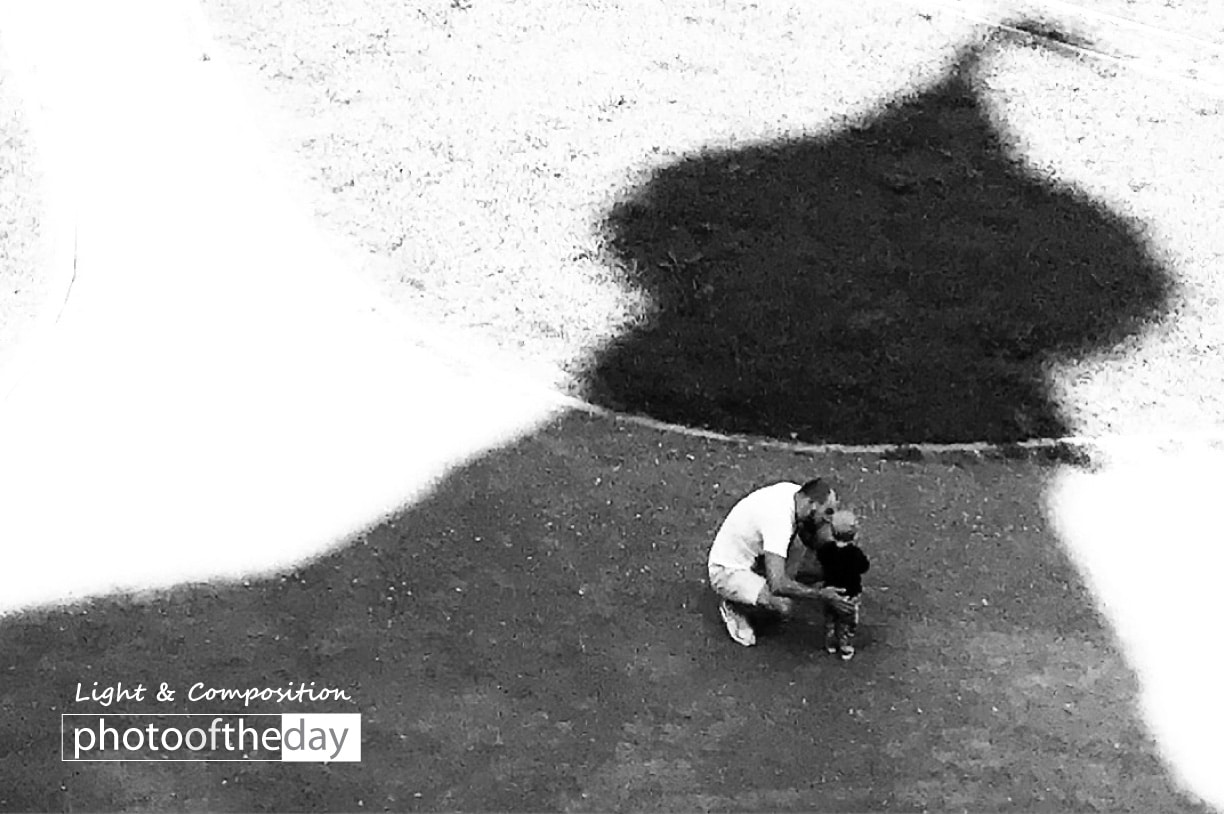
Captured in the historic surroundings of Pskov, Russia, this evocative photograph explores the profound intersection of childhood innocence and the weight of existential inquiry. The photographer masterfully utilizes light and shadow to frame a moment of quiet reflection, prompting viewers to contemplate the deeper meaning of life and the human condition. By juxtaposing the small, singular presence of a child against the vast, comprehensive backdrop of the world, the image transcends a simple portrait to become a philosophical meditation on purpose and existence, ultimately earning recognition for its emotional depth and artistic resonance.
Pavel Yudin
Hailing from the historic city of St. Petersburg, Russia, Pavel Yudin balances a distinguished career in engineering and IT with a profound dedication to the photographic arts. A recipient of the State Prize of the Russian Federation for his scientific contributions, Yudin channels his analytical precision into a creative pursuit that documents the beauty of human experience. His work serves as a heartfelt narrative of travel, friendship, and dreams, capturing the fleeting moments of life through a lens shaped by both intellectual rigor and deep emotional curiosity.
Resonance Score Breakdown
Transparency Note: The resonance score (9.2/20) is calculated based on social engagement metrics collected before the award announcement.
Expert Photography Reviews · 8
The Weight of Small Things
It is 3:14 am. The house has stopped settling, and the silence is heavy enough to touch. In the dark, the scale of things shifts.
Read the reflection →The Architecture of Silence
When a forest fire sweeps through a stand of lodgepole pines, the heat does not merely destroy; it triggers the serotinous cones, melting the resin that has held them shut for years.
Read the reflection →Reviews & Comments
Share your thoughts about this award-winning photograph. Your reviews contribute to the community engagement score.
Before the eye identifies the child in Pskov, something in the chest tightens. It’s the silence of the stone walls pressing against that small, singular frame. I feel a sudden, cold draft on my neck when I look at it. It’s not just a portrait; it’s the weight of history meeting a fragile, unformed future. When I return to this, I don’t see the architecture anymore. I only see the loneliness of being human.
You waited for that child to find their own quiet in the shadow of those ancient walls. It’s a heavy, lonely space, but you didn’t crowd them. I’ve stood in places like Pskov, feeling that same cold weight of history pressing down. Because you held back, the silence in the frame feels real. You didn’t force a narrative; you just let the kid exist. There’s something honest happening here. I felt a genuine ache in my chest.
In Pskov, the stones hold centuries of secrets, yet we find a child standing amidst them, small and still. Pavel Yudin didn’t just point his lens; he waited for the silence to settle. We look at this face and we understand something about the weight of history resting on young shoulders. It’s a quiet, haunting ache I feel in my own chest. This is a portrait that asks to be returned to, again and again.
Pskov’s ancient stone walls don’t care about your framing, but Yudin caught the kid perfectly. It’s that split second where the solitude hits—the child’s posture against the massive, looming history. If he’d clicked a heartbeat later, the tension would’ve vanished into the background. I love the way the light clings to the coat. It’s honest. He didn’t hesitate. He saw the geometry of the moment and grabbed it before the world shifted. That’s the street.
Most entries I reviewed this year relied on cheap sentimentality, but Yudin’s work avoids that trap. The child’s posture against the crushing, ancient stone of the Pskov Krom creates a genuine tension between fleeting youth and permanent history. It’s the way the light clings to the child’s coat that actually stopped me in my tracks. I’d bet on this surviving thirty years because it doesn’t ask for our pity; it simply demands our quiet, undivided attention.
The architecture of the Pskov wall provides a brutal, geometric anchor. It’s a rigid frame that forces the child into a singular, precarious fulcrum. The negative space isn’t empty; it’s a heavy, oppressive void that threatens to swallow the subject whole. I’m genuinely unsettled by how the stone’s texture crushes the figure’s silhouette. It’s a cold, calculated geometry. The composition doesn’t offer comfort, but it holds. It’s a rare instance where the structure actually justifies the noise.
The stone wall looms. It’s heavy, cold, and absolute. A small figure stands against the expanse. I’ve spent minutes watching the child, yet I can’t look away from the gray void beside them. It’s not just stone. It’s the silence of Pskov. Nothing here is accidental. The empty corner is not empty. It’s where the breath gathers. I feel a sudden, sharp ache in my chest. It’s the weight of being small.
Pskov’s ancient stone doesn’t just frame the child; it consumes him. Yudin understands that shadow isn’t a void, but a heavy, historical gravity. When I look at the way the darkness swallows the boy’s silhouette against those crumbling walls, I feel a sudden, cold ache in my own chest. It’s a reminder that we’re all just fleeting ghosts haunting the ruins of time. He’s not afraid of the dark, and that’s why it’s profound.