The Maasai Warrior by Muneera Hashwani
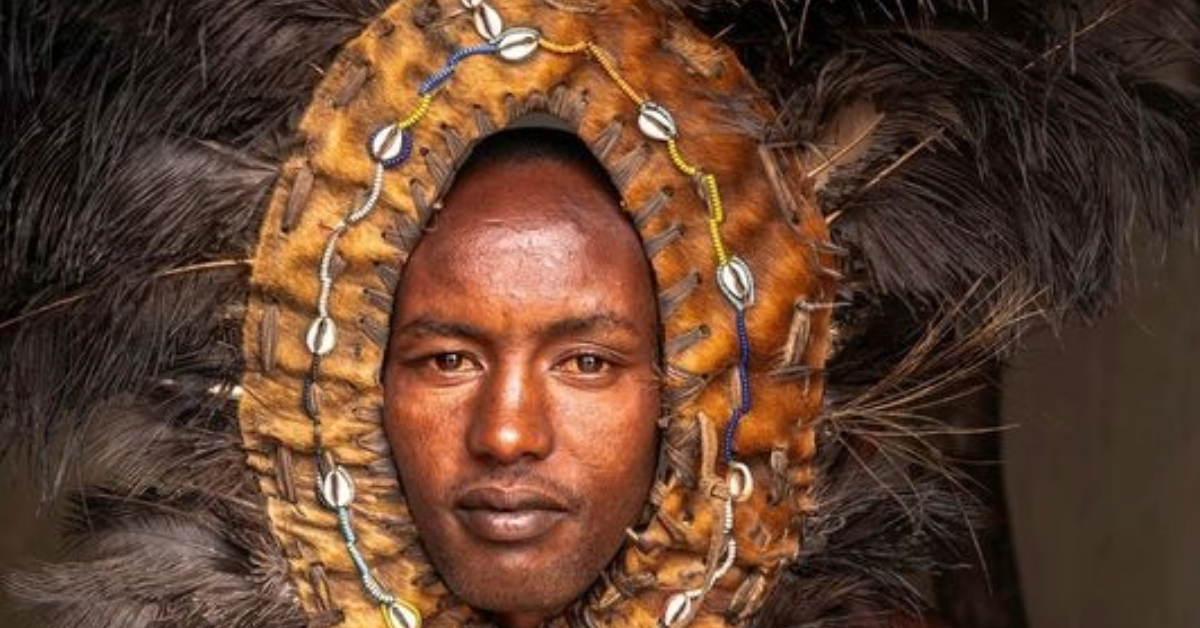
The Maasai Warrior captures the enduring spirit of a Nilotic ethnic group, focusing on a warrior adorned in a traditional Shuka and an Esidai headdress. Muneera Hashwani masterfully documents the cultural significance of the ostrich-feathered headdress, which historically signified a warrior's journey and now serves as a symbol of ritual and ceremony. By highlighting the contrast between the warrior's fierce reputation as a protector and his peaceful, harmonious life within the tribe, the photograph offers a profound look at Maasai heritage. The composition is elevated by the subject's striking traditional attire, capturing a moment that honors centuries of tradition and a deep, ancestral respect for nature.
Muneera Hashwani
Born in Karachi, Pakistan, Muneera Hashwani is a globally-minded photographer currently based in Dubai. Having lived in diverse locations including Singapore and Australia, she draws upon her extensive travels to inform her evocative portraiture, landscape, and street photography. Her work has been featured in numerous international solo and group exhibitions, earning her recognition and accolades within the competitive photography community.
Resonance Score Breakdown
Transparency Note: The resonance score (7.2/20) is calculated based on social engagement metrics collected before the award announcement.
Expert Photography Reviews · 8
The Root of the Horizon
We often mistake stillness for an absence of movement, forgetting that the mountain is also traveling, carried by the slow, tectonic drift of the earth.
Read the reflection →The Weight of Ancestry
Seneca once remarked that we are not given a short life, but we make it short by wasting it on things that do not belong to us.
Read the reflection →Reviews & Comments
Share your thoughts about this award-winning photograph. Your reviews contribute to the community engagement score.
There’s a distance here that bothers me. While the ostrich feathers and Shuka are striking, I don’t feel the man beneath the regalia. It’s a beautiful study of costume, but it lacks the intimacy of a shared moment. I’ve spent enough time in the field to know when a subject is performing for a lens rather than existing with the photographer. This face has a whole life in it, but I’m still waiting to meet him.
The vertical axis here is anchored by the warrior’s gaze, creating a perfect tension against the diagonal sweep of the ostrich-feathered headdress. It’s a precise 1:2 ratio of subject mass to negative space, balancing the intricate, repetitive geometry of the Shuka against the vast, blurred horizon. I’m genuinely struck by how the circularity of the beadwork resolves the frame’s linear rigidity. It’s a beautifully solved spatial equation; the math doesn’t just hold the subject—it elevates it.
Shadows here don’t merely frame; they interrogate the warrior’s gaze. Hashwani’s light clings to the ostrich feathers, yet it’s the encroaching darkness behind the subject that haunts me. It’s a heavy, existential silence. I’ve stared at this for an hour, feeling the weight of a culture retreating into the gloom. When the light fails to penetrate the deep folds of the Shuka, we’re forced to confront what remains unsaid. It’s a brutal, necessary erasure.
The ostrich feathers of the Esidai headdress command the frame, yet I can’t help but feel the subject is being curated for a specific Western gaze. Why does the warrior look past the lens, avoiding any connection with the viewer? It’s a polished, safe portrait that flattens a complex history into a singular aesthetic. Does this composition honor his heritage, or does it merely turn his identity into a decorative object for our consumption?
The crimson of that Shuka, a shade reminiscent of Turner’s most fevered sunsets, vibrates against the arid, ochre earth with such intensity it’s as if the fabric itself were bleeding light. One finds oneself breathless before the ostrich feathers, their stark, bleached-bone white cutting through the heat like a Vermeer highlight. It’s a chromatic collision that doesn’t merely document a warrior; it orchestrates a symphony of pigments that makes my own heart ache with sudden, quiet longing.
Before the eye identifies the feathers, the chest tightens. There’s a sudden, sharp stillness in the room. The ostrich plumes don’t just frame the face; they demand a physiological surrender, forcing a shallow, rhythmic breath. I’ve returned to this gaze three times today, and each time, the warrior’s quiet intensity feels heavier. It’s an unsettling, beautiful weight. When I close my eyes, that piercing, ancestral focus follows me, lingering like a pulse I can’t quite steady.
You caught him in a moment of stillness that feels earned. I’m looking at those ostrich feathers and I can almost hear the wind moving through them. It’s not just a portrait of a warrior; it’s a quiet conversation between two people. You waited for the light to settle on his face, and it shows. There’s something honest happening here. You didn’t just take a picture; you felt the weight of his history. I respect that.
The ostrich feathers cut into the sky. A sharp, vertical line. I find myself holding my breath, waiting for the wind to shift. The Shuka doesn’t distract. It anchors. There is so much space around him. It’s a quiet dignity. I’ve seen many portraits, but this one doesn’t clamor for attention. It just exists. Nothing here is accidental. The empty corner is not empty. It is the silence he carries with him.