The Joy of Having It All by Jabbar Jamil
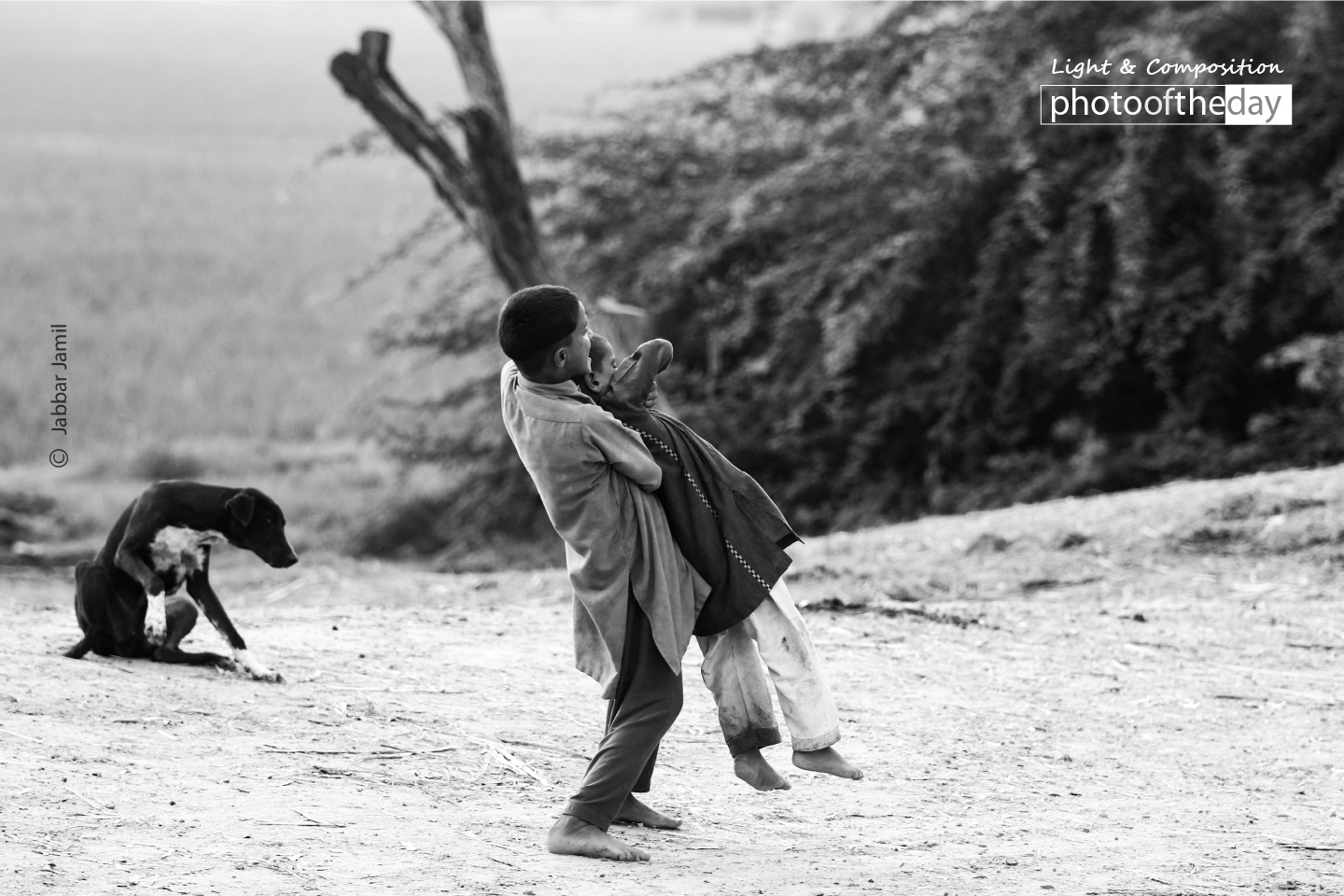
Captured near a tranquil water stream in Sambrial, Pakistan, this poignant image highlights the contrast between modern childhood and the simple, unadulterated joys of nature. The photographer observed two children finding happiness in their natural surroundings, far removed from the indoor resources often prioritized today. This photograph is award-worthy for its authentic emotional resonance and its ability to elevate a candid, everyday moment into a powerful social commentary. By focusing on the raw connection between the subjects and their environment, the image serves as a gentle reminder of the enduring, accessible beauty found in the outdoors.
Jabbar Jamil
Based in Sialkot, Pakistan, Jabbar Jamil is a dedicated street photographer who views his craft as both a creative outlet and a vital stress reliever. By venturing beyond his comfort zone to document the world around him, he seeks to forge genuine human connections that transcend the frame of his camera. His work is defined by an honest, observant approach, capturing the unfiltered realities of life with a focus on the stories that unfold in the public sphere.
Resonance Score Breakdown
Transparency Note: The resonance score (11.7/20) is calculated based on social engagement metrics collected before the award announcement.
Expert Photography Reviews · 3
The Weight of Nothing
I spent twenty minutes this morning watching my neighbor’s toddler try to catch a dandelion seed. He wasn't frustrated by his failure; he was just delighted by the chase. He didn't have a phone, a schedule, or a list of things to fix.
Read the reflection →The Weight of Empty Hands
In the nineteenth century, naturalists often spoke of the 'economy of nature,' a tidy, ledger-like view of the world where every creature possessed exactly what it required to survive.
Read the reflection →Reviews & Comments
Share your thoughts about this award-winning photograph. Your reviews contribute to the community engagement score.
The light here doesn’t merely illuminate; it interrogates the mud and the children’s skin with a brutal, honest clarity. I’m struck by how the shadows pool around their feet, anchoring them to a reality that feels heavier than the stream itself. It’s not a simple joy. It’s a defiance of the void. When I look at those dark, encroaching edges, I feel a sudden, sharp ache for the silence they’ve managed to claim for themselves.
It’s refreshing to see the Sialkot stream captured with such unpretentious clarity. The framing echoes the humanist tradition of Helen Levitt, yet it avoids her urban artifice. I’m genuinely moved by the way the light catches the water’s edge; it’s a quiet, tactile honesty that’s rare today. While the composition leans on familiar tropes of rural innocence, Jamil’s eye for the children’s posture elevates this beyond mere sentimentality. It’s a small, perfect conversation with the past.
Romanticizing poverty as a return to nature feels dishonest here. Why must these children in Sialkot serve as props for our nostalgia? It’s unsettling how the frame strips them of their specific reality to satisfy a Western desire for simplicity. I find myself looking away, frustrated by the distance Jamil maintains. Does their joy belong to them, or is it merely a performance for the camera? We’ve seen this gaze before, and it’s tired.