The Gap by Syed Asir Ha-Mim Brinto
The photograph is presented in a symbolic sense. Attempts to discriminate between men and women by using religion have been going on since ancient times. It is important to come out of the patriarchal society that attempts to hinder women's participation in important religious and social matters. No improvement is possible by keeping women in isolation.
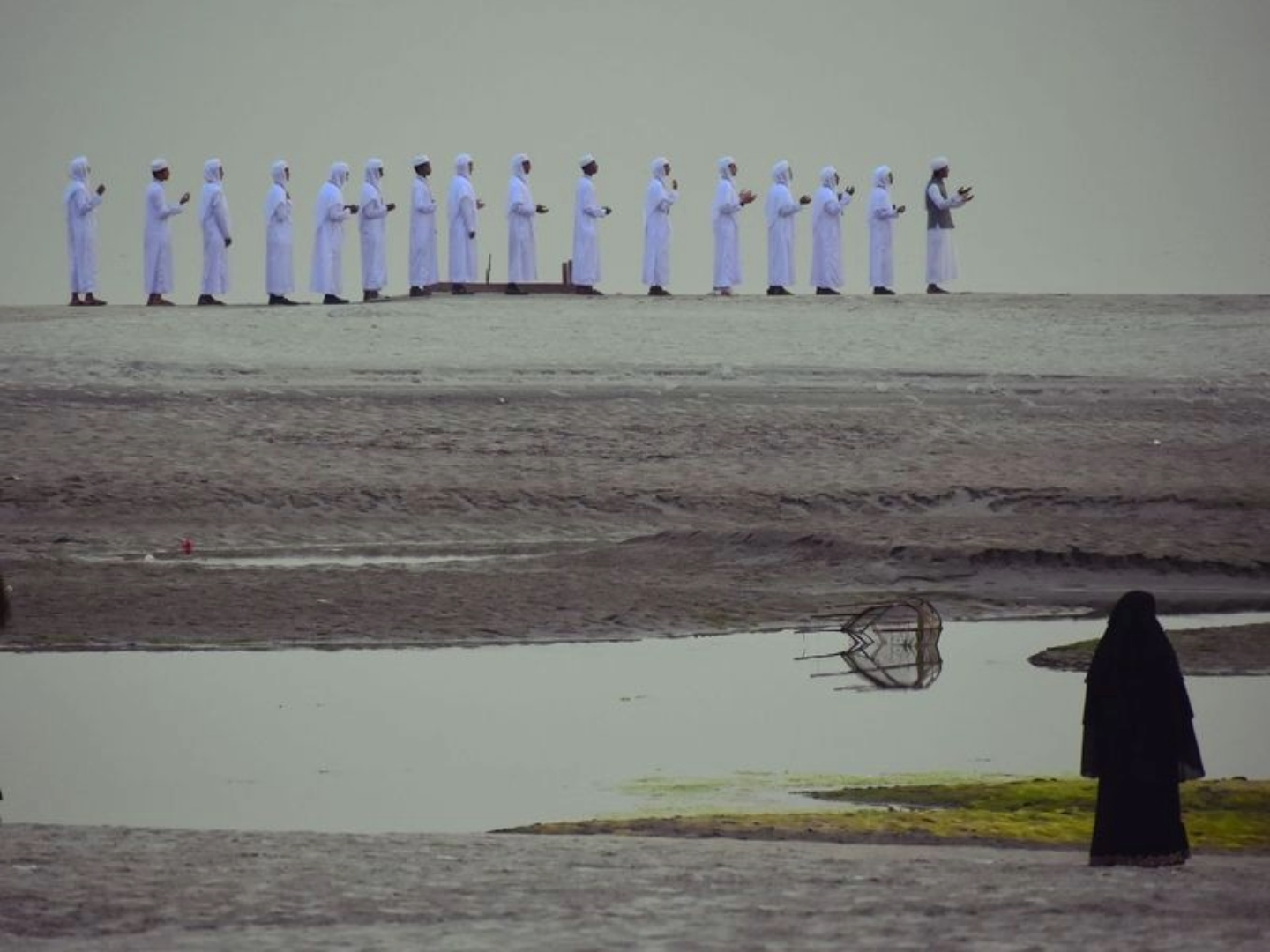
Exposure 1/640sec @ f/5.6 | ISO 1250 | Focal Length 220mm
Syed Asir Ha-Mim Brinto
Based in Rajshahi, Bangladesh, Syed Asir Ha-Mim Brinto is a dedicated self-taught photographer who holds a degree in Bengali Language and Literature from Rajshahi University. His lifelong fascination with the craft began in childhood through early exposure to family cameras, eventually evolving into a professional pursuit. Today, he excels in street, lifestyle, landscape, and documentary photography, consistently striving to explore the world and articulate compelling human and natural stories through his lens.
Resonance Score Breakdown
Transparency Note: The resonance score (6.8/20) is calculated based on social engagement metrics collected before the award announcement.
Expert Photography Reviews · 5
Across the Threshold
I remember sitting in my grandmother's house during family gatherings, where a curtain often divided the men's conversations from the women's laughter. As a young girl, I would sneak beneath the hem of that curtain, fascinated by how identical the laughter sounded on both sides.
Read the reflection →The Space Between Steps
I keep a small, silver thimble in my desk drawer, worn smooth by decades of my grandmother’s thumb. It is a hollow thing, yet it feels heavy with the weight of all the seams she mended and the fabric she guided through the needle’s eye.
Read the reflection →The Architecture of Smallness
We are taught to measure significance by the scale of the shadow we cast, yet the earth often reserves its deepest wisdom for the smallest of things.
Read the reflection →The Spaces We Construct
The most formidable walls in human history were never built of granite or iron; they were constructed from customs, interpretations, and unexamined habits passed down like heavy heirlooms.
Read the reflection →Reviews & Comments
Share your thoughts about this award-winning photograph. Your reviews contribute to the community engagement score.

The frame breathes. It’s a wide, low-angle tracking shot that refuses to pan, locking onto the sandpiper’s frantic, rhythmic stride against the Sundarbans’ vast negative space. I’ve spent hours watching birds, but this stillness feels like a held breath before a jump cut. The 220mm compression flattens the mud into a stage. It’s quiet, precise, and honestly, it makes me miss the field. The editor keeps this shot because it understands the weight of silence.
The Sundarbans mud isn’t just silt; it’s a void waiting to swallow the bird whole. Brinto’s frame captures the Sandpiper teetering on the edge of an existential abyss. I’ve stared at these dark, wet textures until my eyes ached, feeling the crushing weight of that silence. It’s not a serene encounter. It’s a desperate negotiation with the encroaching dark. When the light fails to define the creature, the shadow finally begins its necessary, brutal work.
1/640sec at f/5.6, ISO 1250, 220mm. The Nikon d5500 struggles at ISO 1250; the noise floor is visible in the mud’s texture. f/5.6 at 220mm provides just enough separation, though the background remains distracting. It’s a functional choice for a fleeting subject. I’ve spent hours in similar marshes, and the grit here actually makes me miss the humidity. You’ve balanced the shutter speed against the bird’s movement. It’s technically sound, even if the sensor’s limitations show.
We look at this Common Sandpiper in the Sundarbans and we aren’t just seeing a bird; we’re seeing a solitary traveler. Syed Asir Ha-Mim Brinto has listened to the silence of the mudflats. It’s a portrait of resilience, a tiny life navigating an immense, indifferent world. I feel a sudden, quiet ache in my chest watching it walk alone. It’s a photograph that asks to be returned to, reminding us that every creature carries its own story.
The Sundarbans aren’t built, yet they possess a tectonic logic. Here, the mud acts as a datum, a horizontal plane defining the threshold between liquid and solid. Brinto’s frame captures the sandpiper against this vast, void-like expanse, where the light hits the silt with a brutal, flat clarity. It’s a study in scale that makes me ache for the humidity of that place. It’s not architecture, but it’s a masterclass in spatial presence.