The Arc Tunnel by Fabrizio Bues
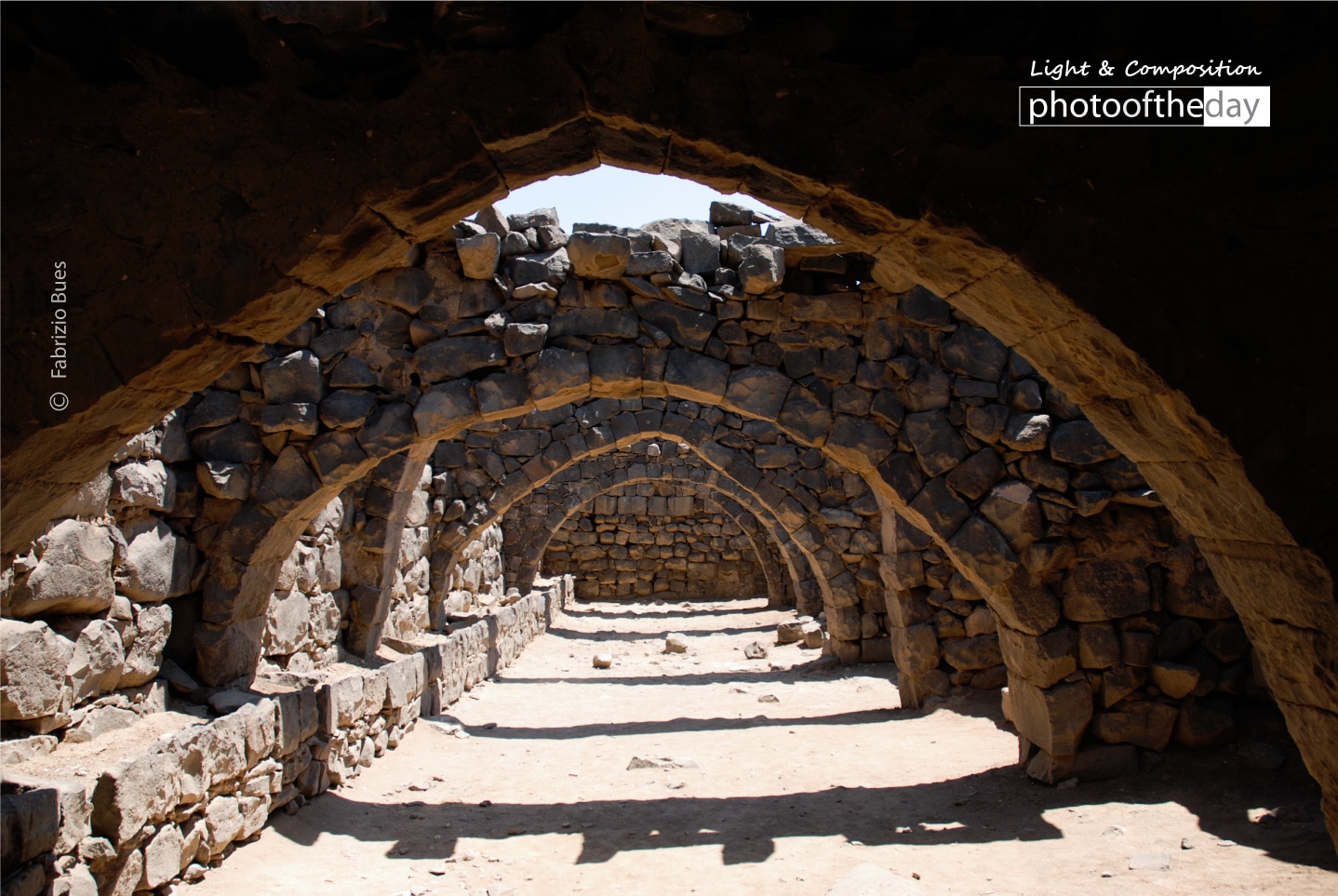
Captured in the vast, arid plains near the Iraqi border in Jordan, this photograph highlights the enduring remnants of an ancient Omayyadi castle. The photographer masterfully frames the row of stone arches, which stand as a poignant testament to the passage of time against a desolate landscape. By focusing on the interplay between the crumbling architecture and the stark, open environment, the image evokes a sense of historical fragility and resilience. This composition is award-worthy for its ability to transform a ruined structure into a powerful narrative on human history and the relentless progression of time.
Fabrizio Bues
Born in Turin, Italy, in 1972, Fabrizio Bues continues to reside in his home city while balancing a professional career as a Project Manager for an American corporation. His frequent international travels provide the inspiration and opportunity to pursue his passion for photography, which he actively refines through dedicated study. Driven by a desire to elevate his technical proficiency, Bues captures the world through his lens with a focus on architectural beauty and the stories embedded within historical landscapes.
Resonance Score Breakdown
Transparency Note: The resonance score (10.2/20) is calculated based on social engagement metrics collected before the award announcement.
Expert Photography Reviews · 4
The Echo of Abandoned Thresholds
We often mistake ruins for endings, yet they are merely the skeletons of human intention. Every archway was once a promise of shelter, a deliberate carving of space out of the indifferent wild. To build is to declare a boundary between the self and the vast, unscripted horizon.
Read the reflection →The Architecture of Silence
In the desert, time does not move in a straight line. It pools like water in the hollows of stone, gathering weight until the very air feels dense with the ghosts of those who once stood there.
Read the reflection →Reviews & Comments
Share your thoughts about this award-winning photograph. Your reviews contribute to the community engagement score.
1/250sec at f/5.6, 18mm, ISO 100. A Nikon D80 sensor isn’t forgiving, yet the exposure is clean. Stopping down to f/5.6 at 18mm keeps the arches sharp without introducing diffraction. It’s a calculated, efficient choice. I’ve spent too long looking at soft, over-processed ruins, so this crispness actually makes me exhale. The technical execution is precise. It doesn’t lean on post-processing tricks. It just works. The math is sound, and the result is honest.
Those arches cut through the Jordanian heat like a jagged heartbeat. I’m looking at the geometry, the way the light hits the stone. It’s quiet, but it’s alive. If Bues had waited another heartbeat, the shadows would’ve bled into the dust and killed the rhythm. He caught it right. It’s lonely out there, and I can almost feel the grit in my teeth. That’s the decisive moment, caught before the desert swallows it whole.
The rhythmic repetition of these arches creates a perfect geometric progression, anchoring the frame along a strong horizontal axis. Bues utilizes the 18mm focal length to force a vanishing point that pulls the eye deep into the negative space of the desert. It’s a rigorous solution to a spatial problem; the balance between the stone mass and the arid void is exquisite. I’m genuinely moved by how the math resolves into such profound, silent stillness.
We look at these stone arches and we don’t just see ruins; we see the ghosts of people who once gathered here to trade stories. Fabrizio Bues listened to the silence of the Jordanian desert before he clicked the shutter. It’s a portrait of a place that’s lost its voice. I find myself shivering, feeling the weight of all those forgotten conversations. It’s a haunting, beautiful reminder that we are only passing through this vast, arid light.