The Architecture of Silence
In the desert, time does not move in a straight line. It pools like water in the hollows of stone, gathering weight until the very air feels dense with the ghosts of those who once stood there. We are taught that ruins are signs of an ending, yet there is a stubbornness to a standing arch that defies such a simple reading. It is a frame for nothingness, a doorway that leads only to the horizon, yet it insists on its own existence. Perhaps we build these structures not to house our bodies, but to house our absence—to prove that we were once here, occupying space, breathing in the heat, and carving our intentions into the earth. When the roof falls and the walls surrender to the wind, what remains is the rhythm of the structure itself, a skeleton of human thought. Does the stone remember the hands that shaped it, or has it finally learned to be as indifferent as the sand that slowly buries its feet?
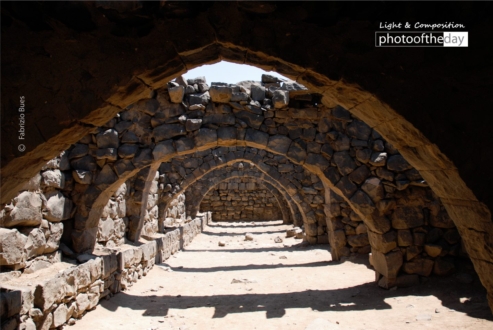
Fabrizio Bues has captured this quiet endurance in his image titled The Arc Tunnel. It invites us to stand within that hollow space and consider what we leave behind when we move on. Does the silence of the desert feel heavy or light to you?