Sunset Serenity by Farhat Memon
Captured at the iconic Lake Tekapo in New Zealand, this photograph highlights the subtle beauty of a mild sunset. While the sky remained understated, the photographer masterfully framed the scene to emphasize the rich autumn foliage against the dramatic, snow-capped peaks of the Southern Alps. By balancing the long exposure to capture the serene water with the natural landscape elements, the photographer created a tranquil, evocative composition. This image is award-worthy for its delicate handling of light and color, transforming a quiet, shy sunset into a compelling narrative of stillness and natural grandeur.
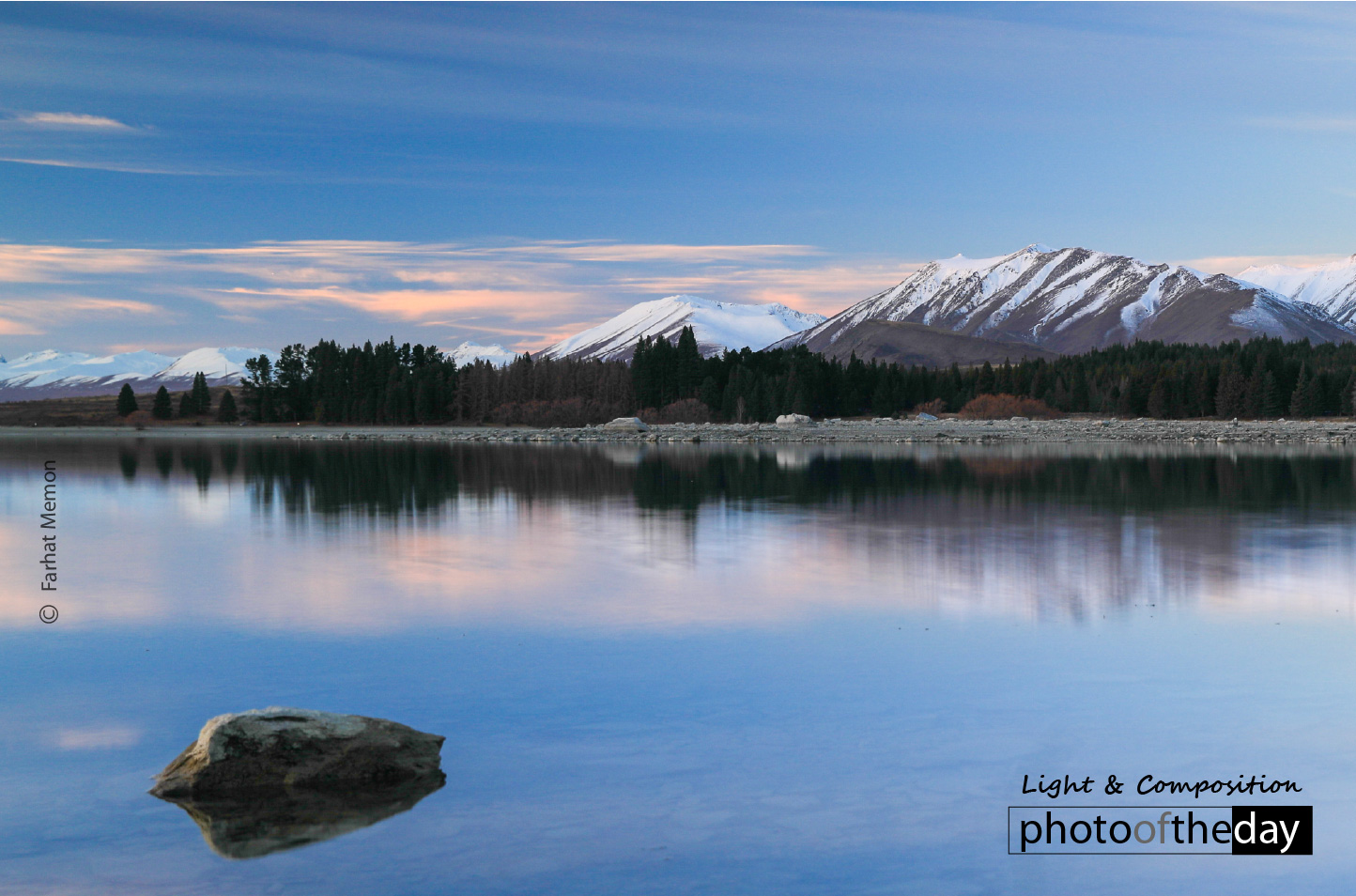
Exposure 3.2sec @ f/5.0 | ISO 100 | Focal Length 35mm
Farhat Memon
Born in Mumbai and raised in Dubai, Farhat Memon is a dedicated landscape and travel photographer currently based in Melbourne, Australia. Driven by a deep-seated wanderlust and a passion for mountain hiking, she draws inspiration from the natural world to craft her evocative imagery. As she transitions from an amateur enthusiast to a professional career, her work continues to reflect a profound connection to the diverse environments she explores across the globe.
Resonance Score Breakdown
Transparency Note: The resonance score (11.2/20) is calculated based on social engagement metrics collected before the award announcement.
Expert Photography Reviews · 7
The Weight of Stillness
I spent this morning trying to organize my bookshelf. It’s a task I’ve put off for months, mostly because I hate deciding what to keep and what to let go of. I pulled out a stack of old journals and sat on the floor, reading entries from years ago.
Read the reflection →The Weight of Stillness
There is a specific quality to the air just before the light fully retreats, a thin, cooling clarity that makes the edges of the world seem sharper, more deliberate.
Read the reflection →Reviews & Comments
Share your thoughts about this award-winning photograph. Your reviews contribute to the community engagement score.
The frame resolves into a precise 1:2 ratio, anchoring the Southern Alps against the fluid, low-frequency motion of the lake. I’m struck by how the foliage vectors pull the eye toward the lower-left quadrant, perfectly counterbalancing the mountain peaks’ jagged geometry. It’s a beautifully solved spatial equation. The long exposure doesn’t just soften the water; it creates a mathematical stillness that makes my pulse slow down. It’s rare to see such rigid structural discipline feel this organic.
The frame’s geometry relies on the rigid horizontal axis of the shoreline. It’s a precarious balance. The Southern Alps provide the necessary weight to anchor the composition, preventing the sky’s soft tonality from drifting into insignificance. I’m genuinely unsettled by the foliage’s placement; it disrupts the spatial tension, forcing the eye toward an awkward periphery. It doesn’t quite hold. The structure is nearly there, yet the foreground lacks the discipline required to command the picture plane.
You waited for the light to soften, and it shows. There’s a quiet patience in how you’ve balanced those sharp, snow-capped peaks against the blurred stillness of the water. I’ve stood by lakes like Tekapo, and you’ve captured that specific, heavy silence that settles in your chest when the sun dips low. It’s not just a landscape; it’s a moment of genuine peace. You felt the stillness, and because you did, I can feel it too.
The Southern Alps provide a brutal, jagged datum against the sky, yet I’m struck by how the foreground foliage softens that rigid tectonic edge. It’s a quiet study of mass and void, though the long exposure renders the lake’s surface unnervingly static. I find myself longing for a human scale—a threshold or a structure—to ground this vastness. It’s beautiful, sure, but it feels like a stage set waiting for an architect to arrive.
Of the thousands of landscapes I’ve reviewed, most photographers mistake a pretty sunset for a finished thought. Memon avoids that trap. By choosing a 35mm focal length, he forces the viewer to engage with the texture of the autumn foliage rather than just the mountains. It’s a quiet, deliberate choice. I’ll admit, the stillness of that water actually made me take a deep breath. It’s a rare, enduring anchor in a sea of over-saturated digital noise.
The amber foliage clinging to the shore acts as a velvet frame for the Southern Alps, grounding the vast, glacial stillness. It’s a quiet dialogue between earth and ice. I’ve always felt that landscapes are just portraits of the world, and here, the water’s long-exposure silkiness creates a sense of intimacy I find deeply moving. The environment isn’t just a backdrop; it’s the very soul of this place, revealing a serenity that a face could never articulate.
Lake Tekapo’s turquoise water looks almost synthetic here, smoothed into a glassy void by that long exposure. Why do we insist on sanitizing these landscapes until they feel like postcards? The autumn foliage glows, yet it feels detached from the biting cold of those Southern Alps. I’m left cold by this forced tranquility. Does the photographer fear the raw, messy reality of this place? It’s pretty, sure, but it’s a hollow, curated silence that ignores the land’s actual pulse.