Sunset Camel Ride by Rabih Madi
Captured during a desert safari between Abu Dhabi and Dubai, this image documents a quiet, serendipitous moment amidst the vast dunes. As the photographer prepared to photograph ATVs, a lone rider on a camel appeared, perfectly positioned against the horizon. The composition highlights the timeless essence of desert travel, emphasizing the contrast between the traveler and the expansive landscape. This photograph is award-worthy for its impeccable timing and the way it transforms a fleeting, candid encounter into a striking visual narrative of life in the United Arab Emirates.
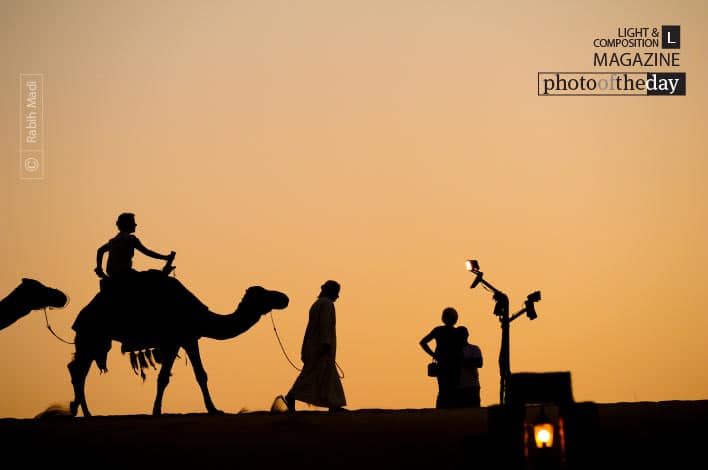
Exposure 1/400sec @ f/8.0 | ISO 100 | Focal Length 24mm
Rabih Madi
Based in Laval, Quebec, Rabih Madi is a dedicated travel and photography enthusiast with a passion for documenting the world. Since acquiring his first DSLR in 2009, he has rapidly evolved from an amateur to a versatile professional, building a diverse portfolio that spans weddings, corporate contracts, macro, and travel photography. Driven by a desire to explore the globe, Madi continues to refine his artistic vision while capturing the unique stories of the people and places he encounters.
Resonance Score Breakdown
Transparency Note: The resonance score (14.1/20) is calculated based on social engagement metrics collected before the award announcement.
Expert Photography Reviews · 8
The Long Shadow of Silence
The desert does not keep secrets; it only buries them under layers of shifting gold. There is a specific kind of patience required to walk where the wind is the only architect, building and dismantling cathedrals of sand in a single afternoon.
Read the reflection →The Weight of the Horizon
I spent this morning trying to clear out my closet, pulling out sweaters I haven't worn in three years. It’s funny how we hold onto things, thinking they might be useful again, or that they define a version of ourselves we aren't quite ready to let go of.
Read the reflection →Reviews & Comments
Share your thoughts about this award-winning photograph. Your reviews contribute to the community engagement score.
The horizon swallows the camel. It’s a thin line of life against a vast, cooling orange. I feel a sudden, sharp loneliness looking at it. The dunes aren’t just sand; they’re a weight. Madi understands the pause. He lets the desert breathe. Nothing here is accidental. The empty corner is not empty. It’s the sound of wind. It’s the weight of the sun leaving the sky. I’ve rarely seen such quiet.
The desert doesn’t offer clarity; it demands a reckoning with the void. Madi’s camel rider isn’t merely a silhouette against the dying sun, but a dark anchor in an ocean of shifting light. It’s a haunting reminder that we are all just passing through the silence. I’ve stared at these dunes for an hour, and honestly, the encroaching shadows make my chest ache. It’s not a sunset; it’s the horizon finally swallowing the traveler whole.
Serendipity is a polite word for luck, and luck is rarely a substitute for a tripod and a long, cold wait. The composition is tidy, certainly, but it feels like a tourist’s happy accident rather than a deliberate pursuit. I’ve spent enough hours shivering in the dunes to know that one doesn’t just stumble upon this. It’s a pretty enough postcard, but it lacks the grit of a photograph that’s been truly earned.
The ochre dunes bleed into a bruised, violet horizon, echoing the melancholic stillness of a Morandi study, yet it’s the camel’s silhouette, carved in the ink-black of a dying sun, that truly arrests the soul. I’m breathless before this chromatic friction, where the searing, burnt-sienna heat of the sand doesn’t just sit against the cooling sky; it’s a visceral, aching collision of light that makes one feel the desert’s ancient, lonely, and utterly beautiful indifference.
The horizon line bisects the frame with surgical intent, anchoring the camel’s silhouette against the encroaching dusk. It’s a study in geometric isolation. The negative space above the rider creates a necessary vacuum, preventing the composition from collapsing into mere travelogue. I’ve grown weary of desert clichés, yet the spatial tension here holds. The weight of the animal against the vast, empty dunes provides a rare, disciplined equilibrium. It doesn’t need sentiment to justify its existence.
The desert doesn’t reveal itself to those in a hurry. Rabih waited, and the dunes finally exhaled. That low, raking light catches the camel’s silhouette, turning a fleeting encounter into something eternal. I’ve felt that same stillness, where the wind dies down and the horizon feels like a prayer. It’s a quiet, heavy beauty. He didn’t chase this moment; he let the landscape offer it. It’s a rare, honest conversation between man and sand.
At f/8, the Nikon’s 24mm focal plane renders the desert’s granular texture with clinical sharpness, pushing right against the diffraction limit. It’s a rare pleasure to see such micro-contrast in the camel’s silhouette against the sun’s flare. I’m genuinely moved by how the lens resolves those fine, wind-swept ripples in the sand. It’s not just a sunset; it’s a precise calibration of light and silica, capturing a fleeting geometry that the naked eye simply misses.
Most desert shots rely on tired silhouettes, but Madi’s frame avoids that trap. By placing the camel precisely at the horizon’s dip, he forces the viewer to confront the scale of the dunes. It’s a quiet, lonely geometry that I’ve rarely seen captured with such restraint. I’ll admit, it made me miss the silence of the Empty Quarter. It’s not just a sunset; it’s a reminder that in thirty years, this stillness will still matter.