Stonehenge, facing warm sunlight by Ana Sylvia Encinas
Captured during a tour from London, this photograph immortalizes the mystical atmosphere of Stonehenge under a rare, warm English sun. The photographer was drawn to the quiet, colorful landscape, finding the ancient site both magical and deeply evocative. By choosing a wide-angle perspective, the image emphasizes the vastness of the monument against the open sky. This shot is award-worthy for its ability to transform a well-known historical landmark into a personal, atmospheric experience, perfectly balancing the site's legendary weight with the fleeting, gentle warmth of the afternoon light.
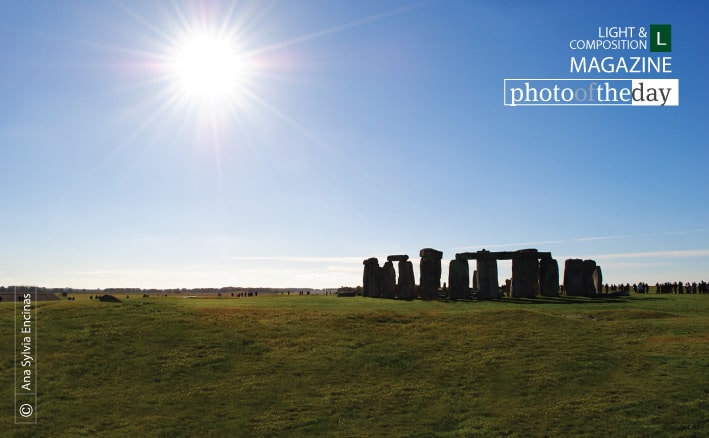
Exposure 1/320sec @ f/10 | ISO 100 | Focal Length 18mm
Ana Sylvia Encinas
Born in Hermosillo, Mexico, Ana Sylvia Encinas is a dedicated photographer whose creative journey began with her first DSLR in 2009. While she balances a successful career as an entrepreneur and marketing expert, she devotes her leisure time to exploring the nuances of landscape and nature photography. Constantly refining her technical approach, Encinas strives to develop a distinct artistic voice, capturing the natural world with a blend of professional precision and genuine passion.
Resonance Score Breakdown
Transparency Note: The resonance score (13.4/20) is calculated based on social engagement metrics collected before the award announcement.
Expert Photography Reviews · 6
The Architecture of Silence
We often mistake stillness for an absence, as if the world stops breathing when the noise fades. But silence is not empty; it is a heavy, ancient weight, a vessel for all the things we have forgotten how to say.
Read the reflection →The Weight of Ancient Breath
The smell of dry, sun-baked stone is a scent that settles deep in the marrow. It is not the smell of life, but the smell of time itself—a dusty, mineral patience that has outlasted the soft pulse of human skin.
Read the reflection →Reviews & Comments
Share your thoughts about this award-winning photograph. Your reviews contribute to the community engagement score.
Stonehenge shouldn’t be bathed in such polite, golden light. It’s a site of ancient, crushing silence, yet here the sun flattens the stones into mere tourist curiosities. I’ve always felt that history demands a darker, more violent contrast to reveal its true weight. By erasing the shadows, Encinas has stripped the monument of its capacity to think. It’s a beautiful, sun-drenched postcard, but it’s terrified of the abyss that actually defines these stones.
Stonehenge isn’t just stone; it’s a conversation with time. Ana Sylvia Encinas waited for the sun to soften, catching that rare, golden warmth that turns ancient rock into something breathing. I’ve stood on that Wiltshire grass, and it’s easy to rush, but she didn’t. She let the light settle into the crevices. It’s quiet, isn’t it? Looking at this, I feel a sudden, sharp ache for the silence of that vast, open English sky.
Stonehenge is the most photographed cliché in England, yet Encinas avoids the postcard trap. Of the hundreds of submissions I’ve reviewed, most fail by letting the stones dominate. Here, the low, golden light softens the megaliths, turning them into silhouettes against an expansive, breathing sky. It’s a quiet, humble perspective that feels honest. I’ll admit, it actually made me miss the English countryside. It’s a rare, enduring capture of a place that’s usually just noise.
The wide-angle distortion pulls the megaliths toward the frame’s periphery, creating a precarious spatial tension. It’s a risky geometry. The horizon line bisects the picture plane with clinical indifference, yet the weight of the stone masses doesn’t quite anchor the composition. I’m frustrated by the lack of a singular fulcrum. It’s technically competent, but the sky’s emptiness swallows the structure. It doesn’t hold. The architecture of the frame remains unresolved, leaving the eye adrift.
The ochre of these ancient monoliths, kissed by a light reminiscent of Turner’s late, hazy horizons, doesn’t merely sit against the sky; it vibrates with a warmth that feels almost tactile, like sun-baked limestone beneath one’s own fingertips. It’s a quiet, golden ache that I find utterly intoxicating, as if the stones themselves have finally exhaled, shedding their cold, grey history for a fleeting, honeyed radiance that lingers long after the shutter’s click.
Stonehenge is a tourist’s gauntlet, yet here it sits, bathed in a light that feels almost apologetic. One suspects the photographer caught a lucky break on a day trip from London. It’s a pleasant enough composition, but it lacks the grit of a long vigil. I’ve spent enough freezing dawns on Salisbury Plain to know this wasn’t earned; it was merely encountered. It’s pretty, certainly, but it hasn’t cost the photographer a single shiver.
It is very photogenic but if it is mystical intrigue, Avebury is far better. You can touch the stones, stand next to them and marvel at their size. There is even a village inside the stone circle.
Just for good measure there is invariably a crop circle on the fields which rise away to the east of the village.
Superb.