Sialkot Junction by Jabbar Jamil
Sialkot Junction serves as a quiet, rhythmic heartbeat in the daily life of the city, defined by the arrival of two trains—one at dawn and one at dusk. The photographer captures the station not merely as a transit hub, but as a communal sanctuary where abandoned tracks meet the vibrant energy of local youth playing cricket and residents gathering for conversation. This image is award-worthy for its authentic portrayal of urban stillness and human connection, transforming a simple, accessible location into a poignant narrative of community and the passage of time.
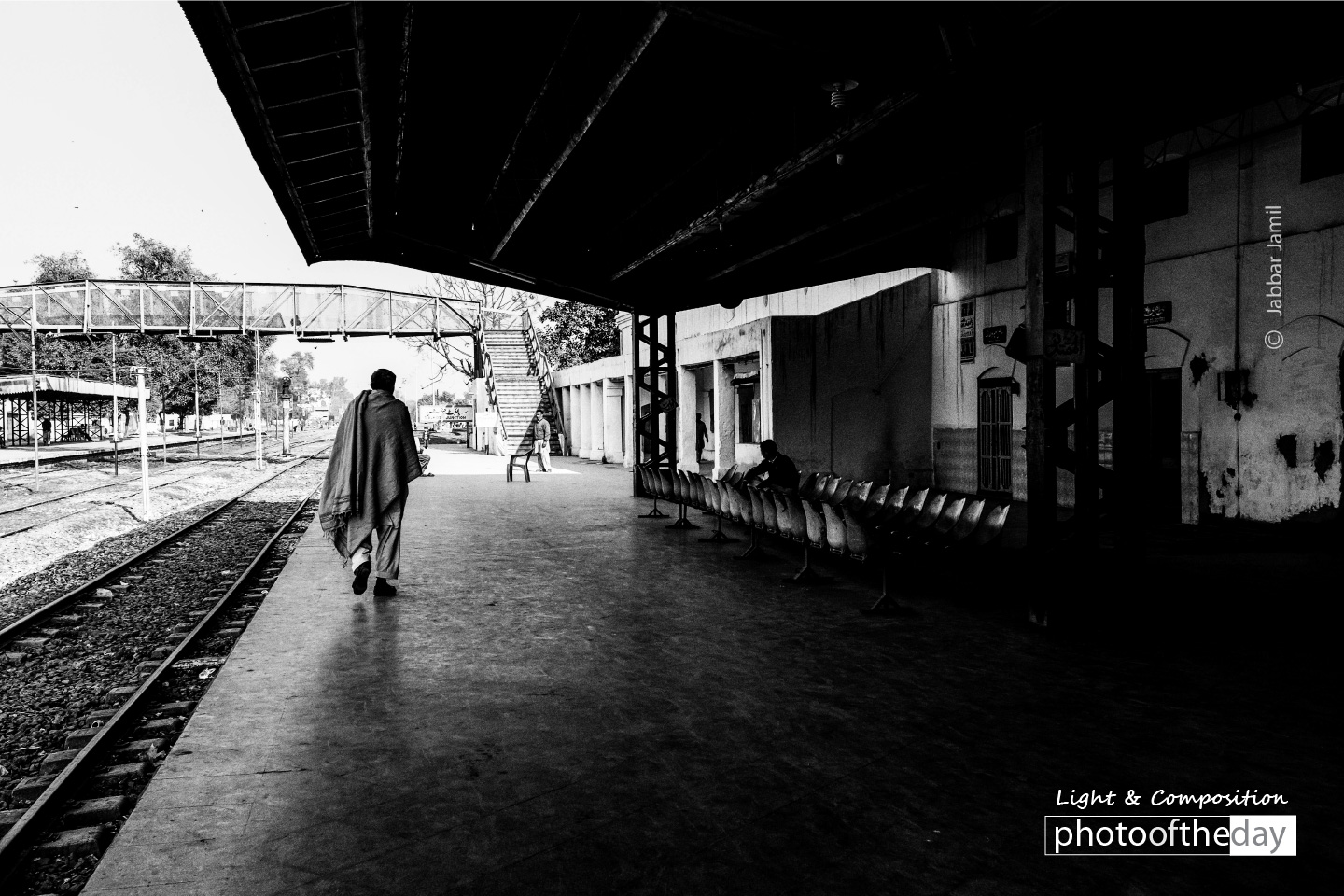
Jabbar Jamil
Based in Sialkot, Pakistan, Jabbar Jamil is a dedicated street photographer who views his craft as a vital bridge between his personal comfort zone and the wider world. Through his lens, he seeks to forge human connections that transcend the images themselves, using photography as both a creative outlet and a therapeutic escape. His work is characterized by a raw, honest approach to his surroundings, capturing the unfiltered reality of daily life with a keen eye for the stories hidden in plain sight.
Resonance Score Breakdown
Transparency Note: The resonance score (11.8/20) is calculated based on social engagement metrics collected before the award announcement.
Expert Photography Reviews · 8
The Weight of Departures
I keep a rusted iron key in a velvet-lined box, one that no longer fits any lock in my house. It belonged to a heavy wooden trunk my grandfather used to carry across borders, a vessel for his entire life when he had to leave everything else behind.
Read the reflection →The Rhythm of Arrival
There is a particular grace in places built for departure. We often view stations as mere thresholds, spaces to be hurried through on our way to somewhere else.
Read the reflection →Reviews & Comments
Share your thoughts about this award-winning photograph. Your reviews contribute to the community engagement score.

There’s a quiet grace in how these men occupy the Sialkot tracks. You can tell they’ve forgotten the camera exists, which is the highest compliment I can pay a photographer. They aren’t performing; they’re just existing in the dust and the light. It makes me ache for the simplicity of that afternoon. When a subject stops posing and starts living, you’ve finally earned your keep. This face has a whole life in it.
We look at these boys on the Sialkot tracks and we understand that they aren’t just playing cricket; they’re claiming the rhythm of the city as their own. Jabbar Jamil didn’t just point a lens here. He sat in the dust, he listened to the trains, and he waited for the silence between them. It’s a beautiful, aching reminder of how we find home in transit. I’ve found myself lingering here, feeling the heat of that Pakistani dusk.
The rails here don’t just carry steel; they hold the weight of a long, dusty afternoon. Jabbar waited until the light softened, turning the tracks into golden veins. Watching those boys play cricket amidst the stillness, I’m struck by a sudden, sharp ache for the simplicity of their joy. He didn’t rush the frame. He let the station breathe, capturing the exact moment the world paused to listen to the coming dusk. It’s truly beautiful.
The light hits the tracks and the frame breathes. It’s a long take, a wide shot where the cricket match feels like a scene waiting for the train to break the tension. I love how the stillness holds; the cut would’ve been a mistake here. It’s the kind of rhythm I’ve spent years chasing. Jamil caught the exact moment the city exhales. It’s not just transit; it’s a sanctuary where time finally stops moving.
Most street photography today is just noise, but Jamil’s work breathes. Of the thousands I’ve reviewed, few capture the specific, dusty stillness of a Pakistani dusk like this. The way the cricket stumps align with the rusted tracks creates a tension between play and transit that I find deeply moving. It’s not just a station; it’s a living room. I’d bet in thirty years, this quiet, rhythmic honesty will still feel like a home.
Before the eye identifies the rusted rails or the cricket stumps, something in the chest settles. It’s the stillness of the light that catches me; I feel my own pulse slow to match the rhythm of that Sialkot dusk. When I return to this, I don’t see a station, but the ache of a place waiting for a departure that never comes. It’s a quiet, heavy comfort that follows me into sleep, lingering like old dust.
The tracks cut a brutal diagonal, anchoring the frame against the chaotic sprawl of the platform. It’s a rigid geometry that forces the eye toward the horizon. The negative space surrounding the cricketers provides a necessary pause, preventing the composition from collapsing into mere clutter. I’m genuinely unsettled by how the light bleeds across the rusted iron. It doesn’t just sit there; it dictates the spatial tension. The structure holds, but only just.
I’ve spent enough time in the brush to know when a scene is forced. Here, the stillness feels earned, not staged. Watching those boys play cricket near the tracks, I’m struck by how they ignore the camera entirely. That’s the mark of a photographer who waited until they became part of the landscape. It’s a rare, quiet patience I rarely see in urban work. It doesn’t feel extracted; it feels like a genuine, shared breath.