Rural Life by Ryszard Wierzbicki
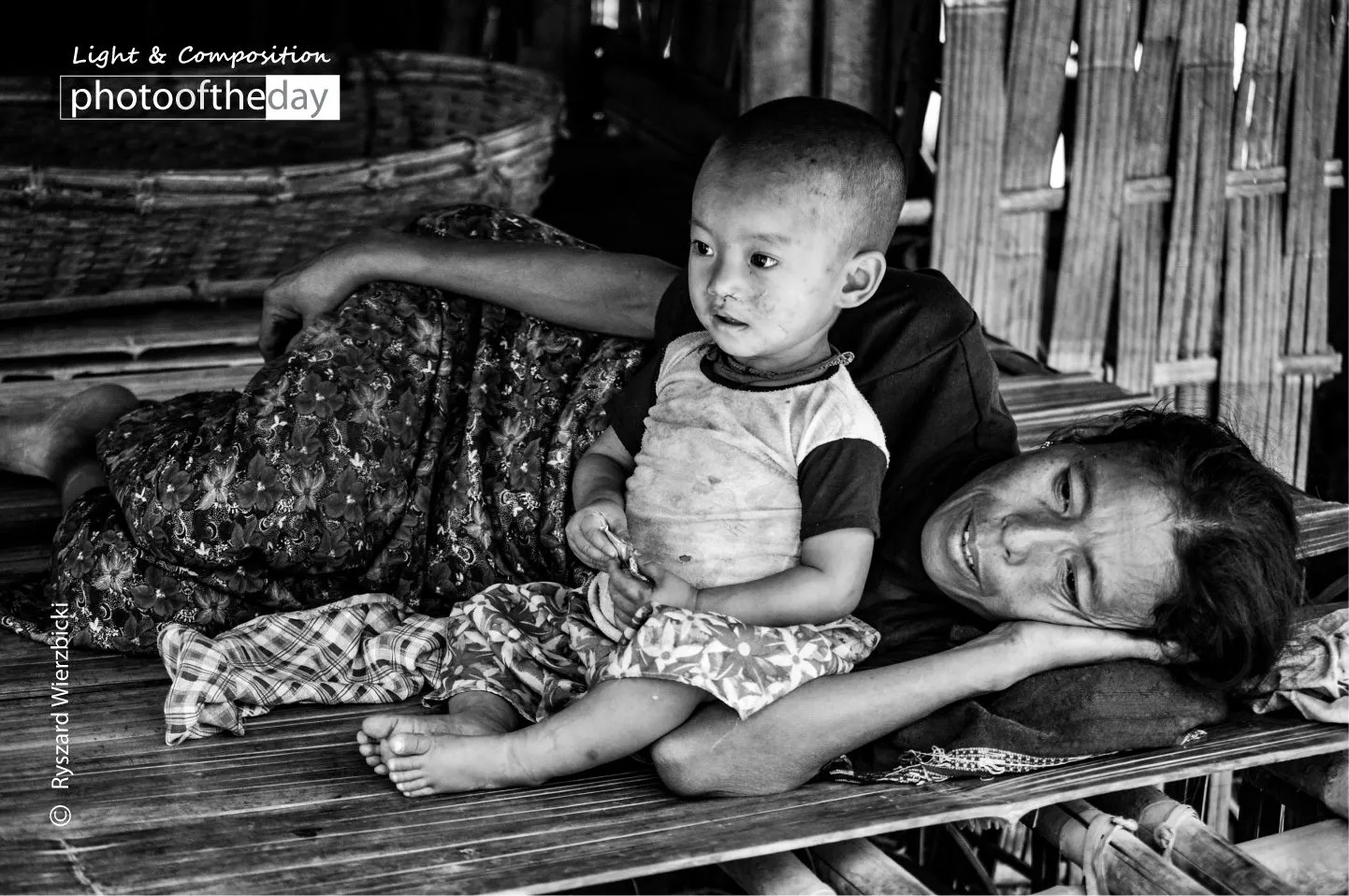
Captured in the Sittwe area along the Kaladan River, this evocative portrait reflects the photographer's deep commitment to authentic cultural immersion. Rather than merely passing through, the photographer spent meaningful time with the local community, fostering a connection built on mutual respect and shared stories. This patient approach allowed for a candid, intimate representation of rural life in Myanmar, capturing the humanity of the subjects with profound empathy. The image is award-worthy for its ability to transcend the role of a simple travel photograph, serving instead as a poignant, compassionate documentary of a moment earned through genuine human interaction.
Ryszard Wierzbicki
Born in 1963 and a graduate of the University of Gdańsk, Ryszard Wierzbicki transitioned from a diverse career in education and marketing to become a dedicated travel photographer and adventurer. After relocating to the United Kingdom in 2006, he focused his lens on South-East Asia, where he frequently volunteers with organizations supporting Thai and Burmese orphans. Balancing his life as a marketing advisor and tour organizer, Wierzbicki utilizes his photography to document the human experience, driven by a passion for exploration and a deep-seated commitment to the communities he encounters across the globe.
Resonance Score Breakdown
Transparency Note: The resonance score (8.6/20) is calculated based on social engagement metrics collected before the award announcement.
Expert Photography Reviews · 8
The Weight of the River
I often find myself thinking about the places that exist on the edges of maps, where the water dictates the rhythm of the day rather than the ticking of a clock.
Read the reflection →The Weight of Quiet
I spent this morning trying to fix a loose hinge on my kitchen cabinet. It was a small, annoying task that I had been putting off for weeks. As I knelt there, screwdriver in hand, I found myself just staring at the dust motes dancing in the sliver of sunlight hitting the floor.
Read the reflection →Reviews & Comments
Share your thoughts about this award-winning photograph. Your reviews contribute to the community engagement score.

Wierzbicki’s work along the Kaladan River echoes the ethnographic patience of early Magnum photographers, yet it avoids the romanticized exoticism that plagued mid-century reportage. The tonal gradation in the shadows reminds me of Salgado’s early work, though it’s less theatrical. I’m genuinely struck by the subject’s gaze; it’s a quiet, piercing defiance I haven’t seen in this region’s documentation before. It’s not just a record of rural life; it’s a conversation that finally feels earned, not stolen.
Along the Kaladan, we find a face etched by the river’s slow, rhythmic pulse. Ryszard didn’t just point a lens; he sat in the silence until the subject’s story became his own. We look at these eyes and we feel the weight of a life lived in the current. It’s a quiet, aching intimacy that hits me right in the chest. I’ve rarely seen a portrait that listens this well. It’s a photograph that asks to be returned to.
The focal plane here is razor-thin, isolating the subject against the Kaladan’s humid, atmospheric haze. I’m struck by how the lens resolves the skin’s texture against the diffraction limit of the background foliage; it’s a delicate balance of micro-contrast. The bokeh, a function of a wide aperture, renders the river’s light into soft, chromatic circles. It’s physically precise, yet it captures a haunting, fragile humanity that makes my own pulse quicken. It’s truly beautiful optics.
The curator calls this empathy, but I feel a cold distance. Why are these villagers framed as timeless relics of the Kaladan River? When Wierzbicki positions them against such a romanticized, hazy backdrop, does he capture their reality or his own fantasy of rural Myanmar? It’s a polished aesthetic, sure, but it’s one that flattens complex lives into a picturesque prop. Whose story are we actually consuming here? I’m left wondering if they ever had a choice.
There’s a quiet, unforced stillness here that I rarely see in travel work. Too often, photographers treat people like wildlife, extracting proximity without permission. But look at the subject’s eyes; they aren’t guarded or startled. It’s clear Wierzbicki didn’t just barge in with a long lens. He sat, he listened, and he waited until he was part of the room. Honestly, it makes me exhale. It’s a rare, earned intimacy that respects the subject’s space.
The light here isn’t forced; it’s the soft, diffused glow of a riverbank morning, clinging to the skin of the subjects. He didn’t just point a lens; he waited until the Kaladan’s rhythm became his own. I feel a quiet ache in my chest looking at the stillness of their hands. It’s a rare, honest grace. He stood there long enough for the world to stop performing, and that’s where the truth finally settled in.
You didn’t just point a lens at the Kaladan River; you sat with these people until the camera became invisible. I can feel the humidity and the weight of their day in the way they hold their gaze. It’s rare to see such quiet dignity in a portrait. You waited for the truth, and it’s right there in their eyes. And honestly? It makes me miss the field. You earned this moment, Ryszard. It’s real.
Before the eye identifies the silt-heavy water of the Kaladan, something in the chest tightens. It’s the stillness of the subjects that triggers a sympathetic nervous response; I’ve found myself holding my breath to match their quiet. A year later, it’s not the river I recall, but the weight of their gaze. It’s an ache, really—a reminder that we’re all just waiting for the tide to turn. It’s a haunting, visceral tether.