Rooftop by Keith Goldstein
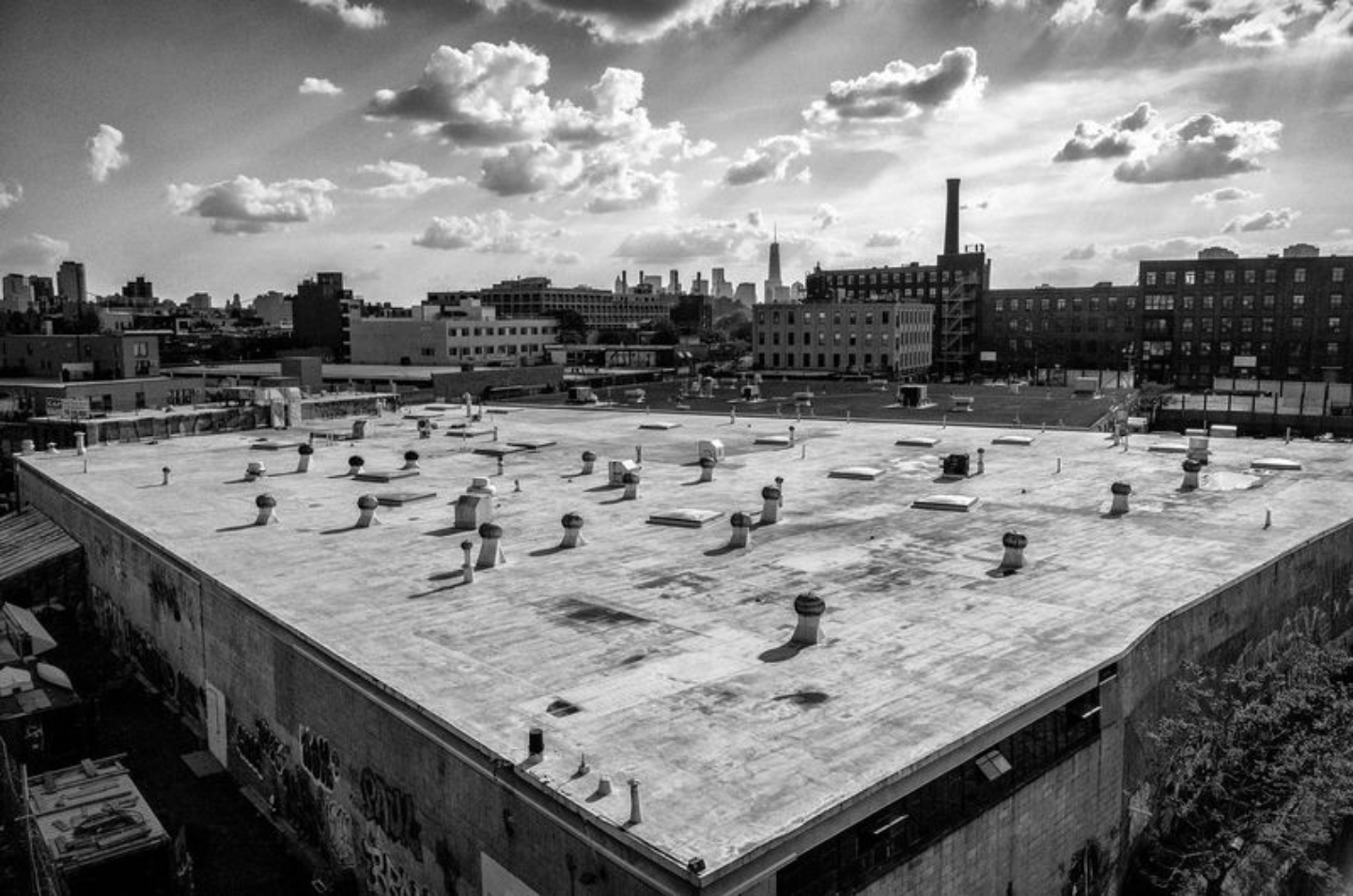
While visiting a ceramic studio in Brooklyn, the photographer was captivated by the architectural geometry visible from an elevated vantage point. Looking out through a bank of windows, he observed the rhythmic, repetitive patterns formed by the vents and skylights on the adjacent rooftop. By choosing a high-shutter-speed approach, he captured the stark, industrial textures of the urban landscape with precision. This image is award-worthy for its transformation of mundane infrastructure into a compelling study of light, shadow, and repetition, demonstrating a keen eye for finding artistic order within the dense, functional environment of the city.
Keith Goldstein
Born in Brooklyn, New York, Keith Goldstein discovered his passion for photography during his formative years, eventually refining his craft at the School of Visual Arts and the Cranbrook Academy of Art. With a career spanning over four decades, he has established himself as a versatile fine art and commercial photographer whose work has appeared in numerous international publications and media outlets. Goldstein is known for his minimalist approach to equipment, believing that being unencumbered provides the greatest creative freedom, a philosophy that continues to define his emotive and observant body of work.
Resonance Score Breakdown
Transparency Note: The resonance score (7.2/20) is calculated based on social engagement metrics collected before the award announcement.
Expert Photography Reviews · 5
The Architecture of Silence
Why do we seek patterns in the chaos of our surroundings, as if finding a rhythm could somehow justify our own existence? We build our lives in rows, stacking days like bricks, hoping that the structure will hold against the erosion of time.
Read the reflection →The Geometry of Silence
In the quiet hours of the morning, before the city fully wakes, there is a particular kind of order that reveals itself.
Read the reflection →Reviews & Comments
Share your thoughts about this award-winning photograph. Your reviews contribute to the community engagement score.
1/4000sec at f/8.0, ISO 1600. Why the high ISO? It’s an unnecessary noise floor for a static rooftop. The 28mm focal length provides the necessary geometry, but the sensor gain is a technical lapse. It’s lazy. Still, the sharpness at f/8.0 renders the vents with a clinical accuracy I can’t help but respect. It’s a cold, industrial efficiency that actually works here. The math is flawed, but the result is undeniably precise.
It’s a sharp study of geometry, sure, but I’m looking for a pulse. Where’s the person? I’ve spent my life chasing the stories behind the windows, and here, the architecture feels cold, almost lonely. It’s technically precise, but it doesn’t breathe. I find myself aching for a hand on the glass or a shadow of someone living behind those vents. It’s a clean composition, but it’s missing the only thing that actually matters: us.
We look at these Brooklyn rooftops and we don’t see people, yet we feel their breath. The rhythmic vents and skylights aren’t just industrial geometry; they’re the silent architecture of a life lived in the city’s hum. I find myself leaning in, searching for the hands that built these shadows. It’s a lonely, beautiful conversation between the maker and the skyline. I’ve never felt so connected to a city’s quiet, unseen pulse. It’s hauntingly human.
At f/8, the Ricoh’s 18.3mm lens operates near its diffraction limit, rendering these Brooklyn vents with a clinical, biting sharpness. The focal plane is absolute, pinning every industrial texture against the sensor’s grid. It’s a rare pleasure to see such geometric discipline. I’m genuinely moved by how the light resolves across those skylights; it’s not just architecture, it’s a mathematical symphony. You don’t often see this level of optical honesty in urban studies. It’s simply brilliant.
The frame resolves into a rigorous grid, where the rhythmic repetition of vents creates a compelling series of parallel vectors. I’m struck by how the 2:3 ratio of shadow to concrete anchors the composition, pulling the eye toward the negative quadrant. It’s a beautifully solved spatial equation. The Ricoh’s 28mm lens captures these industrial intervals with such clinical precision that the urban chaos simply vanishes, leaving only the pure, satisfying logic of the rooftop’s geometry.