Purple Flowers by Leanne Lindsay
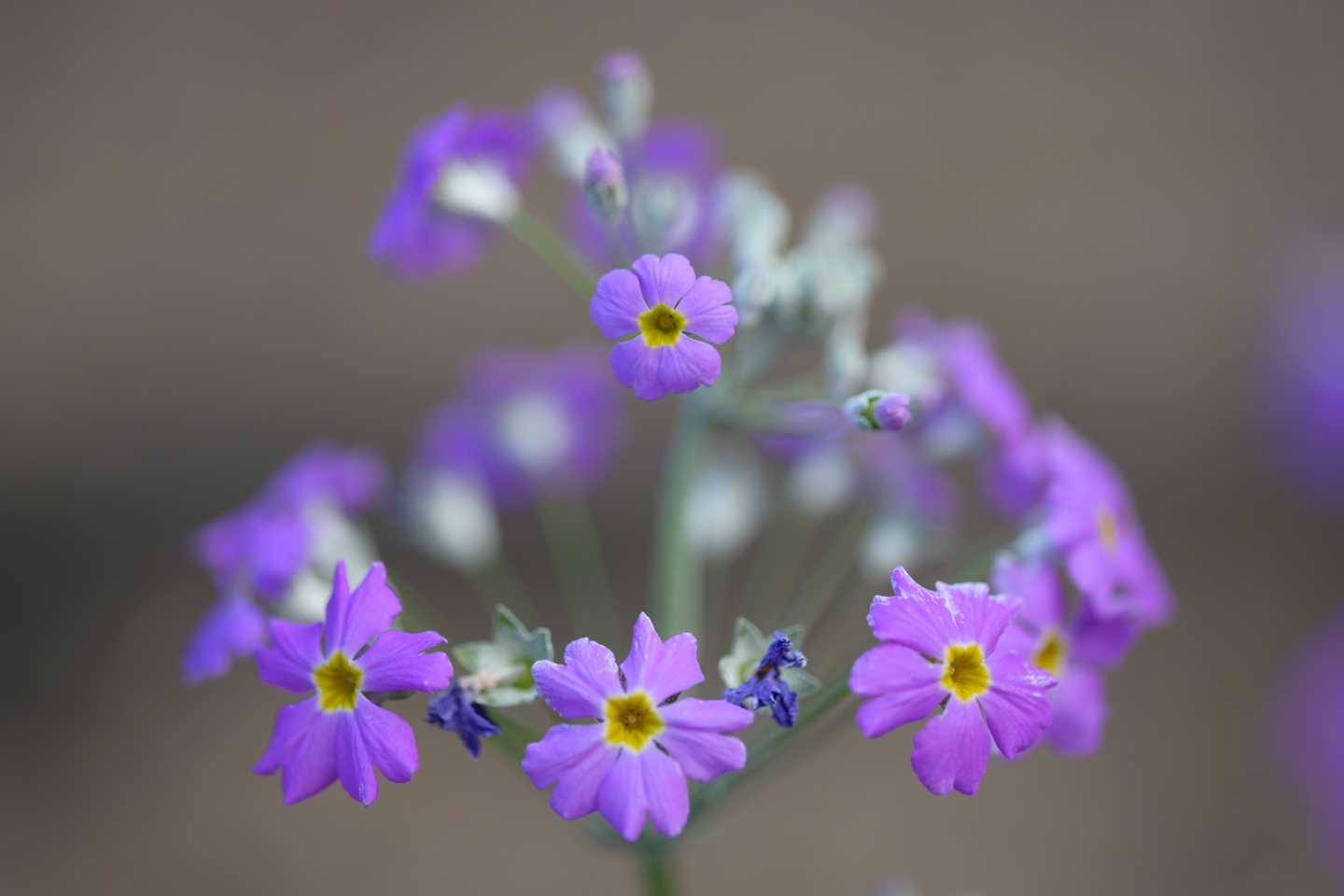
Leanne Lindsay captures the vibrant allure of purple flowers at the Auburn Botanic Garden, utilizing a deliberate shallow depth of field to isolate her subjects. By focusing sharply on the foreground petals, she creates a soft, dreamy bokeh in the background that emphasizes the delicate textures and rich hues of the blooms. This technical choice effectively guides the viewer's eye, transforming a simple garden scene into an intimate study of nature. The photograph is award-worthy for its masterful use of light and composition, which elevates a common botanical subject into a compelling, ethereal visual experience.
Leanne Lindsay
Born in Adelaide in 1962, Leanne Lindsay relocated to Sydney during her youth. After a long hiatus from photography following the loss of her first camera, she rediscovered her creative passion in her late 50s. Now based in Sydney, she specializes in family and newborn portraiture while maintaining a dedicated interest in architectural and landscape photography, capturing the world with a renewed sense of wonder and technical precision.
Resonance Score Breakdown
Transparency Note: The resonance score (8.5/20) is calculated based on social engagement metrics collected before the award announcement.
Expert Photography Reviews · 6
The Quiet Language of Petals
There is a small, overgrown patch of earth tucked behind a row of terrace houses in my neighborhood where the seasons seem to hold their breath. I often find myself walking past it on Tuesday afternoons, when the city noise softens into a low, rhythmic hum.
Read the reflection →The Quiet Persistence of Color
I have always been suspicious of flowers in art. They are the easy shorthand for beauty, a reliable way to bypass the intellect and go straight for a cheap, reflexive sigh.
Read the reflection →Reviews & Comments
Share your thoughts about this award-winning photograph. Your reviews contribute to the community engagement score.
It’s refreshing to see such vibrant purples without fighting the water’s relentless hunger for the red spectrum. Down here, those hues vanish within five metres, leaving only a monochromatic blue void. I’m genuinely envious of how easily Lindsay captures these petals; there’s no backscatter to navigate, no refractive index distortion, and no need for strobes to reclaim lost warmth. It’s a clean, terrestrial luxury I rarely find in my own work beneath the surface.
Of the thousands of floral studies I’ve reviewed, most are merely pretty. What separates this from the pack is the precise focal plane at f/3.8; it doesn’t just blur the background, it dissolves the Auburn garden into a painterly wash that forces us to confront the velvet texture of those petals. I felt a genuine, quiet ache looking at it. It’s a fleeting moment captured with such intent that it’ll still feel relevant in thirty years.
Technically, it’s a lovely study of light, but it leaves me cold. I’ve spent my life looking for the pulse in a frame, and flowers just don’t offer that exchange. There’s no trust here, no conversation, no human weight. It’s pretty, sure, but it’s a silent room. I find myself craving a face, a pair of hands, or a story told in wrinkles. This doesn’t move me; it’s just a beautiful, empty surface.
At 1/640sec, there’s no thermal noise here, just the quiet, terrestrial life of Auburn. It’s a strange shift for me, trading the cold, ancient photons of deep space for these vibrant, sun-drenched petals. I’m struck by how the f/3.8 aperture renders the background into a soft, ephemeral blur. It’s a beautiful, fleeting moment. While I usually track light that’s traveled millions of years, I find it’s refreshing to watch life bloom in the present.
The frame operates on a strict diagonal tension, pulling the eye from the lower-left focal point toward the upper-right bokeh gradient. Lindsay’s 105mm compression flattens the depth, forcing a tight 3:1 ratio between the sharp, crystalline petal structures and the soft, spherical light clusters. It’s a beautifully solved spatial equation. I’m genuinely struck by how the geometry anchors the chaos of the garden; it’s not just a flower, it’s a perfectly balanced, rhythmic sequence of violet vectors.
A pleasant enough study, though one wonders if the shutter was clicked during a casual stroll. It’s technically competent, certainly, but it lacks the grit of a morning spent shivering in the mud. I’ve spent decades chasing light that refuses to arrive; here, the light feels convenient. It’s a pretty garden shot, but I’m left wanting the story of a return visit. It’s lovely, but did she earn it, or just find it?