People to the Flowing Waters by Shahnaz Parvin
Captured from the center of a river, this evocative photograph portrays the quintessential rhythm of life in Bangladesh. The image centers on a boatman, his weathered features and white beard serving as a poignant testament to the passage of time and the enduring traditions of river culture. By framing the daily commute against the vast, flowing waters that sustain the region, the photographer highlights a timeless connection between the people and their environment. The composition is award-worthy for its authentic storytelling, capturing the quiet dignity of a routine journey that defines the pulse of a nation.
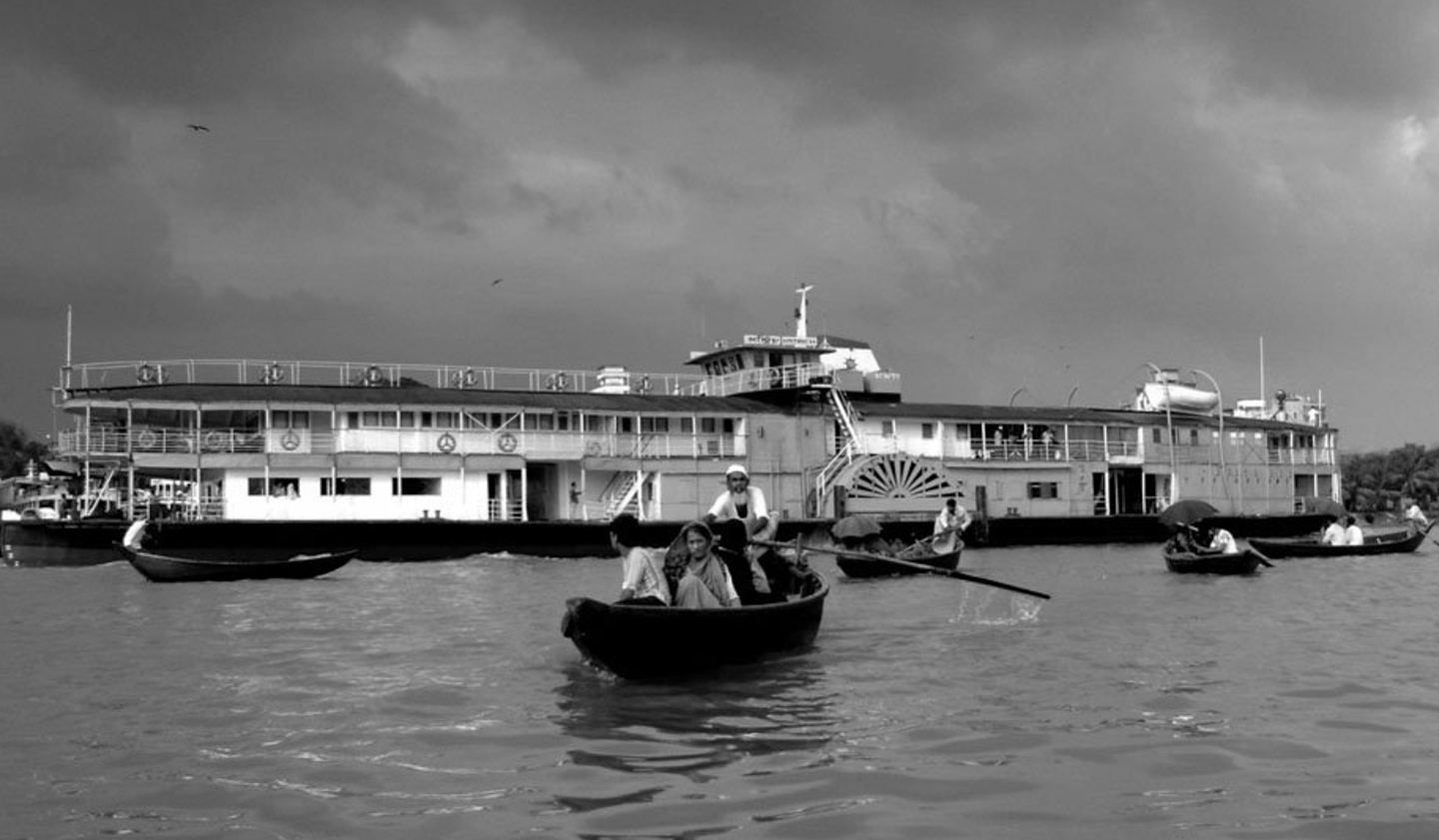
Exposure 1/400sec @ f/1.8 | ISO 200 | Focal Length 85mm
Shahnaz Parvin
Shahnaz Parvin was an acclaimed photojournalist and a passionate advocate for Bangladeshi culture. Recognized as one of the world's top photographers during her career, she specialized in documentary photography, capturing the complexities of conflict, culture, and daily life across South Asia. As a prolific contributor to Light & Composition, she earned numerous accolades for her ability to represent the spirit of her homeland through her lens. Her legacy remains defined by her dedication to the craft and her profound impact on international documentary photography.
Resonance Score Breakdown
Transparency Note: The resonance score (13.8/20) is calculated based on social engagement metrics collected before the award announcement.
Expert Photography Reviews · 7
The Salt on the Skin
The smell of damp wood always brings me back to the riverbank, to the way the air feels heavy and thick, like a wet wool blanket draped over the shoulders.
Read the reflection →The River That Remembers
Water does not hurry, yet it arrives everywhere. We think of the river as a path, a way to get from one shore to another, but it is really a long, slow conversation with the earth. It carries the silt of mountains and the debris of cities, indifferent to the weight of either.
Read the reflection →Reviews & Comments
Share your thoughts about this award-winning photograph. Your reviews contribute to the community engagement score.
Most entries in this category rely on the exoticism of the Buriganga to do the heavy lifting. Parvin avoids that trap. By shooting at f/1.8, she isolates the boatman’s weary gaze, forcing us to confront his individual history rather than just the scenery. It’s a quiet, aching portrait of endurance. I’ve looked at thousands of river shots, but this one stays. It’s the way his eyes hold the horizon; it makes me feel genuinely small.
The Buriganga doesn’t just flow; it consumes. Parvin’s boatman exists in that narrow, precarious margin where light fails to reach the hull. I’ve stared at his eyes, and it’s unsettling—he isn’t looking at the river, but into the void of his own history. Heidegger argued that we dwell only where we can think. In these deep, suffocating shadows, I feel the crushing weight of a life lived entirely within the dark, silent current.
The Buriganga’s palette isn’t merely water; it’s a bruised, melancholic slate, reminiscent of Turner’s most turbulent, vaporous horizons. One finds the boatman’s skin tones—a parched, ochre earth—clashing beautifully against that cool, liquid desaturation. It’s a chromatic ache that makes my chest tighten, a quiet collision of human mortality and the river’s infinite, grey indifference. I’ve rarely seen such a fragile, muted harmony, where the light doesn’t just illuminate the subject; it consumes him entirely.
One wonders how many mornings were spent bobbing on the Buriganga before the light finally hit that beard just so. It’s easy to snap a commuter, but catching the exact rhythm of the river requires a stubborn sort of patience. I’ve spent enough damp hours in a skiff to know the ache in one’s lower back. She didn’t just find this; she earned it. It’s a quiet, honest piece of work. I quite like it.
What strikes me immediately in ‘People to the Flowing Waters’ is the raw, unforced authenticity. Shahnaz Parvin has a rare gift for stepping into a community and capturing moments of profound human dignity without intrusion. The subject’s expression and posture speak with complete honesty; there is no performance here, only life witnessed with deep empathy and respect. You waited for the exact right second, and the result is timeless.
Optically and technically, ‘People to the Flowing Waters’ delivers exceptional execution. The depth of field is measured to isolate the vital textural details while maintaining context in the background. Exposure values are tightly controlled, retaining subtle highlight gradations without crushing the shadow details. The shutter speed captures the organic cadence of the environment cleanly, proving that intentional camera craft is the bedrock of powerful imagery.
The structural balance in ‘People to the Flowing Waters’ demonstrates a rigorous spatial discipline. Shahnaz Parvin anchors the visual weight with precision, establishing a clear hierarchy that guides the eye across the frame without hesitation. The negative space functions not as an empty void, but as an intentional counterbalance to the central subject. There is a geometric integrity here that holds the entire scene together with commendable authority.