Panorama Rocchetta Mattei by Antonio Biagiotti
Captured at the break of dawn, this striking image of Rocchetta Mattei showcases the photographer’s dedication to the craft of long-exposure film photography. By arriving well before sunrise and utilizing a large-format camera with specialized ND filters, the photographer achieved an eight-minute exposure that renders the sky ethereal and the castle’s architecture monumental. This deliberate technical approach, combined with the patience required to wait for the perfect morning light, elevates the scene into a timeless study of form and atmosphere. The resulting image is a testament to the power of traditional darkroom techniques in modern architectural photography.
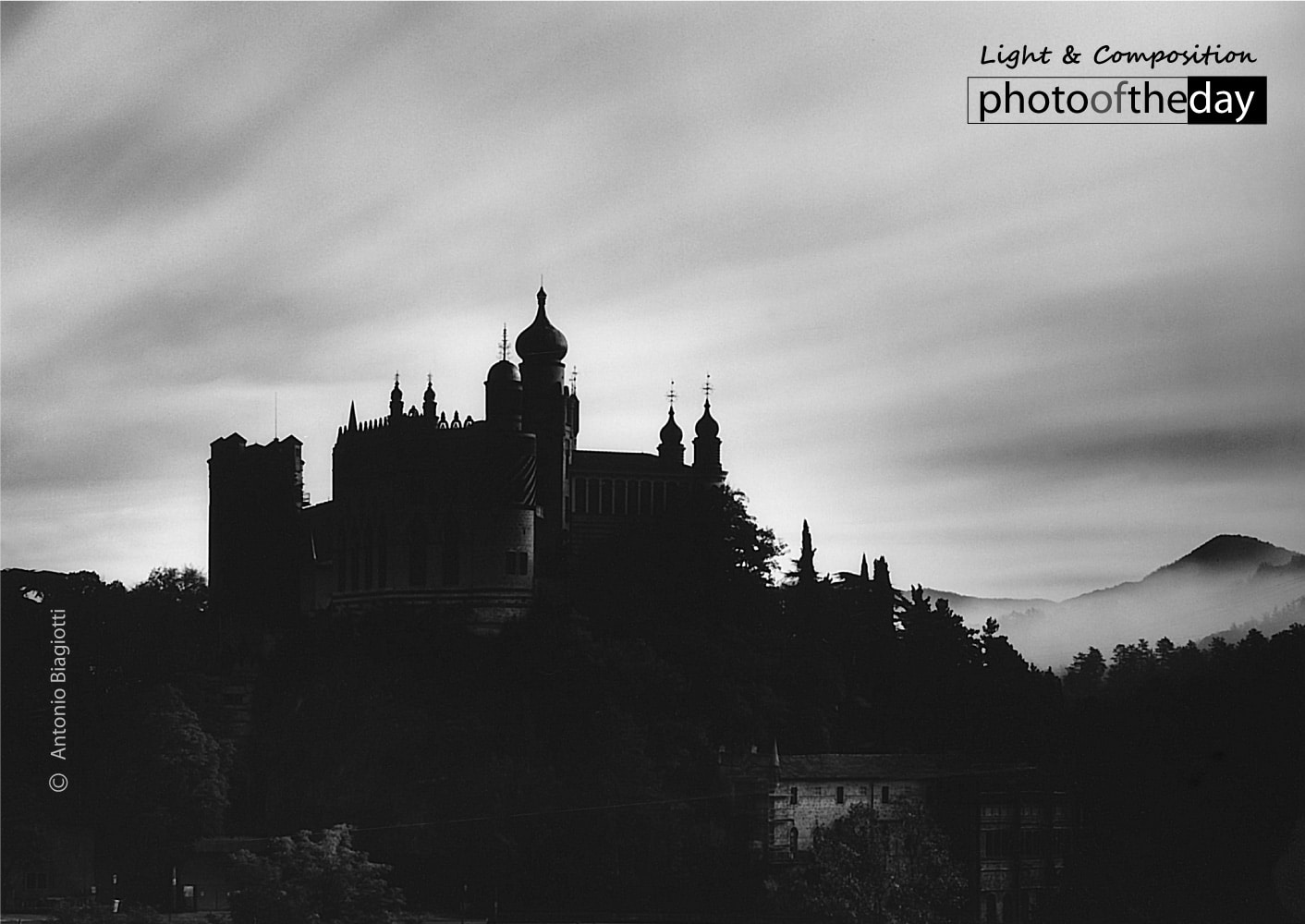
Exposure 8 Minutes @ f/64 | ISO 100 | Focal Length 240mm
Antonio Biagiotti
Born in 1971 in Porretta Terme, Italy, Antonio Biagiotti is a dedicated photographer based in the scenic Appennino Tosco-Emiliano region. His practice is deeply rooted in traditional methods, favoring large and medium format film cameras which he personally develops and prints in his own darkroom. Driven by a passion for the tactile elements of shutter speed and aperture, Biagiotti’s work is characterized by a meticulous approach to black and white photography, supported by his wife, Sara, who serves as both his primary advocate and his most discerning critic.
Resonance Score Breakdown
Transparency Note: The resonance score (11.2/20) is calculated based on social engagement metrics collected before the award announcement.
Expert Photography Reviews · 8
The Architecture of Silence
When a forest experiences a period of total stillness, the mycelial networks beneath the soil continue their work in the dark, weaving connections that remain invisible until the first rains trigger a sudden, structural bloom.
Read the reflection →The Architecture of Stillness
Seneca once observed that we are often more afraid than we are hurt, and we suffer more in imagination than in reality. He understood that the human mind is a restless traveler, forever leaping ahead to anticipate storms or lingering behind to mourn shadows.
Read the reflection →Reviews & Comments
Share your thoughts about this award-winning photograph. Your reviews contribute to the community engagement score.
The stone walls of Rocchetta Mattei don’t just frame the sky; they anchor it. That eight-minute exposure turns the clouds into a soft, velvet shroud, making the architecture feel like a living, breathing entity. I’m breathless looking at how the light clings to those intricate turrets. It’s as if the castle is the portrait’s true subject, a silent protagonist waiting for dawn. It’s haunting, really—the way the stone holds the history while the sky simply drifts away.
f/64 at 240mm for eight minutes. It’s a brutal commitment to diffraction and reciprocity failure. Most would fear the loss of micro-contrast, but here, the physics hold. The Rodenstock resolves the masonry with clinical precision, refusing to let the long exposure turn stone into mush. I’ve spent years chasing this kind of mechanical discipline. It’s rare to see a photographer actually respect the glass this much. The technical execution is correct. It’s damn impressive.
Before the eye identifies the stone, something in the chest tightens. That eight-minute exposure doesn’t just blur the sky; it suspends the world in a state of permanent, breathless anticipation. I feel a strange, cold ache in my shoulders looking at those towers, as if I’m standing in that dawn chill myself. It’s a haunting stillness. When I return to it, the silence feels heavier, a ghost of a memory I never actually lived.
The palette here evokes a Morandi still life, where the stone’s pale, chalky ochre dissolves into the bruised violet of a pre-dawn sky. It’s a haunting, chromatic suspension; one feels the chill of the Apennines in those muted, desaturated greys. I’m utterly breathless at how the light clings to the masonry, turning the castle into a phantom of history. It doesn’t just exist; it breathes in a soft, melancholic harmony that’s truly divine to behold.
Eight minutes? That’s an eternity. Cartier-Bresson would’ve had a heart attack waiting that long. I’m used to the street’s frantic pulse, where a tenth of a second decides everything. Here, the light is frozen, smoothed into a dream. It’s technically flawless, sure, but I miss the grit. I crave the chaos of a moving shadow. It’s beautiful, honestly, but it’s a statue, not a heartbeat. I’d trade that ethereal sky for one fleeting, unrepeatable human glance.
Eight minutes at f/64 with a Gibellini isn’t a casual morning stroll; it’s a commitment to the cold. One doesn’t lug a 4×5 kit up to Rocchetta Mattei unless they’ve made peace with the damp. I’ve spent enough dawns shivering behind a dark cloth to recognize that stillness. It’s a rare, quiet victory. The architecture feels properly anchored, earned through sheer, stubborn patience. It’s a damn fine piece of work, and frankly, I’m envious of the light.
Eight minutes of exposure turns the sky into a ghostly void, but what does that silence hide? By smoothing away the morning’s reality, Biagiotti transforms this fortress into a sterile, untouchable monument. It’s technically precise, yet I feel a cold detachment looking at it. Why must we erase the living context of Grizzana Morandi to make architecture look “timeless”? Whose history are we scrubbing clean here? I’d prefer a messier, more honest gaze over this polished vacuum.
We look at Rocchetta Mattei and we aren’t just seeing stone; we’re hearing the silence of the mountain. Antonio waited eight minutes for the light to settle, listening to the castle’s history before he dared to look. It’s a portrait of a building that feels alive, breathing through the long exposure. I’ve stood in front of many ruins, but this one makes me feel small, like a guest in a story that’s still being told.