On the River by Ryszard Wierzbicki
Captured along the Kaladan River near Mrauk U in April 2012, this evocative image documents the daily life of local fishermen navigating the waterways of Myanmar. The photographer, while traveling the river, was drawn to the authentic interactions of the villagers and the rhythmic movement of their boats against the landscape. The shot is award-worthy for its candid portrayal of cultural heritage and the precise technical execution that captures the essence of the region. By balancing the natural light with the subjects' environment, the photographer creates a timeless narrative that highlights the quiet dignity of life in the Sittwe district.
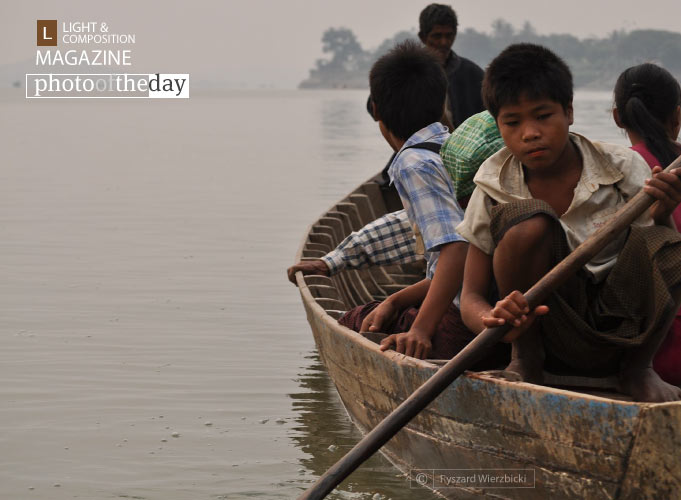
Exposure 1/250sec @ f/8 | ISO 200 | Focal Length 112mm
Ryszard Wierzbicki
Born in Poland in 1963, Ryszard Wierzbicki relocated to the United Kingdom in 2006, where he established himself as a dedicated travel photographer. His work is deeply rooted in cultural observation, with a particular specialization in evocative portraits of children and the elderly. Through his extensive travels, particularly across South-East Asia, he captures the human element of diverse societies, consistently demonstrating a keen eye for the stories that define local traditions and daily life.
Resonance Score Breakdown
Transparency Note: The resonance score (14.1/20) is calculated based on social engagement metrics collected before the award announcement.
Expert Photography Reviews · 4
The Salt of the Current
The smell of wet wood is a specific kind of memory—it is the scent of something that has spent its entire life drinking the river.
Read the reflection →The Rhythm of the Current
We often mistake stillness for an absence of movement, forgetting that the deepest waters are those that carry the most weight without a ripple. To exist in the flow is to understand that we are not the masters of the tide, but merely travelers upon it.
Read the reflection →Reviews & Comments
Share your thoughts about this award-winning photograph. Your reviews contribute to the community engagement score.
One suspects the light cooperated on the first attempt. It often does, for the casual traveler. While the composition holds a certain rhythmic grace, I find myself wanting more grit. Did the photographer return at dawn, or merely drift past on a tour boat? I’ve spent enough days shivering in damp river reeds to know when a shot is earned. This one feels like a pleasant encounter, not a hard-won victory. It’s pretty, but it’s cheap.
The Kaladan’s surface holds the sky’s exhaustion. Ryszard stood here in the cooling hour, waiting for the river to stop its restless shifting. It’s the silence between the oar strokes that catches me; I’ve felt that same heavy, humid stillness in my own lungs. He didn’t force the frame. He simply listened to the water until the light softened enough to reveal the dignity of these men. It’s a quiet, honest prayer of a photograph.
The Kaladan’s surface doesn’t merely reflect; it swallows. Wierzbicki’s shadows here aren’t absences, but heavy, silt-laden silences where the fishermen’s labor dissolves into the murky depths. I’ve stared at these dark, rhythmic ripples until my own pulse slowed to match the current. It’s a haunting, claustrophobic stillness. Most photographers fear this encroaching blackness, yet here, the darkness is the only thing that feels honest. It’s where the river finally stops pretending and begins to think.
Most travel photography is just visual tourism, but this holds up. I’ve seen thousands of river shots, yet the way Wierzbicki frames the boat against that vast, hazy expanse of the Kaladan creates a genuine sense of isolation I can’t shake. It’s the restraint that wins here; he didn’t over-process the light. It’s quiet, honest, and thirty years from now, it won’t feel like a relic. It’ll still feel like a life being lived.