Oldness in Two by Ryszard Wierzbicki
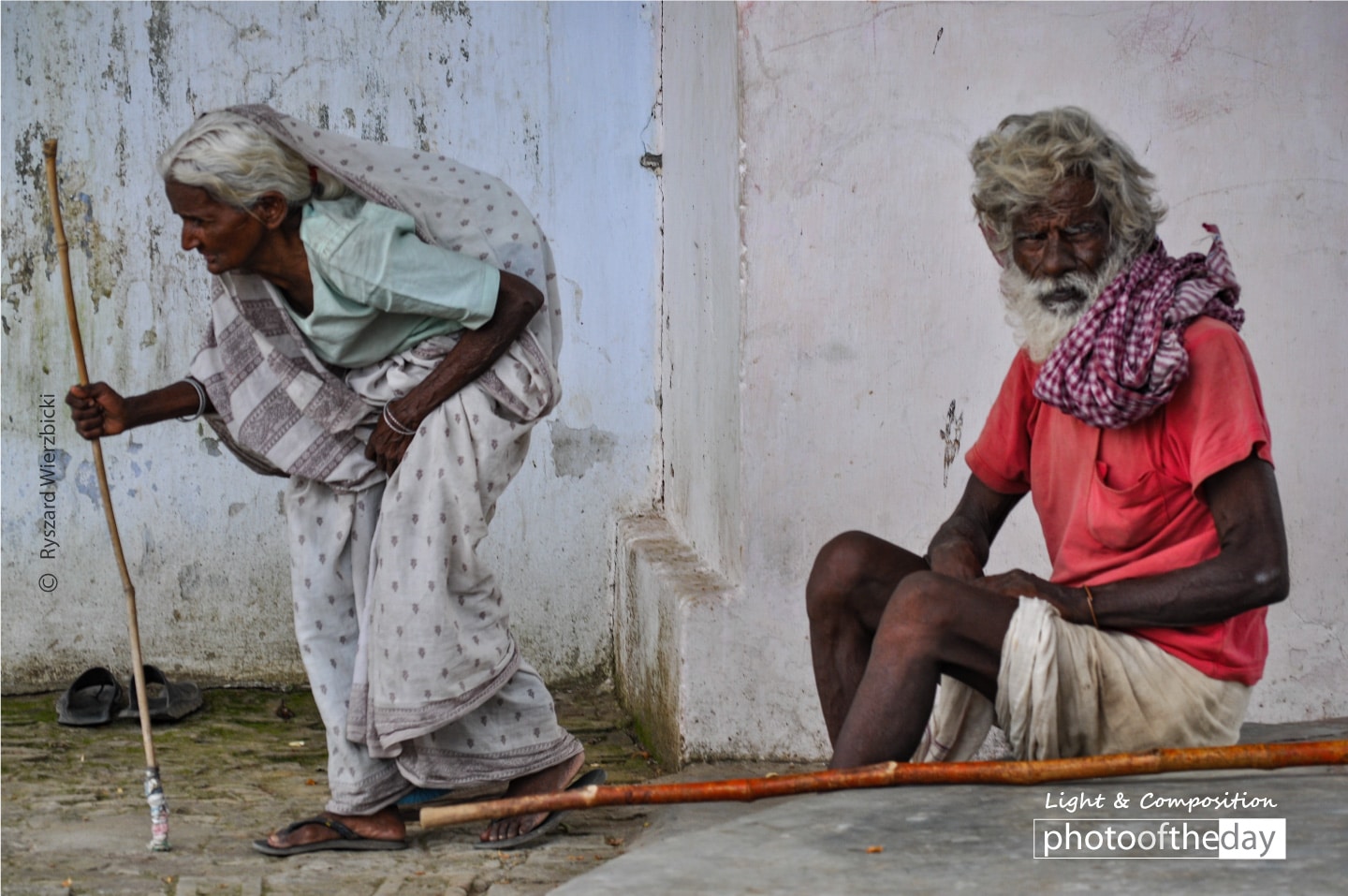
Captured in the shadow of the Dungeswari Hills near Bodh Gaya, this poignant portrait documents an elderly couple living near the site where Siddhartha Gautama once practiced asceticism. The photographer masterfully juxtaposes the profound spiritual history of this sacred landscape with the stark, contemporary reality of local poverty. By focusing on the weathered expressions of his subjects, the image invites a reflection on the passage of time and the resilience of the human spirit. This candid work is award-worthy for its deep empathetic connection, sensitive composition, and its ability to bridge the gap between ancient enlightenment and modern hardship.
Ryszard Wierzbicki
Born in 1963, Ryszard Wierzbicki is a Polish-born photographer and educator currently based in Swindon, United Kingdom. After a diverse career in social sciences and marketing, he transitioned into a life of global exploration and visual storytelling, focusing his lens on the cultures of South-East Asia. His work is deeply informed by his extensive travels and his commitment to humanitarian efforts, including volunteering with orphanages in Thailand and Burma. Through his photography and travel forums, he documents the human condition with a focus on empathy and cultural discovery.
Resonance Score Breakdown
Transparency Note: The resonance score (11.7/20) is calculated based on social engagement metrics collected before the award announcement.
Expert Photography Reviews · 7
The Weathering of Stone
Lichens are the slow architects of the wild, colonizing bare rock with a patience that defies our human sense of urgency. They do not fight the stone; they integrate with it, breaking down the mineral surface over decades, turning the impenetrable into soil.
Read the reflection →The Texture of Time
The smell of dry earth after a long drought is a scent that clings to the back of the throat, tasting of dust and ancient, sun-baked clay.
Read the reflection →Reviews & Comments
Share your thoughts about this award-winning photograph. Your reviews contribute to the community engagement score.
In the shadow of the Dungeswari Hills, we find a silence that isn’t empty. It’s a conversation held in the deep, mapped lines of these two faces. They haven’t just aged; they’ve endured. When I look at them, I feel a sudden, sharp ache for the stories they’ve never told us. Ryszard didn’t just point a lens; he waited until they were ready to be seen. It’s a portrait that asks to be returned to.
Shadows here aren’t merely blocking the sun; they’re the weight of history pressing against skin. In the Dungeswari hills, Wierzbicki finds the dark, hollowed spaces where time actually resides. It’s not just poverty we’re seeing, but the exhaustion of existence itself. I’ve stared at these faces for an hour, and honestly, it’s terrifying. When light finally touches their eyes, it doesn’t offer hope. It only reveals how much of their lives have already been consumed by the dark.
Bodh Gaya’s sacred geography shouldn’t serve as a backdrop for aestheticizing destitution. Wierzbicki frames this couple against the Dungeswari Hills, but why must their poverty be the lens for our spiritual reflection? It’s uncomfortable. I feel a sharp, visceral irritation at how their weathered skin becomes a prop for the photographer’s narrative of resilience. Are they people, or are they just symbols of ancient hardship? Who granted him the right to commodify their quiet, hungry lives?
f/2.8 at 50mm, 1/200s, ISO 400. A standard aperture for isolation, yet the depth of field here is razor-thin. It’s a calculated risk that pays off. The focus on the skin texture is precise, grounding the subjects in their environment. I’ve seen enough soft portraits to know when a lens is pushed correctly. It’s technically sound, and honestly, the sharpness of those eyes genuinely unsettled me. The technical execution justifies the emotional weight. Correct choices.
Most entries in this category rely on the exoticism of poverty to manufacture depth. Wierzbicki avoids that trap. By framing the couple against the harsh, unyielding textures of the Dungeswari landscape, he forces us to confront their endurance rather than their struggle. It’s the way their hands mirror the jagged rock behind them that truly gets to me. I’ve seen thousands of portraits, but this one will still matter in thirty years because it refuses to pity them.
The light hits those weathered faces and I’m stopped cold. It’s the weight of centuries pressing against the present. Ryszard caught them in a quiet, fragile alignment that feels like a prayer. One tenth of a second later and the connection would’ve dissolved into the dust of Bihar. He didn’t blink. He felt the gravity of that moment before it vanished. It’s raw, it’s honest, and it’s exactly why we keep chasing the light.
The crumbling masonry behind this couple isn’t just a backdrop; it’s a datum of decay that defines their existence. The harsh, raking light emphasizes the texture of their skin, mirroring the weathered stone. I’m struck by how the frame omits the threshold of their shelter, leaving us to wonder if they’re protected or merely exposed. It’s a brutal, honest study of mass and void, where the architecture of poverty feels heavier than the hills themselves.