Morning Dew on the Mustard Field by Shahnaz Parvin
Agriculture in our countryside is an art form passed down through generations. Standing in the middle of the lush green fields, I observed the concentration and care given to every single shoot. There is a deep, spiritual bond between our people and the soil that sustains them.
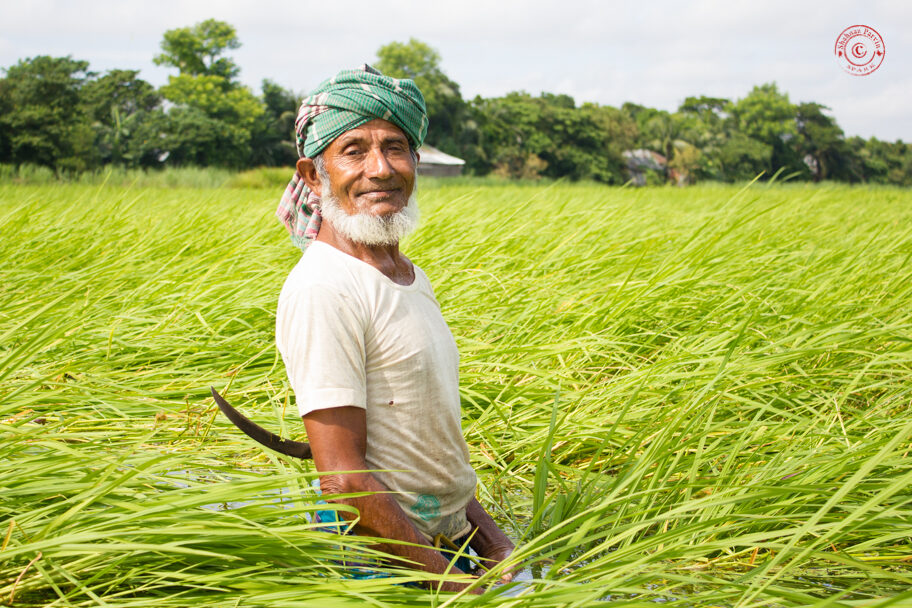
Exposure 1/320 sec @ f/4 | ISO 200 | Focal length 135mm
Shahnaz Parvin
Based in Dhaka, Bangladesh, Shahnaz Parvin was a celebrated photojournalist and a dedicated documentarian of South Asian culture. Renowned for her ability to capture the essence of her homeland, she consistently ranked among the world’s top photographers during her prolific career. As a key contributor to Light & Composition, she utilized her lens to bridge cultural divides, documenting everything from daily life to complex social upheavals with profound empathy and technical precision before her untimely passing in 2016.
Resonance Score Breakdown
Transparency Note: The resonance score (12.6/20) is calculated based on social engagement metrics collected before the award announcement.
Expert Photography Reviews · 6
The Quiet Courage of the Field
There is poetry in the physical weight of labor.
Read the reflection →The Golden Fiber of Patience
There is an honest dignity in earth-stained hands that no title or credential can ever confer. We who spend our days in air-conditioned rooms staring into glowing rectangles easily forget where our sustenance truly begins.
Read the reflection →Reviews & Comments
Share your thoughts about this award-winning photograph. Your reviews contribute to the community engagement score.
There is a serene, contemplative stillness in ‘Morning Dew on the Mustard Field’ that reflects the concept of Ma—the meaningful interval. Shahnaz Parvin exercises remarkable restraint, resisting the temptation to overcomplicate the composition. The quiet intervals between the elements give the photograph room to breathe, inviting the viewer into a state of peaceful observation. A masterclass in visual simplicity.
In ‘Morning Dew on the Mustard Field’, shadow is not merely the absence of light—it is where the psychological weight of the image resides. The rich contrast and textured darks sculpt the contours of the subject with dramatic intensity. The interplay between luminous highlights and contemplative shadows creates an atmosphere that invites sustained, thoughtful reflection. It is an image that acknowledges the complexity of existence.
What strikes me immediately in ‘Morning Dew on the Mustard Field’ is the raw, unforced authenticity. Shahnaz Parvin has a rare gift for stepping into a community and capturing moments of profound human dignity without intrusion. The subject’s expression and posture speak with complete honesty; there is no performance here, only life witnessed with deep empathy and respect. You waited for the exact right second, and the result is timeless.
The tonal harmony in ‘Morning Dew on the Mustard Field’ is nothing short of luminous. The palette breathes with natural warmth, capturing the distinct atmospheric quality of Buriganga River, Dhaka, Bangladesh with delicate chromatic fidelity. The transitions between warm ochres, deep earth tones, and cool atmospheric light evoke the painterly sensibility of classical chiaroscuro. It is a work of profound color coherence that enriches the emotional resonance of the entire frame.
Optically and technically, ‘Morning Dew on the Mustard Field’ delivers exceptional execution. The depth of field is measured to isolate the vital textural details while maintaining context in the background. Exposure values are tightly controlled, retaining subtle highlight gradations without crushing the shadow details. The shutter speed captures the organic cadence of the environment cleanly, proving that intentional camera craft is the bedrock of powerful imagery.
The structural balance in ‘Morning Dew on the Mustard Field’ demonstrates a rigorous spatial discipline. Shahnaz Parvin anchors the visual weight with precision, establishing a clear hierarchy that guides the eye across the frame without hesitation. The negative space functions not as an empty void, but as an intentional counterbalance to the central subject. There is a geometric integrity here that holds the entire scene together with commendable authority.