Moment in Time by Jabbar Jamil
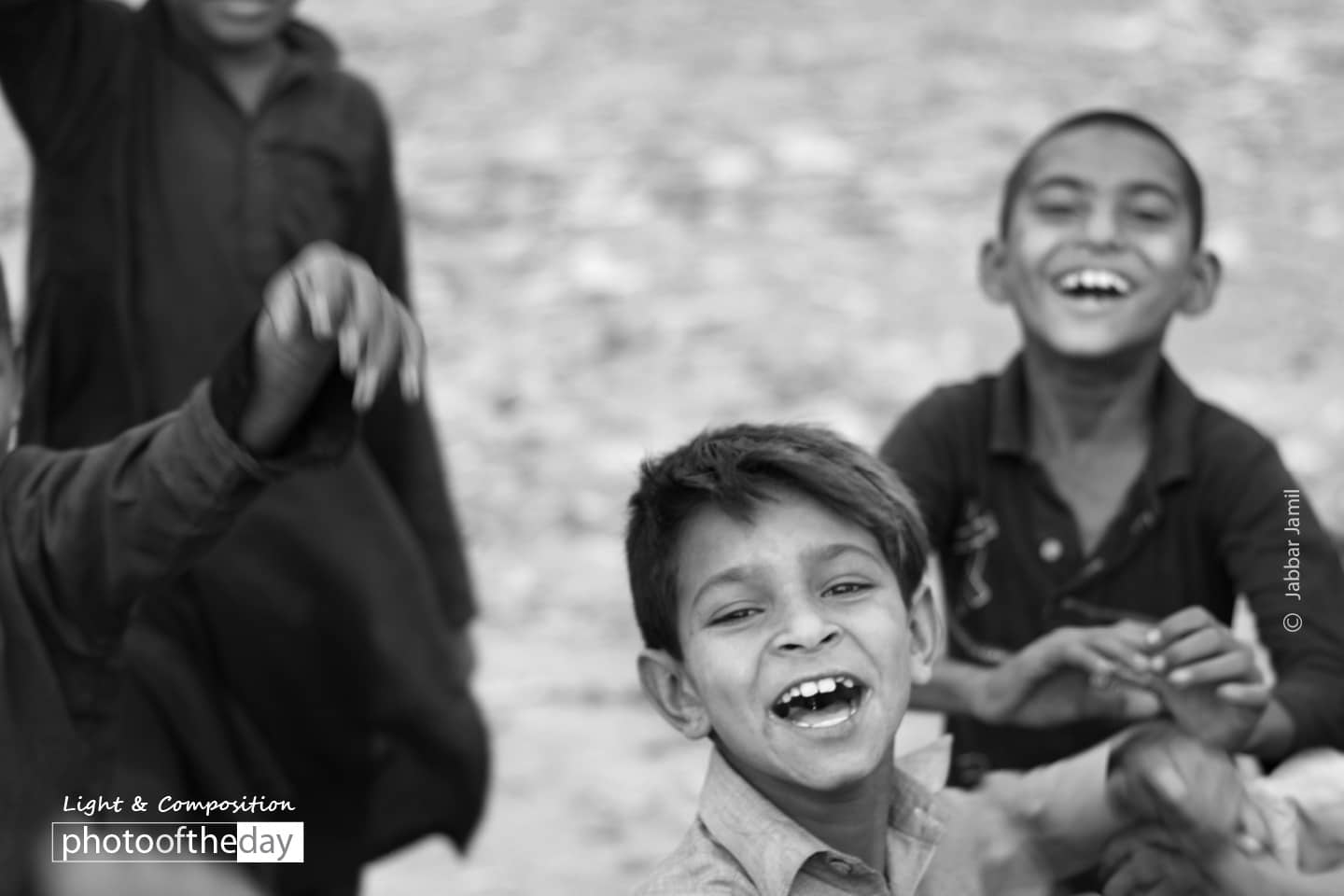
Captured on the outskirts of Sialkot, this candid image freezes a fleeting moment of childhood joy. While returning from a village, the photographer noticed a group of children playing in the distance and seized the opportunity to document their unscripted interaction. By stepping into the scene with a keen eye for human connection, the photographer successfully translated a simple, everyday occurrence into a timeless narrative. The photograph is award-worthy for its authentic portrayal of pure, spontaneous emotion, demonstrating a masterful ability to find beauty and significance in the quiet, overlooked corners of daily life.
Jabbar Jamil
Based in Sialkot, Pakistan, Jabbar Jamil is a dedicated street photographer who views his craft as a vital bridge to the outside world. Through his lens, he seeks to move beyond mere image-making to foster genuine human connections, often finding that photography serves as both a creative outlet and a therapeutic escape. His work is defined by a commitment to documenting reality as he finds it, embracing the raw and honest nature of the streets to tell compelling stories about the world around him.
Resonance Score Breakdown
Transparency Note: The resonance score (11.7/20) is calculated based on social engagement metrics collected before the award announcement.
Expert Photography Reviews · 6
The Weight of Unburdened Air
In the physics of childhood, gravity seems to operate differently. We spend our adult lives tethered to the earth by the heavy, invisible chains of schedules, debts, and the relentless ticking of the clock.
Read the reflection →The Weight of a Run
I remember a dusty afternoon in a village outside of Jaipur where the air felt thick enough to hold onto. A group of boys were chasing a hoop made of rusted wire, their laughter cutting through the heat like a sharp blade.
Read the reflection →Reviews & Comments
Share your thoughts about this award-winning photograph. Your reviews contribute to the community engagement score.

The dust of Sialkot doesn’t merely settle; it gilds the air in a hazy, ochre warmth reminiscent of Turner’s late, dissolving horizons. One finds the children’s garments vibrating against the parched earth, a symphony of faded indigo and sun-bleached terracotta that makes my heart ache with a sudden, sharp nostalgia. It’s a chromatic dance where the light isn’t just illumination, but a living, breathing pigment that binds these fleeting, joyous souls to the eternal landscape.
It’s a familiar trope, echoing the unposed spontaneity of Henri Cartier-Bresson’s children in Seville, yet Jamil finds a distinct, dusty resonance in Sialkot. The way the light catches the movement here reminds me of Helen Levitt’s street work, though it’s less about urban grit and more about pure, kinetic joy. I’ve spent decades cataloging such moments, but the sheer, unadulterated delight on these faces actually made me smile. It’s a rare, refreshing echo of humanity.
These children are playing, but they’re playing for themselves, not for a lens. That’s the difference. Jabbar didn’t intrude; he waited until they forgot he was there. I look at the dust kicked up by their bare feet and I’m right back in my own childhood, feeling that same frantic, sun-drenched freedom. It’s a rare, honest gift when a photographer lets a moment breathe like this. They’re truly alive in this frame.
f/2.8 at 85mm, 1/1000s, ISO 200. A tight aperture choice for a candid scene. It isolates the subject from the Sialkot dust, forcing focus onto the child’s expression. It’s a calculated risk that pays off. The shutter speed is overkill, but it freezes the motion perfectly. I’ve spent years staring at data, yet this stillness actually caught me off guard. The technical execution is precise. It’s not just a snapshot; it’s a disciplined capture.
Sialkot’s dust settles around these children, but why does the frame feel so distant? Jamil captures joy, yet I’m left wondering: are we observers or intruders? It’s a classic composition, sure, but it feels like a tourist’s souvenir of poverty. Does the photographer’s presence alter the spontaneity he claims to document? I find myself feeling a sharp, uncomfortable ache for the subjects’ privacy. Whose narrative are we actually consuming here, and at what cost?
Most candid shots of children are saccharine traps, but Jamil’s work avoids the sentimentality that usually ruins this genre. Of the thousands I’ve reviewed, this one survives because the geometry of the children’s limbs creates a genuine, kinetic tension. It’s not just a memory; it’s a structural success. I’ll admit, the dust kicked up around their feet actually made me smile. It’s a rare, honest slice of Sialkot that will still matter in thirty years.