Miserable by Leanne Lindsay
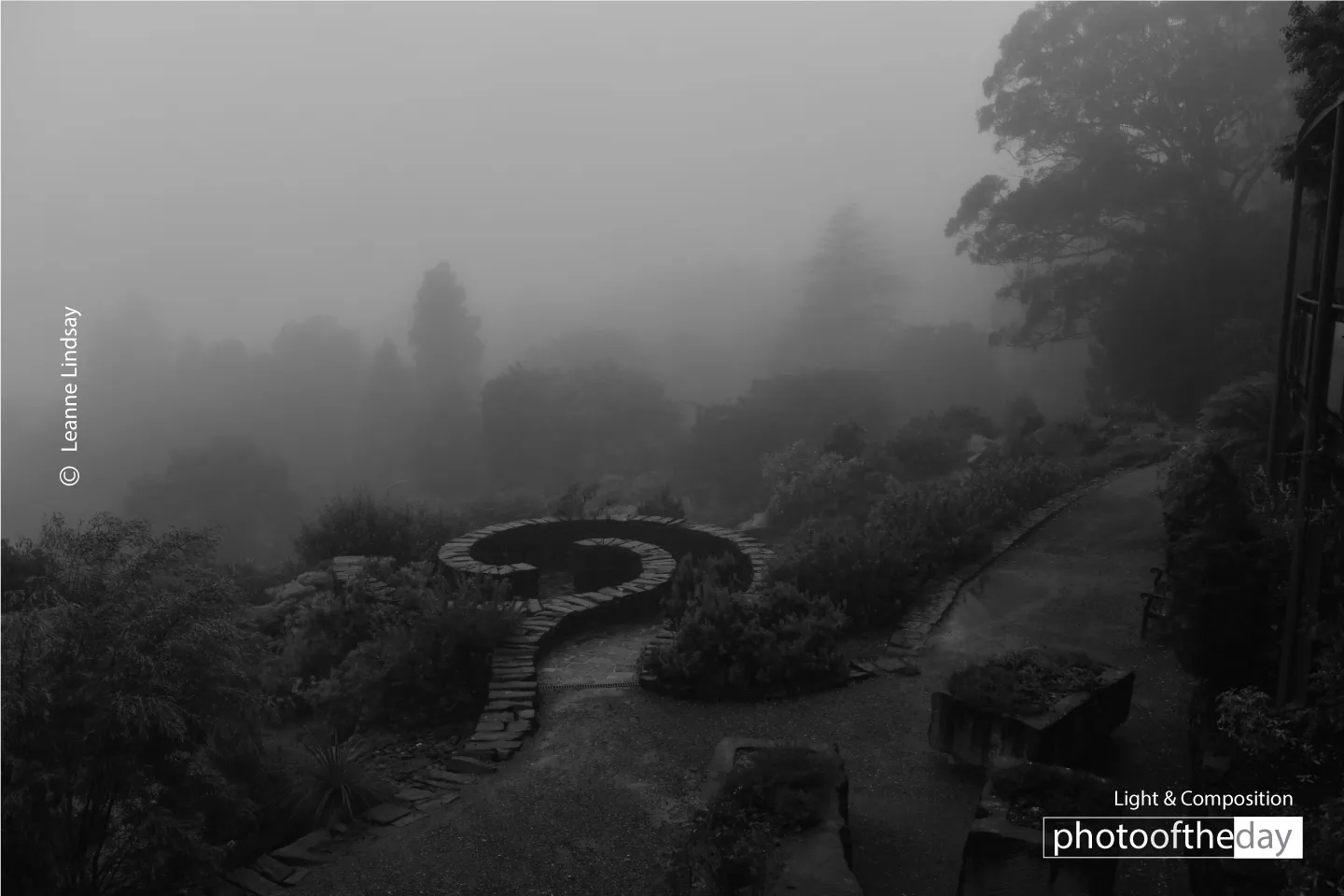
What began as a planned excursion to a sunflower field transformed into an atmospheric exploration of the mountains when inclement weather forced a change in plans. Enveloped by thick fog and biting cold, the photographer discovered a vibrant garden that stood in stark contrast to the gloomy conditions. By choosing to underexpose the scene and render it in black and white, the photographer masterfully captured the genuine, somber emotions of the day. The resulting image is a poignant study of mood, where the absence of color and the heavy, misty atmosphere perfectly encapsulate the feeling of an unexpected and somewhat miserable journey.
Leanne Lindsay
Born in Adelaide in 1962, Leanne Lindsay relocated to Sydney during her youth, where she eventually rekindled a long-dormant passion for photography in her late fifties. Though she specializes in family and newborn portraiture, her artistic focus frequently shifts toward the structural elegance of architectural photography and the vastness of landscapes. Now based in Sydney, Lindsay brings a renewed sense of wonder and dedication to her craft, capturing the nuanced beauty of the world around her with a deeply personal perspective.
Resonance Score Breakdown
Transparency Note: The resonance score (7.6/20) is calculated based on social engagement metrics collected before the award announcement.
Expert Photography Reviews · 7
The Weight of Damp Wool
The smell of rain on wool is a heavy, grounding scent. It is the smell of a sweater that has spent too long in the mist, clinging to the shoulders like a damp, persistent memory.
Read the reflection →The Weight of Grey
There is a particular honesty in a day that refuses to be bright. We are taught to chase the sun, to seek out the warmth, to demand that the world perform for our comfort. But the grey days are the ones that hold us still.
Read the reflection →Reviews & Comments
Share your thoughts about this award-winning photograph. Your reviews contribute to the community engagement score.
The vertical axis here is anchored by the dense, high-contrast foliage, creating a rigid 1:2 ratio against the negative space of the fog. It’s a beautifully solved spatial problem. The diagonal vectors of the drooping petals pull the eye downward, reinforcing the weight of the atmosphere. I’m genuinely struck by how the geometry of the garden resists the encroaching mist. It’s a cold, calculated equilibrium that makes the misery feel mathematically inevitable. I love the precision.
The frame’s architecture relies on the heavy, low-hanging mist to anchor the foreground. It’s a calculated reduction of visual noise. The spatial tension between the sharp, dark foliage and the void of the background creates a necessary fulcrum. It doesn’t rely on sentiment; it relies on the weight of the negative space. Honestly, I’m relieved the color was stripped away. The structure holds, even if the composition’s balance feels slightly precarious at the edges.
The mist clings to the foliage like a shroud, muting the garden’s vitality into a monochromatic study of isolation. It’s a heavy, tactile atmosphere that forces the subject into a quiet, internal retreat. I’m struck by how the fog acts as a physical barrier, isolating the figure from the world. The environment doesn’t just frame her; it dictates her melancholy. It’s a haunting dialogue where the landscape’s cold indifference finally reveals the weight of her own spirit.
Most entries this year relied on high-contrast drama to force an emotion, but Leanne’s work succeeds by leaning into the quiet, suffocating weight of the fog. It’s the deliberate underexposure that anchors the mood; it doesn’t just show a garden, it makes me feel the damp chill of that Blue Mountains morning. I’ve seen thousands of landscapes, yet this one lingers because it captures the specific, lonely ache of a ruined plan. It’s honest, and that’s rare.
Looking at this, I’m struck by the absence of the light-starved, monochromatic struggle I face daily. Down at thirty metres, the water steals every wavelength, leaving only a crushing, blue-grey void. Here, the fog mimics that suspended particulate backscatter I’m always fighting to avoid. It’s hauntingly familiar. While I usually crave the vibrant biology of a reef, there’s a strange, quiet beauty in how these flowers endure the gloom. It’s a cold, atmospheric triumph of mood.
The fog in the Blue Mountains is unforgiving, but it’s the subject’s expression that stops me cold. You can tell they didn’t just stumble into this frame; they’ve let the photographer see their exhaustion. It’s a raw, honest moment of surrender to the elements. I feel a genuine ache in my chest looking at those eyes. It’s not a capture; it’s a shared weight. They’ve given us something real, and that’s a rare, beautiful gift.
The fog here acts as a threshold, dissolving the datum of the horizon and flattening the garden’s massing into a series of ghostly silhouettes. It’s a study in the loss of spatial hierarchy. I find myself shivering just looking at it; the way the light fails to penetrate the foliage makes the void feel heavy, almost suffocating. It doesn’t just capture a mood; it captures the cold, damp erasure of structure itself. It’s hauntingly honest.