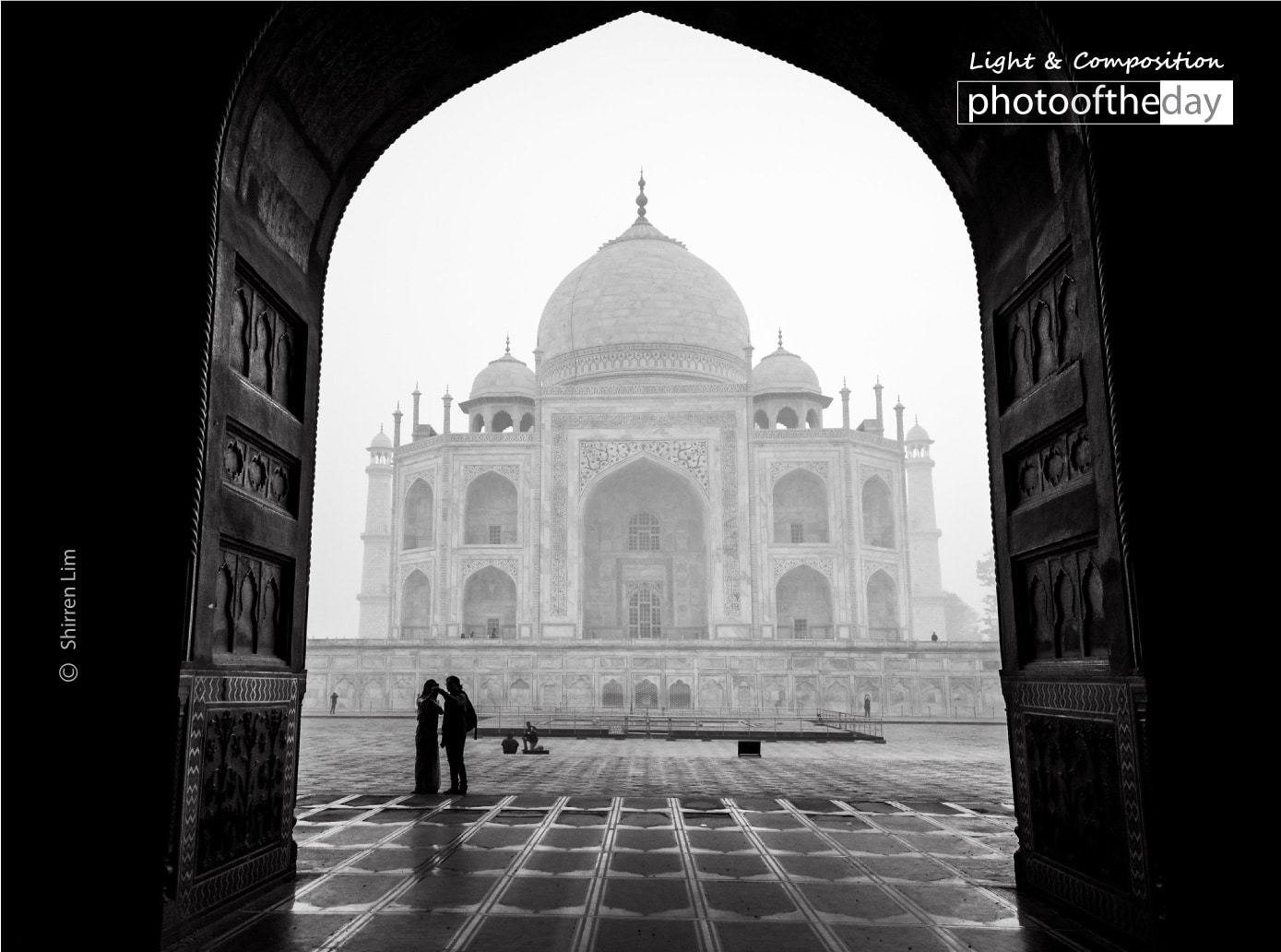
Lovers by Shirren Lim
Captured during a misty, cold morning at the Taj Mahal in Agra, this photograph encapsulates a fleeting moment of intimacy amidst one of the world's most iconic landmarks. The photographer arrived early to beat the crowds, utilizing the ethereal, low-light conditions to frame a quiet interaction within a grand doorway. By focusing on the human element against the backdrop of such monumental architecture, the image transcends a typical travel shot, offering a poignant narrative of connection. Its award-worthy quality lies in the balance between the subject's sincerity and the atmospheric, timeless setting, perfectly rendered in a evocative black and white composition.
Shirren Lim
Born on Penang Island, Malaysia, in 1970, Shirren Lim is a Jakarta-based photographer who discovered her true passion for the craft in 2009. Specializing in portraiture, she is driven by a desire to capture the raw sincerity of human expression, producing work often described as intense and earthy. Inspired by the iconic photography of Steve McCurry, Lim strives to document humanity with a simple, direct compositional style that cuts to the heart of her subjects. Her evocative imagery has been featured in various international web and print publications.
Resonance Score Breakdown
Transparency Note: The resonance score (11.3/20) is calculated based on social engagement metrics collected before the award announcement.
Expert Photography Reviews · 4
The Architecture of a Whisper
We often mistake permanence for the stone we build with, forgetting that the most enduring structures are those we carry within the hollows of our own ribs.
Read the reflection →The Architecture of Silence
In the seventeenth century, a ruler built a monument to grief, a white marble promise that death would not be the final word. We often speak of such places as grand, as heavy with history, yet we forget that stone is merely a vessel for the quiet things that happen in its shadow.
Read the reflection →Reviews & Comments
Share your thoughts about this award-winning photograph. Your reviews contribute to the community engagement score.
The archway’s geometry dictates the frame, forcing the subjects into a rigid, vertical alignment. It’s a disciplined use of negative space that anchors the figures against the Taj Mahal’s mass. The tension between the stone’s cold, architectural weight and the soft, misty tonality creates a necessary equilibrium. I’ve rarely seen such structural restraint in travel work. It doesn’t rely on sentimentality; it relies on the fulcrum of the frame. The composition holds. It’s precise.
Mist clings to the stone. The Taj Mahal isn’t the subject here; it’s the weight behind the lovers. They occupy a sliver of the frame. The rest is cold, grey air. I’ve stood in that doorway. It’s vast. Lim lets the architecture breathe, refusing to crowd the intimacy. Nothing here is accidental. The empty corner is not empty. It’s the silence between them. I feel a sudden, sharp ache for that quiet. It’s rare.
Most photographers would have chased a crisp Taj Mahal, but Lim’s choice to let the mist dissolve the architecture into a soft, monochromatic void is far more compelling. It’s closer to Sugimoto’s long-exposure theatres than a travelogue. I’m genuinely moved by how she’s abandoned the sharp detail of the Ricoh’s sensor to prioritize the blur of intimacy. Why resolve the stone when the feeling is found in what’s left unsaid? It’s beautifully imprecise.
Mist clings to the Taj, but Lim’s timing cuts through the haze. It’s that split second where the couple’s posture mirrors the archway’s geometry. If she’d waited, the intimacy would’ve dissolved into the crowd. I’ve spent years chasing this kind of silence in chaos. It’s sharp, it’s honest, and it hits me right in the chest. One tenth of a second later and the shadow has moved, the frame has collapsed. She nailed it.